Georgia Firm Linked to 'Patriot Economy' Sudden Closure Sparks Investor Fears
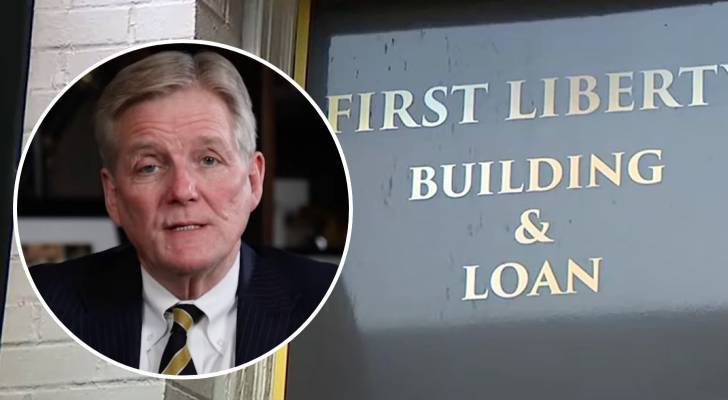
The Collapse of First Liberty Building and Loan
A lending company in Georgia that marketed itself to Republicans and faith-based groups has recently shut down, leaving hundreds of investors in the dark about their financial future. This company, known as First Liberty Building and Loan, had positioned itself as part of the “patriot economy” and targeted conservative media for its promotions. However, what started as a promising investment opportunity quickly turned into a financial nightmare.
The company recently posted a notice on its website stating that it has ceased all business operations. It also announced that interest payments on existing promissory notes, bridge loan participation interests, and other investment programs are indefinitely suspended. According to the company, it is cooperating with federal authorities as part of an effort to accomplish an orderly wind up of the business.
SEC Charges and Allegations
The Securities and Exchange Commission (SEC) filed charges against Edwin Brant Frost IV, one of the founders of First Liberty Building and Loan, on July 10. He is accused of running a Ponzi scheme that cost approximately 300 investors at least $140 million. The SEC claims that First Liberty offered returns of up to 18%, which is significantly higher than typical market rates.
According to the press release, some investor funds were used to make bridge loans, but these loans did not perform as represented. Most of them ultimately defaulted and stopped making interest payments. Additionally, Frost is accused of misappropriating investor funds for personal use, including $2.4 million in credit card payments, $335,000 to a rare coin dealer, and $230,000 on family vacations.
Understanding Investment Fraud
Banks and credit unions are subject to regulations that protect Americans, but First Liberty was a lending firm, not a bank. Bank accounts are insured up to $250,000 by the Federal Deposit Insurance Corporation (FDIC) if a bank fails. If a brokerage firm is a Securities Investor Protection Corporation (SIPC) member, customers are protected in the event of a firm’s failure, up to $500,000.
Investors should be aware of red flags that may indicate potential fraud. These include promises of unusually high returns, guaranteed profits, and pressure to invest immediately. The SEC’s “Red Flags of Investment Fraud Checklist” includes offers that sound “too good to be true,” promises of great wealth and guaranteed returns, “risk-free” investment opportunities, unlicensed investment professionals, aggressive sellers who may provide exaggerated or false credentials, and over-the-top, sensational pitches that may have fake testimonials.
Protecting Yourself from Fraud
To avoid falling victim to investment fraud, it is essential to thoroughly research any investment and the investment professional you’re working with. The SEC outlines important questions you should ask before investing:
- Check if the seller is licensed. If you’re working with a broker, you can check their background and qualifications on the Financial Industry Regulatory Authority’s (FINRA) BrokerCheck website.
- Research the investment and whether it is registered. Offers or sales of securities must either be registered with the SEC or exempt from registration. Check if an investment is registered using the SEC’s EDGAR database.
- Ask yourself whether you understand the investment. Investors should carefully read an investment’s prospectus or disclosure statement, and be sure they understand how the investment works and how it will make money.
What Happens Next?
It remains unclear what will happen to the hundreds of investors in First Liberty Building and Loan. The court has appointed a receiver, who will conduct an investigation and recovery effort. He has created a website to update investors. In a letter to investors, the receiver, S. Gregory Hays, said that it is “much too early for us to make any estimate about the amount that will be distributed.”
He recently told Fox 5, "The records are pretty much in shambles … Some of the reports show loans being paid off even though the principal wasn’t repaid." Around $1.2 million in cash assets have been frozen. At least one investment loss attorney is investigating whether registered sales agents sold investments for First Liberty. A post from Wolper Law Firm states that “registered sales agents worked for FINRA member brokerage firms, which may be held financially responsible for the misconduct of their registered financial professionals.”

Post a Comment for "Georgia Firm Linked to 'Patriot Economy' Sudden Closure Sparks Investor Fears"
Post a Comment