Gaza's Daily Battle for Basic Survival
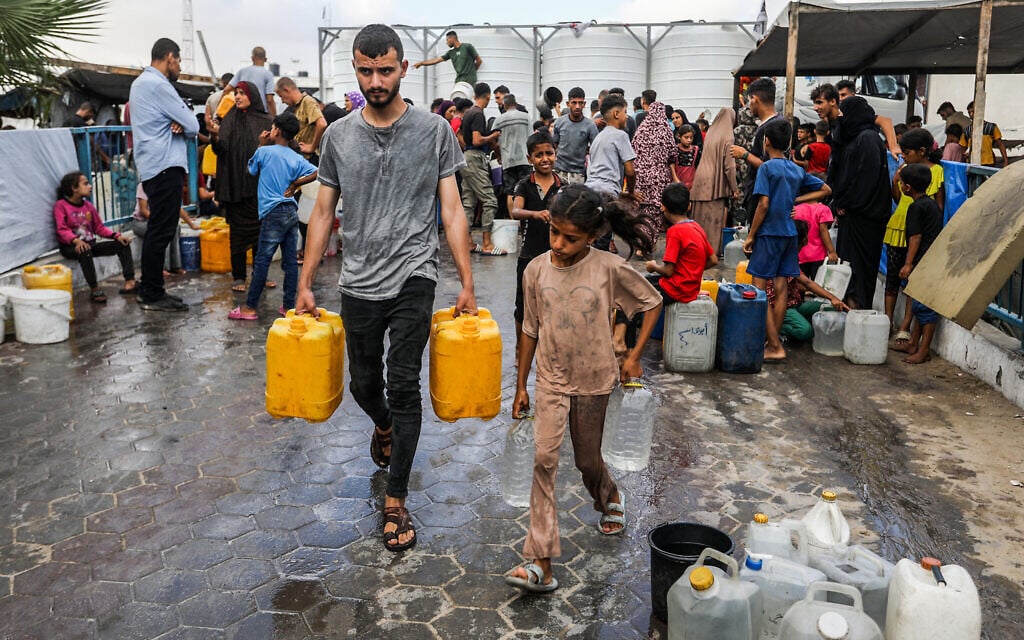
The Daily Struggle for Survival in Gaza
In recent months, the humanitarian crisis in the Gaza Strip has reached a critical point, making access to basic necessities like water, food, and safety an almost impossible task. For many residents, survival is not just about enduring the war but also about navigating the daily challenges of scarcity, uncertainty, and fear.
Anas Arafat, a father of three from Gaza City, described his life as a relentless battle for survival. He lives in the al-Daraj neighborhood, having moved between different areas due to overcrowding and fears of Israeli Defense Forces (IDF) strikes. Currently, he rents an apartment from a friend, which gives him some stability compared to others who live in displacement camps. Arafat still has access to a makeshift bathroom and personal belongings, which makes his situation better than many in the region. However, even with these small comforts, life remains difficult.
Arafat's daily routine revolves around securing water, which he buys from private vendors at a high cost. “We need water for washing and laundry every day,” he explained. “Even the water we buy for drinking isn’t really safe, but it’s all there is.” The lack of clean water has led to severe hygiene issues, with soap and shampoo becoming expensive luxuries.
The destruction of infrastructure has compounded the problem. Satellite imagery and UN reports indicate that large parts of Gaza have been destroyed, including key areas such as the northern tip, eastern Gaza City, and parts of Khan Younis. In January, the UN Office for the Coordination of Humanitarian Affairs reported that 92% of buildings in Gaza had been damaged or destroyed. Despite this, some areas in western Gaza City and Deir al-Balah remain habitable, though they are far from safe.
Before the war, life in Gaza was already challenging due to economic restrictions imposed by Israel and Hamas policies. High unemployment and reliance on foreign aid were common. However, the conflict has made things worse, leaving many Gazans without jobs, homes, or access to essential services.
Water Scarcity and Its Impact
Water scarcity in Gaza predates the war, but the conflict has worsened the situation significantly. Before the war, Gazans relied on water supplied by the Palestinian Authority from Israel’s Mekorot company, as well as local wells and desalination facilities. However, many of these sources have been damaged by Israeli strikes, and Israel has stopped selling water to Gaza since November 2023.
The desalination plant, which was crucial for providing clean water, went offline after Israel cut off electricity to the Strip in March 2025. While Israel announced plans to restore power, no confirmation has come from local or UN sources. As a result, many homes lack running water, forcing residents to rely on private vendors.
Arafat pays NIS 100 ($30) every four days to fill a cistern for his toilet and shower, an expense that most cannot afford. This has led to infrequent showers and poor hygiene, with soap and shampoo being costly items.
Hunger and Food Insecurity
Food insecurity is another major issue. With no gas or fuel, cooking is done using firewood over open flames, and obtaining food is a constant struggle. Flour, a staple in Gazan households, has become extremely expensive. Hilu, a father of ten, said he buys flour at NIS 40-50 per kilogram, a price that has fluctuated dramatically over the past few months.
Both Arafat and Hilu purchase food from local markets, but prices are volatile and often depend on when the last aid truck arrived. Some goods are believed to come from looted aid supplies, raising concerns about the distribution of resources. Israel has accused Hamas of stealing aid, but recent reports suggest there is no evidence of systematic theft.
The impact on children is particularly severe. Arafat and Hilu both mentioned that their families receive only two meals a day, and even those are not substantial. “We give them two meals a day, one in the mid-morning, one in the afternoon,” Arafat said. “And even those aren’t real meals — just something to quiet their hunger.”
Power Outages and Daily Life
Electricity is another essential service that has been completely cut off. Before the war, Gaza relied on electricity supplied by Israel, but this was halted in October 2023. Without power, hospitals and other institutions use diesel generators, but private households have limited access. Some residents have solar panels, but it is unclear how many survived the destruction.
The lack of electricity has forced people to rely on candles for lighting and hand-washing for clothes. A black market has emerged for charging devices, with some offering phone charging for a small fee. In some areas, businesses now charge for electricity, further straining already limited resources.
Economic Collapse and Unemployment
The job market in Gaza has been paralyzed for nearly two years. Most private businesses have closed, and even restaurants and cafes that once thrived are now rare. Arafat noted that the streets are empty after 5 p.m., with people avoiding the risk of airstrikes or theft. Without work, many residents are relying on savings or donations from friends outside Gaza.
Hilu, a former employee of the Palestinian Authority, has not received his salary for the past two months due to budgetary difficulties. Even those with money in the bank face challenges accessing it, as banks are closed and private currency brokers charge high fees for withdrawals.
Education and Children’s Futures
Schools, universities, and daycares have been closed since the war began, leaving children without education or structured activities. Arafat struggles to keep his children occupied, limiting their energy expenditure to avoid hunger and ensure their safety. “I don’t let them leave the building,” he said. “I set up a little learning space for kids in our building during the war.”
Despite the overwhelming challenges, hope persists among Gazans. Arafat and others remain hopeful that aid will increase and that conditions will improve. “As long as there are Palestinians, and as long as Allah exists, there is hope,” he said.

Post a Comment for "Gaza's Daily Battle for Basic Survival"
Post a Comment