Fort Stewart Shooting Sparks Military Gun Policy Debate
Military Base Shooting Sparks Debate Over Weapon Policies
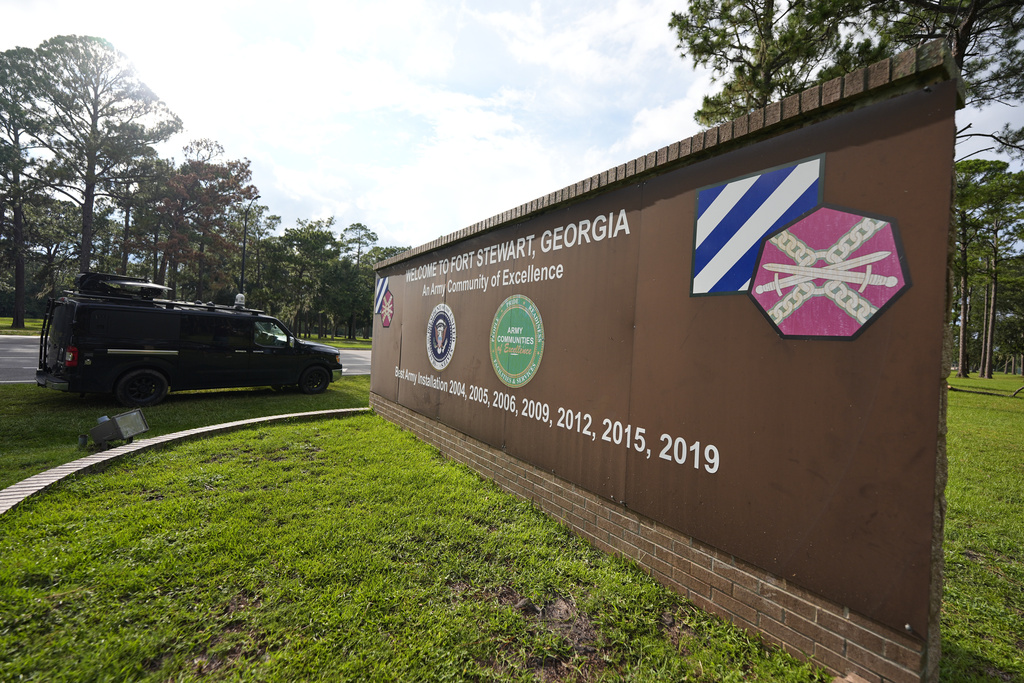
A shooting incident that left five soldiers injured at one of the country's largest military bases has reignited discussions about longstanding policies that restrict service members from carrying personal weapons on military installations. The event took place at Fort Stewart in Georgia and raised questions about the effectiveness of current regulations in ensuring safety.
During the incident, witnesses reported that soldiers immediately tackled the shooter to subdue him before law enforcement arrived. However, they did not have firearms available to respond, as a policy dating back several decades limits armed personnel on army bases to military police. The suspect, logistics Sgt. Quornelius Radford, used a personal weapon, according to Brigadier Gen. John Lubas, who spoke at a news conference following the event.
Online discussions have emerged regarding why soldiers did not use weapons to defend themselves during the shooting. Some videos shared on social media showed service members in uniform fleeing to safety during an hour-long lockdown, rather than engaging the shooter. This has led to broader questions about whether existing regulations are sufficient to prevent such incidents on military bases.
The shooting is part of a growing list of violent events at American military installations over the years, some of which have resulted in multiple fatalities. Despite these concerns, experts highlight the rationale behind long-standing firearm regulations on military bases.
Department of Defense Policy on Firearms
The Department of Defense has maintained a policy for decades that prohibits military personnel from carrying personal weapons on base without explicit permission from a senior commander. There are strict guidelines for how firearms must be stored, typically requiring them to be checked out of secure storage for sanctioned activities like hunting or shooting ranges. After use, the weapons must be returned promptly.
Military police are generally the only armed personnel on base outside of designated areas such as shooting ranges or hunting zones, where soldiers can carry their service weapons without ammunition. This regulation applies uniformly across all bases, including locations in states with more lenient gun laws, such as Georgia, where Fort Stewart is situated.
Designed to Protect National Security
Robert Capovilla, a founding partner at one of the largest military law firms in the country, supports the Second Amendment but emphasizes the necessity of strict firearm policies on military bases. He points out that many installations handle top-secret operations and sensitive information, necessitating heightened security measures.
“you don’t want folks walking around a federal installation with personal weapons,” he said. Capovilla, who has visited nearly every major military installation in North America, noted that armed military police are consistently visible on base. He believes that even if soldiers had been armed during the recent shooting, it might not have prevented the incident.
Limitations of Military Gun Regulations
Firearms on military bases are more regulated than in most states, according to former military prosecutor and defense counsel Eric Carpenter. However, he notes that the limitations on gun control on military bases mirror broader debates in public gun policy.
“You don’t forfeit all of your rights when you enter the military,” Carpenter said. Service members retain the same Second Amendment rights as civilians outside of military situations. For instance, a service member living off-base could bring a weapon onto the installation if a senior commander does not regulate gun ownership off-base.
Additionally, there is limited legal authority for leadership to confiscate a firearm if a service member shows signs of mental health issues or post-traumatic stress disorder, which could pose a risk to themselves or others. These gaps have come under increased scrutiny in light of recent mass shootings, with critics arguing that existing rules may not prevent such tragedies.
Carpenter emphasized that while regulations exist, they may not stop someone from committing an act like the one seen at Fort Stewart.

Post a Comment for "Fort Stewart Shooting Sparks Military Gun Policy Debate"
Post a Comment