Foreign Journalists Demand Gaza Access Amid Fears for Starving Colleagues
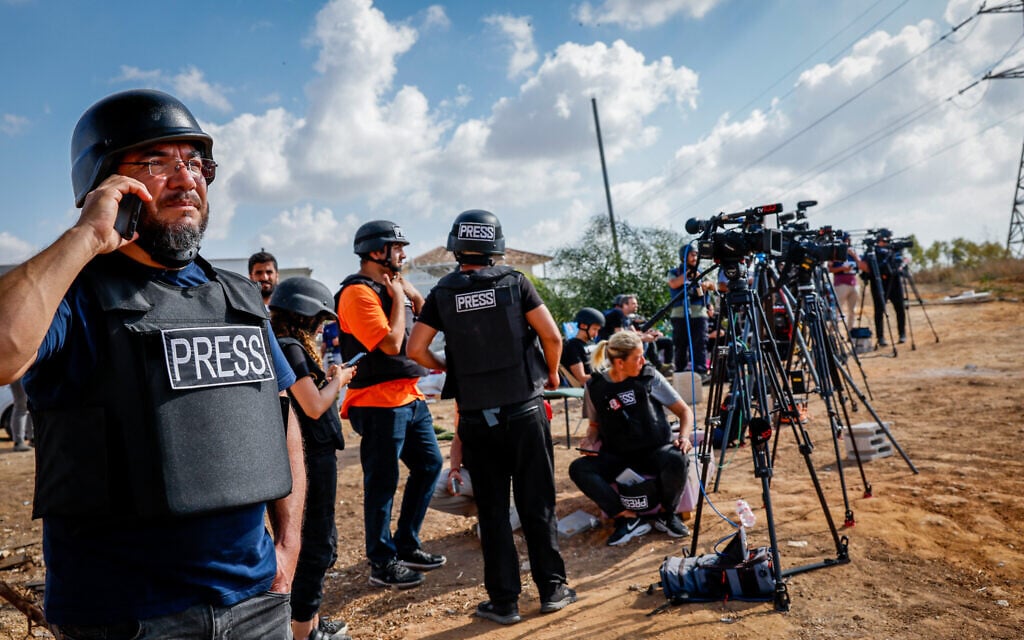
The Struggle for Access and Truth in Gaza
The situation on the ground in the Gaza Strip has become more critical than ever, as major policy decisions are being shaped by images and accounts of mass starvation and deadly shootings at aid sites. However, the challenge of understanding what is truly happening in Gaza has grown increasingly complex due to the limited access international media has to the region.
Allegations and counter-allegations regarding fatal shootings at and near aid distribution sites have only deepened the confusion, with independent verification becoming nearly impossible. This uncertainty is compounded by the fog of war that often surrounds any large-scale conflict. In Gaza, this fog is further thickened by an information blackout, which has been exacerbated by Israel’s policies restricting media access.
Since Hamas's attack on southern Israel on October 7, 2023, foreign journalists have been barred from entering the Gaza Strip independently. For over 21 months, Israel has denied media free access to the enclave, despite repeated appeals for open and independent coverage. The only way journalists have managed to enter is through tightly controlled military embed programs, where select Israeli and foreign journalists are brought into Gaza under IDF supervision. These visits are typically brief, highly curated, and prohibit any free interaction with Palestinian civilians, drawing criticism from press advocates who argue they fall short of true journalistic independence.
In court, Israel has defended its decision by stating that it is necessary due to the risks to both journalists and troops should reporters be allowed to move freely within an active war zone. Such restrictions stand in contrast to how most modern democracies handle press access in wartime. While security concerns often limit how journalists can operate in conflict zones, full bans on foreign media are relatively rare.
Notable exceptions include Syria during the early years of its post-2011 civil war, Russia’s 1999 war in Chechnya, and Myanmar’s crackdown on coverage of the Rohingya crisis beginning in 2016. Those cases typically involved authoritarian regimes accused of widespread human rights violations—a comparison Israel has historically rejected.
Gatekeeping Gaza’s War Coverage
The decision to keep foreign press out of Gaza does not come from the IDF, according to a military official, but rather from an unspecified overseeing body. The Foreign Press Association (FPA), which represents international reporters working in Israel, the West Bank, and Gaza, petitioned the High Court in December 2023 to force Gaza’s gates open. The state responded by arguing that allowing journalists in would endanger IDF troops whose positions could be compromised.
The High Court upheld the ban in January 2024, citing not only national security concerns but also the dangers journalists themselves would face upon entry, noting that ensuring their safety could divert IDF resources. Those dangers are not hypothetical. Palestinian journalists based in Gaza, some of whom work as stringers for international news organizations, have been caught in crossfire as well as facing many of the same dire humanitarian conditions stalking Gaza’s civilians.
According to the Committee to Protect Journalists, 186 news people have been killed in the war, more than in any other conflict the NGO has tracked. The IDF has said that a number of those who claimed to be journalists were actually terror operatives, some of whom participated in the Hamas-led attack on Israel that triggered the war. It has denied targeting actual journalists.
Concerns for Palestinian Journalists
Conscious of how it is viewed in the international arena, Jerusalem has a clear interest in avoiding reports of foreign journalists—especially from allied countries—being killed or injured covering the war. At the same time, many Israeli officials doubt that allowing foreign journalists into Gaza would result in independent reporting anyway, given credible accounts of Hamas authorities tightly controlling what media comes out of the Strip, including through threats of violence.
During 2014’s Operation Protective Edge, several foreign journalists in Gaza reported being harassed or intimidated by Hamas operatives. In some cases, photographers who captured images of fighters launching rockets from civilian areas or engaging in combat while dressed as civilians were confronted, threatened, and had their equipment confiscated.
Nonetheless, experts maintain that the decision on journalists entering areas of conflict should be left to individual news organizations. “The decision of whether to send reporters into dangerous war zones should lie with the networks rather than the government,” FPA chairman Tania Kraemer told The Times of Israel. “As journalists, it is our job to be on the ground and report.”
The Human Toll on Local Journalists
Even as it presses for foreign access to the Strip, the FPA and others are also increasingly expressing concern for the wellbeing of Palestinian journalists in Gaza, coupling the demands together. “The burden of reporting should not fall solely on our Palestinian colleagues in Gaza,” Kraemer said. “Especially now when they are experiencing extremely harsh conditions after 21 months of war, risking their lives to deliver the news, and while they are struggling now to feed themselves and their families.”
In recent days, several news organizations, as well as the FPA, have sounded alarm bells over what they say is interminable hunger faced by Gazan journalists, compounding the risks they already deal with in reporting from the Strip. “Reporting from any conflict zone is a risky and brave pursuit that ultimately performs a global public service,” New York Times international editor Philip Pan said in a statement. “Adding the threat of food deprivation and even starvation to these risks is deeply concerning.”
Throughout the war, local journalists have endured the same hardships as the people they cover—repeated displacement, bombardments, and now, widespread hunger. “Last week, a cameraman told me that he hadn’t eaten all day and wasn’t sure what he would find to eat on his way home,” Kraemer recalled. “And yet, he was still out reporting.”

Post a Comment for "Foreign Journalists Demand Gaza Access Amid Fears for Starving Colleagues"
Post a Comment