Flying lessons aid Brazil's endangered macaws in wild survival
A New Approach to Reintroducing Parrots into the Wild
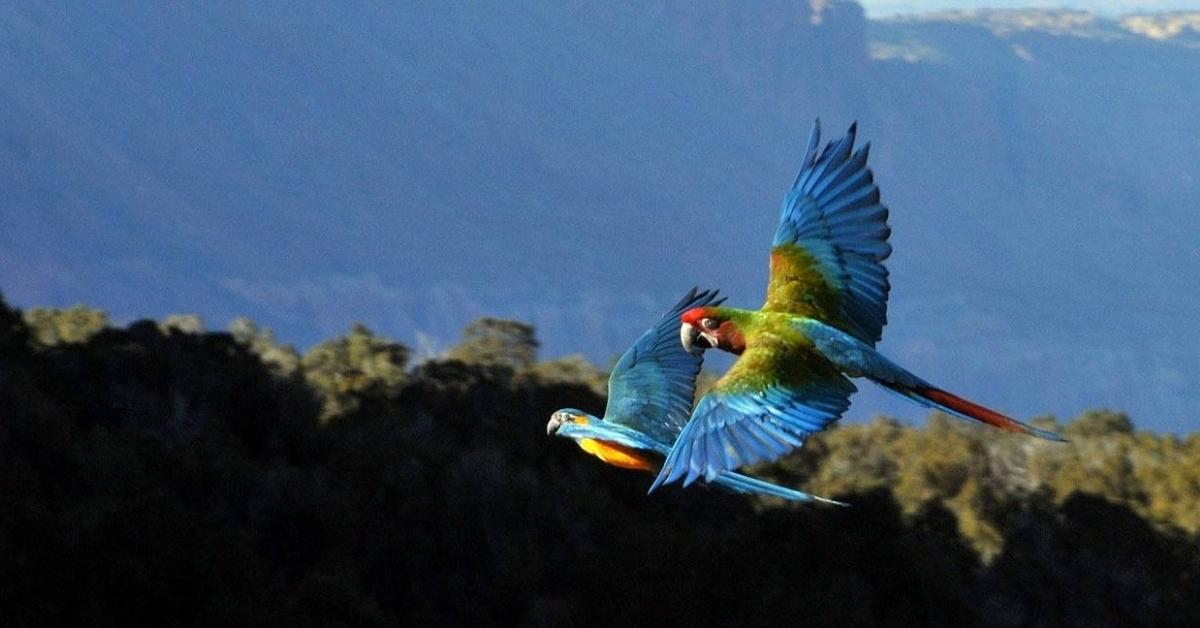
In a groundbreaking initiative in the municipality of São Simão, blue-and-yellow macaws born in captivity were trained in free-flight techniques before being introduced into the wild. This project marks a significant shift in how conservationists approach the reintroduction of parrots and macaws, offering a more effective and cost-efficient method compared to traditional practices.
Traditionally, in psittacine reintroduction projects, captive chicks are only released into the wild at 2 or 3 years of age. However, this approach often leads to high mortality rates because the birds lack the necessary skills to find food, avoid predators, and navigate their environment. Many of these birds end up dying shortly after release due to their inability to adapt to the wild.
The project’s coordinators believe that this new method could revolutionize the way parrot and macaw reintroduction programs are conducted. By focusing on training young birds in free-flight techniques, the initiative offers a higher chance of survival and lower costs. This is particularly important for species that have become locally extinct or are critically endangered.
The Visionaries Behind the Project
Biologist Humberto Mendes, a professor at the Federal University of Alfenas in Brazil’s Minas Gerais state, has been deeply involved in this effort. He recalls his grandfather speaking about the macaws in the region, and now seeing them return brings him great joy. “We know where they sleep and feed, so every time we want to find them, we know where they are,” he says.
Mendes worked alongside Donald Brightsmith, a professor at Texas A&M University and one of the world’s leading experts on Psittaciformes (parrots), and Chris Biro, an international reference in free-flight training for pet birds. Together, they led a project to reintroduce blue-and-yellow macaws (Ara ararauna) in São Simão, an area where the species once thrived but became locally extinct over 50 years ago.
The Pioneering Technique
What makes this project unique is the use of free flight with psittacines, a technique that has never been employed in conservation programs before. The results have been impressive: a 100% success rate. “This result is absolutely wonderful! And I’m not exaggerating. I say that even though I’m a grumpy old scientist,” Brightsmith jokes as he celebrates the project’s success.
Just over two years after the initial release of six blue-and-yellow macaws in 2022, all of them are still alive and showing excellent adaptation. They have even survived a fire that hit the region in the second half of 2024, when much of Brazil suffered from wildfires.
Training the Birds for Survival
For the São Simão project, two males and four females were selected, all chicks bought from breeders authorized by Brazil’s federal environmental agency, Ibama. During their training, they were accompanied by three other adult birds of the same species, familiar with the free-flight technique, so they could learn to fly and behave in flocks.
Traditional methods involve releasing chicks into the wild at around 2 or 3 years of age. However, this approach often leaves the birds unprepared for the challenges of the wild. “If you raise an animal in a cage until it’s 2 or 3 years old, it will hardly know how to defend itself from predators or look for food because it’s being provided. It won’t have any navigational skills,” Biro explains.
“It’s as if you raised a teenager all his life in a closed room and then suddenly released him into a crowded shopping mall,” he compares.
The Science Behind Free Flight
Free flight is not a new concept; it is similar to falconry, which has been used for millennia to train birds of prey through operant conditioning. In recent decades, it has gained popularity among domestic psittacine breeders.
For the method to be successful, the birds need to be trained at a very young age, between 90 days and 120 days old. “We use a mobile cage, and as soon as the chicks have the slightest ability to fly, we encourage them to jump between two points to be fed. Little by little, we increase the distance. Then we fly them out of the aviary and back again,” Biro explains.
As well as encouraging longer flights, the training gradually includes an increasingly scarce food supply and a change in the time of day, forcing the macaws to look for food in the wild. The breaking of ties with humans is also an essential part of the process.
A New Alternative for Reintroduction
Brightsmith, Mendes, and Biro believe the success of the study carried out with the blue-and-yellow macaw in Brazil could signal a new method to be used in parrot and macaw reintroduction programs. They report the results of the experiment in a scientific article in the journal Birds.
By comparison, a reintroduction project for blue macaws (Cyanopsitta spixii) being carried out in Curaçá, Bahia, Brazil, in which 20 birds were released in 2022, only 10 remained in the wild. This represents a 50% success rate.
“We’re looking at a couple of decades of scientific parrot release projects where, in most cases, when you open the cage, the release is final,” Brightsmith says.
Another advantage of the free-flight technique is the much lower cost, the study’s authors argue. “Some programs spend thousands, even millions, of dollars raising parrots in captivity, only to discover that these birds can’t survive in the wild because they don’t have enough experience in the real world,” the Texas A&M professor says.
Expanding the Method
The same method was also used in Colombia in 2023. Around 20 blue-fronted amazon (Amazona aestiva) were confiscated by the police and handed over to a local organization, Fundación Loros. Biro went there, trained them, and after two weeks, they were released into the wild.
Those involved in the Brazilian project say they believe free flight could be a new conservation option for the reintroduction of birds in cases such as the one above, for seized chicks or for those born in captivity, whether in zoos, research institutions, or breeding grounds.
Mendes reveals that there are now plans for a new study with smaller birds that are more vulnerable to predation, such as the red-shouldered macaw (Diopsittaca nobilis). “Our aim is to prove the efficiency of the technique with different sizes and species of psittaciformes.”
The researchers’ hope is that the use of the technique and its wider dissemination among conservation specialists will enable more birds to fly freely in the skies, especially in places where certain species have become extinct, as is currently the case in São Paulo’s countryside, with the return of the blue-and-yellow macaw.

Post a Comment for "Flying lessons aid Brazil's endangered macaws in wild survival"
Post a Comment