Florida seeks rare rainbow snake, last spotted in 2020
The Elusive Rainbow Snake and Conservation Efforts
The Florida Fish and Wildlife Conservation Commission (FWC) is reaching out to the public for help in tracking down one of the rarest snakes in the state, the rainbow snake. This species, known scientifically as Farancia erytrogramma, has not been seen since February 2020, raising concerns about its survival. The FWC is urging citizens and visitors to report any potential sightings, as these reports can provide critical information about the snake’s current distribution and overall health.
Habitat Loss and Declining Populations
Rainbow snakes are non-venomous and have experienced a significant population decline over recent decades. According to the FWC, this decline is largely attributed to habitat loss and a reduction in their primary food source—American eels. These eels have also seen a decrease in numbers within Florida waters, further impacting the rainbow snake’s survival. In addition, snake fungal disease is affecting populations in other states, adding to the challenges faced by this species.
Jonathan Veach, a spokesperson for the FWC, mentioned that there may have been other sightings since 2020, but they were either unreported or not brought to the attention of the commission. "We need help from Floridians and visitors to better understand where rainbow snakes still occur in the state," said Kevin Enge, a research scientist with the FWC. "Every sighting report gives us valuable data about their current distribution and helps us assess the health of the species in Florida."
Physical Characteristics and Behavior
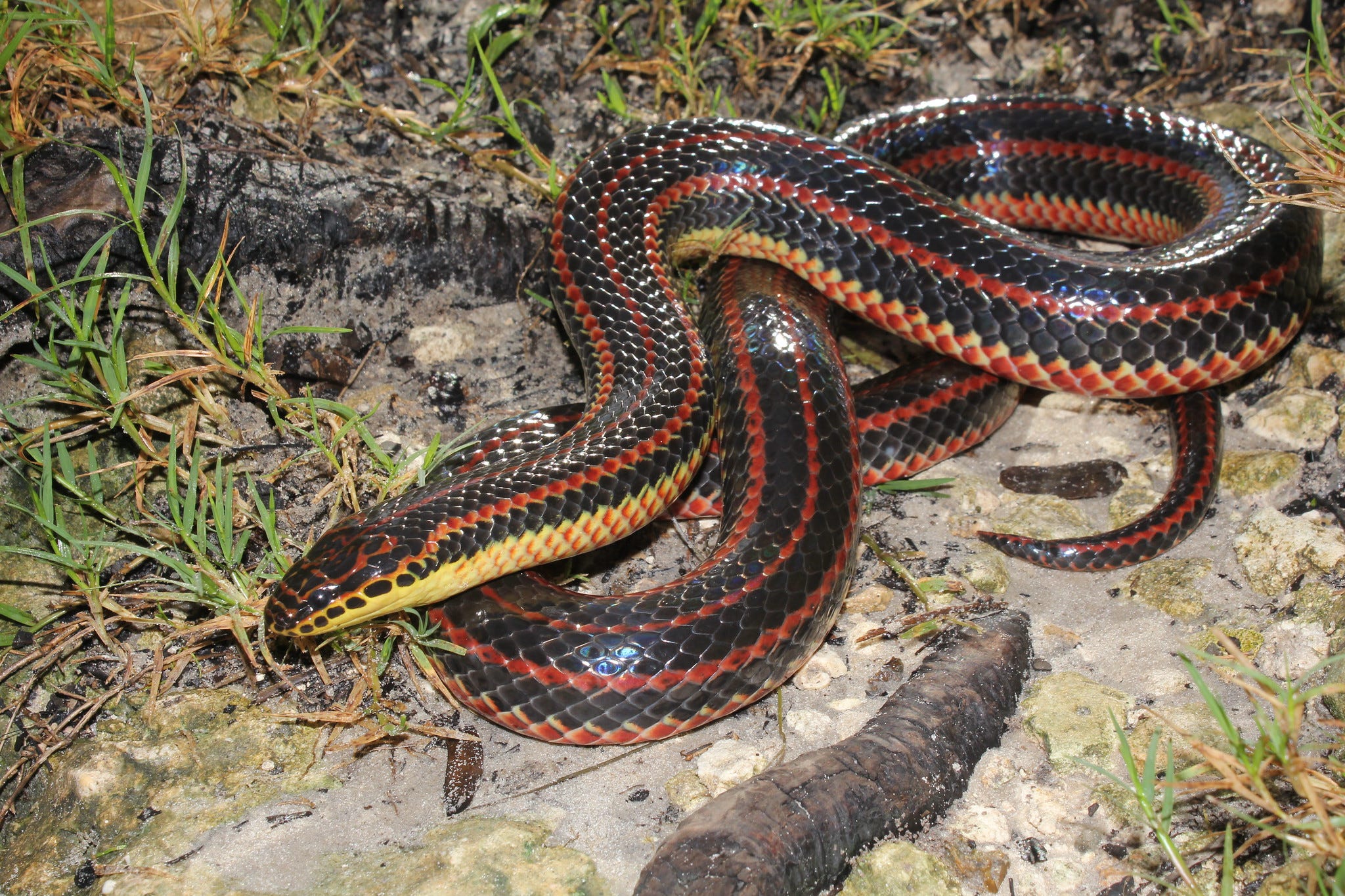
Rainbow snakes are known for their vibrant, colorful scales, making them easily identifiable. They typically display an iridescent black or violet-blue coloration, with three red stripes running along their back. Their lip and chin scales are yellow, often marked with violet spots. Adult snakes usually grow to be between 3 and 4 feet long.
These semi-aquatic reptiles are commonly found near water sources such as rivers, springs, and brackish marshes. One subspecies was historically found in Fisheating Creek in Glades County, over 150 miles south of the nearest known population in Lake County. However, this subspecies has not been documented since 1952, and researchers are hoping to confirm its existence.
How to Report a Sighting
If you spot a rainbow snake, the FWC encourages you to report it online. Photographs are especially helpful in confirming sightings and can be submitted along with your report. By sharing sightings, the public can play a vital role in conserving this unique species.
Rainbow snakes are highly secretive and rarely seen. They may occasionally be found crossing roads between bodies of water, particularly on rainy nights. Swimmers and divers have also reported seeing them slowly crawling along the bottom of clear, spring-fed rivers.
Additional Conservation Initiatives
The FWC's request for assistance comes shortly after the conclusion of the 2025 Python Challenge, which took place in South Florida. This annual event, now in its 13th year, saw a record number of pythons captured—294 in total. Taylor Stanberry, a Naples resident, became the first woman to win the grand prize, taking home $10,000 for catching 60 snakes.
While the focus of the challenge was on invasive pythons, the FWC continues to work on protecting native species like the rainbow snake. These efforts highlight the importance of community involvement in wildlife conservation.
Snake Bites in the United States
Although the rainbow snake is not venomous, snake bites are a common occurrence in the United States. Approximately 7,000 to 8,000 people are bitten by venomous snakes each year, according to the Centers for Disease Control and Prevention. While about five people die from venomous snake bites annually, the CDC notes that this number would likely be higher if those bitten did not seek medical treatment.

Post a Comment for "Florida seeks rare rainbow snake, last spotted in 2020"
Post a Comment