Filmmakers and San Francisco Japantown Museum Honor 80 Years Since Atomic Bomb
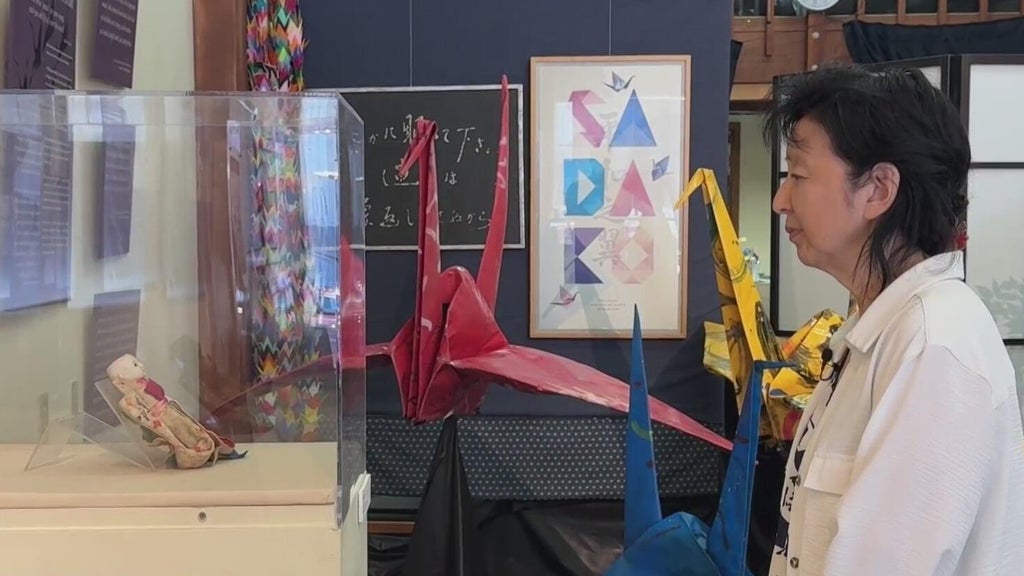
A Powerful Reminder of the Atomic Bomb's Devastation
In a small museum located in San Francisco's Japantown, there is a powerful and poignant message about the horrors of the atomic bomb. The exhibit serves as a reminder of the immense destruction caused by these weapons, which were dropped on Hiroshima and Nagasaki in 1945.
Rosalyn Tonai, the Director of the National Japanese American Historical Society (NJAHS), highlights the stark contrast between how different groups perceive the bombings. "Americans see the bomb as a beautiful mushroom cloud, and the Japanese who were on the ground see it as ground zero, the devastation, the 70,000 people who lost their lives in an instant," she said.
This summer, the NJAHS brought back an exhibit that was first displayed 30 years ago. It aims to honor the victims of the two atomic bombings that ended World War II. The Japanese surrendered less than a week after the attacks, on August 15, 1945.
One of the most haunting items in the exhibit is a doll recovered from the rubble in Nagasaki. This relic was donated by an American family who had kept it for many years. They received it from a family that survived the atomic blast, making it a deeply personal artifact of the tragedy.
The exhibit also features survivor stories, including those of individuals who lived through the bombings. Jack Dairiki, a Japanese American who was visiting family in Hiroshima at the time, shares his experience. He was outside a factory on the outskirts of the city when the first bomb dropped. During a 2015 interview with KPIX, he described the moment: "We saw three aircraft coming above us. At that time, the bomb exploded, all the factory windows went out, it flew over my head. I weighed 100 pounds and was floating in the air."
A new documentary titled Atomic Echoes, created by filmmakers Victoria Kelly and Karin Tanabe, adds more depth to the conversation about the bombings. Tanabe emphasizes that few Americans fully understand the true impact of the events under the mushroom cloud. "We all see the exact same image, which really covers up the atrocities, and then we stop there in the history books," she said.
Tanabe’s great-great uncle was involved in the rebuilding efforts in Hiroshima, while Kelly’s grandfather was an American medic sent to Nagasaki. He witnessed the effects of peak radiation sickness and later suffered from PTSD, passing away at the age of 42. The filmmakers also interviewed other American medics who arrived in Japan 45 days after the bombings. These individuals shared their experiences and expressed a strong desire to prevent such tragedies from ever happening again.
"They were really torn, they were really proud of their service, and all of them said, you know, we were there, and we can't ever have these bombs happen again because they were the worst thing we've ever seen," said Kelly.
For Tonai, the topic remains relevant today. She believes that as the world faces a nuclear buildup, it is crucial to reflect on the human cost of such weapons. "We are the cusps of a nuclear buildup, and this is really a call for world peace," she said. "So, we really need to take a pause and take a look at the human cost and consequences of a possible nuclear fallout."
Her hope is that the lessons learned from the past will guide future actions. She dreams that the history of the atomic bombings will never be repeated, ensuring a safer and more peaceful world for generations to come.

Post a Comment for "Filmmakers and San Francisco Japantown Museum Honor 80 Years Since Atomic Bomb"
Post a Comment