Federal Officials Target Kratom-Opioid 7-OH Restrictions
Federal Officials Target Potent Opioid in Consumer Products
Federal health and law enforcement officials have announced a new initiative to crack down on a powerful semisynthetic opioid found in various consumer products such as gummies, drinks, and dietary supplements. The substance in question is 7-hydroxymitragynine, or 7-OH, which is derived from kratom, an herbal plant with opioid-like properties. This move aims to place the compound in the most restricted category of controlled substances, highlighting its potential dangers.
Kratom itself is known for its dual effects, acting as a stimulant in small doses and potentially aiding some individuals in managing opioid withdrawal symptoms. However, 7-OH, which occurs naturally in trace amounts in kratom, has been concentrated in certain products available on the market. The U.S. Food and Drug Administration (FDA) has warned that these concentrated forms pose significant risks.
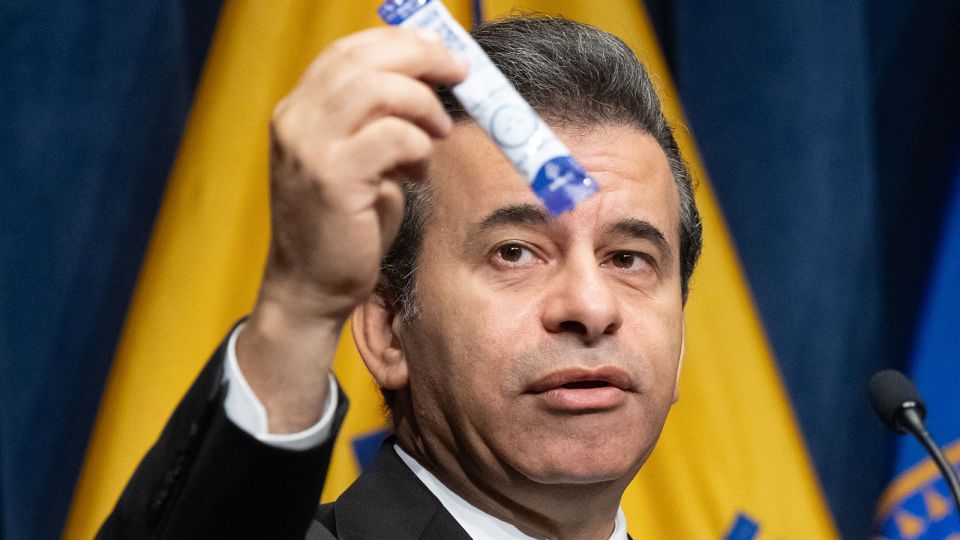
Dr. Marty Makary, the FDA Commissioner, emphasized during a recent event hosted by the Department of Health and Human Services (HHS) that the focus is not on the kratom leaf or ground-up kratom but rather on the synthetic byproduct that functions as an opioid. He pointed out that the rise in overdoses, poisonings, and emergency room visits linked to 7-OH products is concerning. Despite these reports, there are limited statistics on actual overdose cases due to a lack of awareness among healthcare professionals about the substance.
The FDA is recommending that 7-OH be classified as Schedule I, a category reserved for drugs deemed to have no accepted medical use and a high risk of addiction. This classification includes substances like heroin, cannabis, LSD, and psilocybin. In contrast, other opioids such as fentanyl and morphine are placed in lower schedules due to their medical applications.
The regulation of natural kratom remains unclear. While it contains less 7-OH than synthetic products, it is largely unregulated. Dr. Makary acknowledged concerns from some physicians regarding the risks and addiction potential of kratom but stressed the need to prioritize addressing the more dangerous synthetic versions first.
On July 15, the FDA issued warning letters to seven companies marketing 7-OH products, including gummies, tablets, and drink mixes. The agency reiterated that adding 7-OH to dietary supplements or food products is illegal. However, regulating these products has proven challenging, as kratom continues to appear in various retail outlets.
Former health officials from the Trump administration have called for increased regulation of kratom and 7-OH. Dr. Robert Redfield, former CDC Director, wrote an op-ed in The Hill arguing that existing legislation could provide a framework for action. He highlighted the differing risk profiles between natural kratom and synthetic products.
Despite these calls for regulation, the question of how to manage natural kratom remains open. In 2018, the FDA classified kratom as an opioid, stating there was no evidence of its safety or effectiveness for medical use. However, this statement is no longer available on the FDA website, and the agency now warns against using kratom for medical treatment until further research is conducted.
Advocates like Melody Woolf, who credits natural kratom with saving her life, have spoken out against the proposed regulations. She expressed concern over the availability of 7-OH in over-the-counter products.
In response to the announcement, the Holistic Alternative Recovery Trust criticized the lack of concrete public health data supporting the claims. They argued that cutting off access to kratom would harm those who rely on it, rather than help them.
As the debate continues, the federal government faces the challenge of balancing public health concerns with the needs of individuals who may find relief in natural remedies. The ongoing dialogue highlights the complexities of regulating substances with both potential benefits and significant risks.

Post a Comment for "Federal Officials Target Kratom-Opioid 7-OH Restrictions"
Post a Comment