FBI Returns 500-Year-Old Cortés Document to Mexico
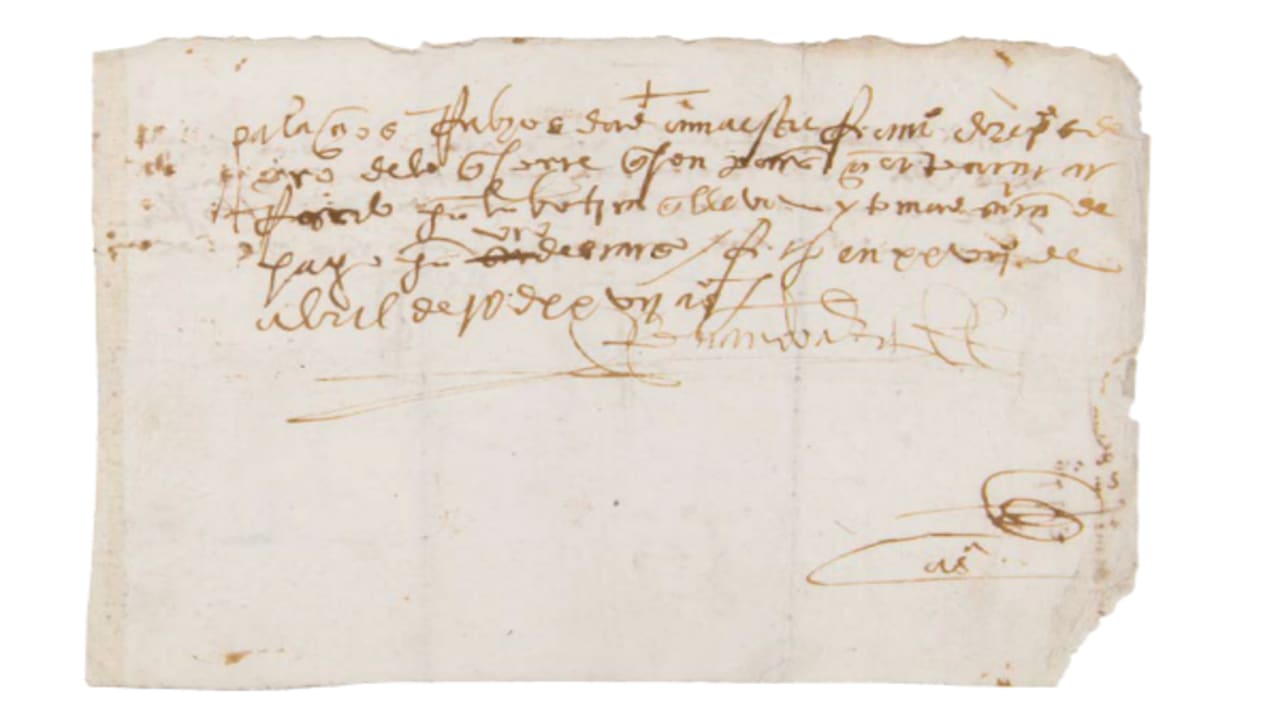
The FBI Returns a 16th-Century Manuscript to Mexico
The Federal Bureau of Investigation (FBI) recently returned a 16th-century manuscript page signed by Hernán Cortés to Mexico, marking a significant step in the recovery of cultural artifacts that were stolen from the country’s national archives. This event highlights the ongoing efforts by international law enforcement agencies to combat the illicit trade of historical documents and artworks.
The document, which was recovered after being missing for decades, is a unique piece of history. It was signed by Cortés on February 20, 1527, and contains records of payments in gold pesos for an exploratory expedition to the Americas. The text includes detailed instructions in Old Spanish, offering insight into the logistics of Cortés’s travels and the early establishment of New Spain.
Special Agent Jessica Dittmer emphasized the importance of such documents, noting that they are considered protected cultural property and represent significant moments in Mexico's history. The FBI stated that the document had passed through many hands over the years, but no individuals would be prosecuted for its possession. The agency did not disclose where or how the page was recovered, nor who had it in their possession.
Collaboration Between Law Enforcement Agencies
The recovery of the manuscript involved multiple agencies working together. The investigation included the New York City Police Department, the U.S. Department of Justice, the FBI’s Atlanta office, and the government of Mexico. Using open-source information, agents were able to determine that the page was in the United States. With support from local authorities, the FBI seized the document from an undisclosed location.
The FBI added the case to the National Stolen Art File, continuing its search for other missing pages from Mexico’s national archives. Archivists at the General Archive of the Nation in Mexico discovered during a 1993 microfilming project that 15 pages from the Cortés collection were missing. These pages were believed to have been stolen between 1985 and 1993.
A distinctive wax numbering system used in 1985–1986, along with recorded rip patterns from the torn folios, helped investigators authenticate the recovered page. This method could also aid in the search for the remaining missing pages.
Previous Recoveries and Ongoing Efforts
This was the second Cortés document the FBI returned to Mexico. In 2023, the bureau returned a 16th-century letter from Cortés that authorized the purchase of sugar in New Spain, describing a payment order in gold for 12 gold pesos of pink sugar.
Veh Bezdikian, a supervisory special agent with the FBI in New York, noted that the United States is one of the largest consumers of art and antiquities. He emphasized that recoveries like this help deter trafficking in cultural goods and highlighted the importance of cooperation between U.S. and Mexican authorities.
Hernán Cortés played a central role in Spain’s expansion across the Americas. After seizing the Mexican capital in 1521, he was named governor of New Spain by Charles V in 1522. The viceroyalty later extended from the area of today’s Washington state to Louisiana and across much of present-day Mexico, Central America, and the United States.
The 1527 manuscript reflects a period when Pacific routes were opening and New Spain sought links between the Americas and Asia. It includes an account of Cortés’s journey from Europe to the Americas, highlighting the significance of this historical document in understanding the early interactions between European powers and the indigenous peoples of the region.
The return of this manuscript underscores the importance of preserving cultural heritage and the collaborative efforts required to protect and recover historical artifacts. As the FBI continues its work, the hope is that these recoveries will serve as a deterrent to those involved in the illegal trade of cultural goods.

Post a Comment for "FBI Returns 500-Year-Old Cortés Document to Mexico"
Post a Comment