FARP: Air Force's Plan to Rapidly Rearm Fighters in War
Understanding the Forward Arm and Refueling Point (FARP) Strategy
In a potential conflict with major powers such as Russia or China, the United States and NATO forces may rely on advanced strategies to maintain air superiority. One of these strategies is the “Forward Arm and Refueling Point” (FARP) framework, which aims to ensure that fighter jets can conduct repeated missions without long-term downtime.
The FARP concept is designed to support sustained operations by enabling aircraft to rearm and refuel quickly in forward locations. This approach becomes crucial in near-peer conflicts where prolonged engagement with powerful adversaries requires constant readiness and flexibility.
The Role of Mid-Air Refueling and Ground-Based Solutions
While mid-air refueling has been a cornerstone of U.S. air power for decades, allowing strategic bombers, surveillance planes, and transport aircraft to extend their operational range, rearming aircraft in mid-air remains a challenge. As a result, the FARP strategy focuses on ground-based solutions to provide rapid support to combat aircraft.
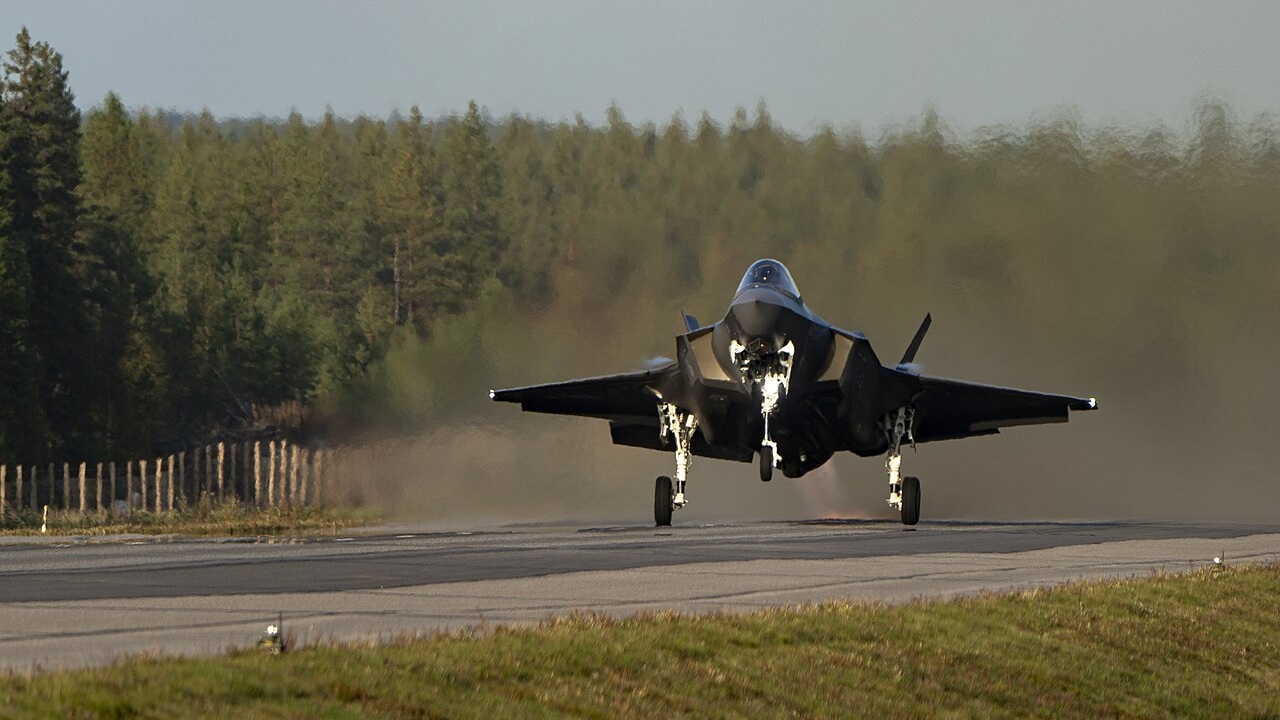
This concept has been tested in various unconventional settings, including highways and other temporary runways. In a hypothetical scenario involving a conflict with Russia, U.S. and NATO aircraft could use these impromptu runways to rearm and refuel close to the battlefield. Such operations not only enhance operational flexibility but also complicate enemy targeting efforts, as adversaries would find it harder to predict where aircraft might be resupplied.
Practical Implementation of FARP
The U.S. Air National Guard has been actively testing FARP through exercises like the “Distributable Integrated Combat Turn” (D-ICT). This operation aims to keep fighter jets fueled, armed, and ready for action within an hour. During recent drills, C-130 transport aircraft carried fuel and munitions to support F-35 Lightning II and F-15 Eagle fighter jets.
Lieutenant Colonel Doug Ferro, commanding officer of the 103rd Aircraft Maintenance Squadron, emphasized the importance of D-ICT in agile combat employment. He noted that during some exercises, maintainers were able to refuel and rearm multiple fighter jets simultaneously, showcasing the efficiency of the FARP model.
“This enables Combat Air Forces to deliver lethal airpower with unprecedented agility by leveraging Mobility Air Forces platforms for rapid, distributed operations,” Ferro said.
Training and Education in FARP Operations
The 103rd Aircraft Maintenance Squadron has become a leader in FARP operations, offering training programs to other units. Colonel Michael Blair, commanding officer of the 158th Fighter Wing, highlighted the significance of speed and flexibility in modern warfare. He stated that D-ICT allows the Air National Guard to project power rapidly wherever needed, especially in contested environments.
FARP operations are particularly relevant in near-peer conflicts, where the ability to maximize sortie rates from existing aircraft can be a decisive factor. By streamlining the rearming and refueling process, the U.S. military can maintain a continuous presence in the air, ensuring a strategic advantage over potential adversaries.
Conclusion
As global tensions continue to evolve, the FARP strategy represents a critical component of U.S. military planning. By focusing on rapid, distributed operations, the Air Force and its allies can sustain air power in high-intensity conflicts. With ongoing training and real-world testing, the FARP concept is becoming an essential tool for maintaining air superiority in the 21st century.

Post a Comment for "FARP: Air Force's Plan to Rapidly Rearm Fighters in War"
Post a Comment