Factory Town's Crisis Signals Japan's Waning Manufacturing Era
The Decline of a Manufacturing Icon
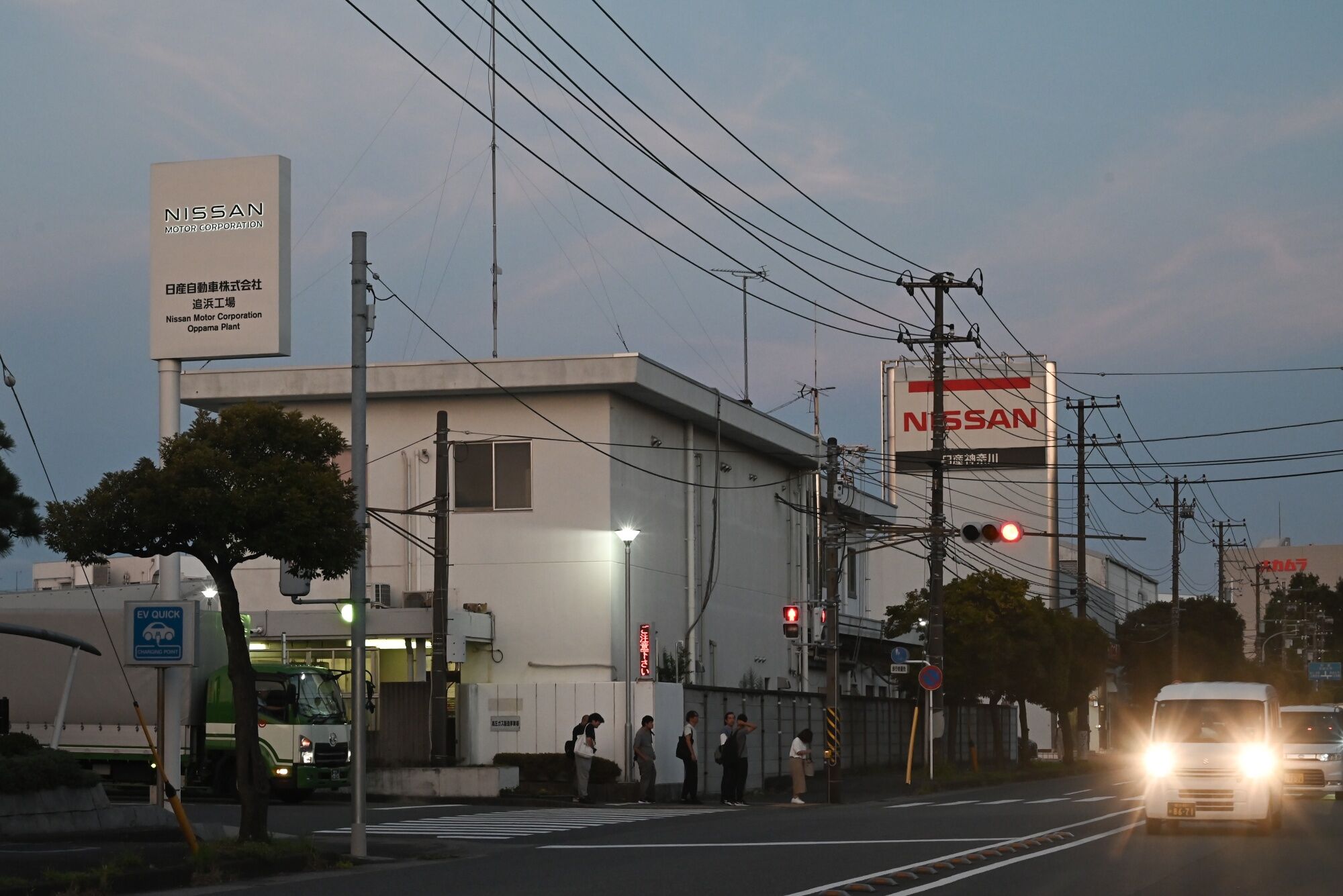
Nissan Motor Co.’s Oppama factory, which opened in 1961, was once a symbol of Japan’s postwar industrial success. It stood as a beacon of innovation and efficiency during a time when the country was rapidly becoming a global manufacturing powerhouse. However, the factory now faces an uncertain future, set to close by March 2028 as part of Nissan’s broader restructuring efforts. This decision comes in response to a decline in sales that has pushed the company into its worst financial crisis since Renault SA rescued it from near bankruptcy a quarter of a century ago.
The closure of Oppama highlights the challenges faced by traditional Japanese automakers in adapting to evolving consumer preferences. As market share shifts to companies like Tesla Inc. and Chinese automakers such as BYD Co., legacy brands are struggling to keep up with the pace of technological change. The fate of Oppama, along with the thousands of local residents who rely on the factory, serves as a cautionary tale for other Japanese manufacturers navigating a period of intense competition and consolidation.
A Town Built Around the Factory
Oppama is more than just a factory; it is a community deeply intertwined with Nissan’s operations. The plant directly employs nearly 10% of the town’s population of 29,700 residents. Local schools often take field trips to the facility, and the factory has played a central role in the social fabric of the area. For instance, Nissan revived its baseball team this year after a 16-year break, though they fell short in the semifinals against Toshiba Corp.
For many residents, the closure of Oppama represents a significant loss. Yuji Fujita, a third-generation owner of a fresh produce store near the factory, expressed concern about what the future holds. He drew comparisons to the 1995 shutdown of Nissan’s Zama plant, which marked the first factory closure by a major automaker in postwar Japan. “This is the worst-case scenario,” Fujita said, noting that his family has owned several Nissan cars over the years.
Uncertainty for Employees and the Future of the Site
The impact on employees is also a major concern. Approximately 2,400 people work at Oppama, and it is unclear how many will be transferred to a Nissan factory in Kyushu, located about 600 miles to the southwest. Keiichi Asakura, general secretary of the Nissan Motor Worker’s Union, emphasized that the priority is to determine what options will be available to current employees.
There is also uncertainty about what will happen to the site itself. Spanning 1.7 million square meters, the factory complex is roughly half the size of Central Park. Some residents speculate that it could be repurposed as a vacation resort, theme park, or even used by the private defense industry. Earlier reports suggested that Nissan was in discussions with Foxconn, but the company’s CEO, Ivan Espinosa, has stated that contract manufacturing is not under consideration.
Shifting Industry Dynamics
The closure of Oppama reflects broader changes in the automotive industry. While the factory once produced seven different models, it now only manufactures two: the Note subcompact hatchback and the Aura, both for the domestic market. The shift away from electric vehicles like the Leaf, which was once a groundbreaking product, underscores the challenges facing Nissan in a competitive landscape dominated by Tesla and Chinese automakers.
Nissan’s struggles are not unique. The company aims to reduce annual output from 3.5 million to 2.5 million units by consolidating production from 17 factories to 10, while cutting 20,000 jobs. These changes come with significant financial implications, including ¥160 billion ($1.1 billion) in impairments and restructuring charges.
A New Era for Japanese Industry
The closure of Oppama also signals a shift in the Japanese economy. The long-standing concept of shushin koyo—a job for life—is being challenged as small and medium-sized businesses face increasing pressure. Katsuaki Kamiji, mayor of Yokosuka, where Oppama is located, has urged Nissan to consider the impact on local employment and economic revitalization when deciding the site’s future.
Despite these challenges, there is hope for renewal. Analysts suggest that the automotive sector is undergoing a period of consolidation, with companies specializing in electric vehicles, autonomous driving, and high-efficiency engines gaining ground. Those without the necessary technology or capital may struggle to survive, leading to a “survival of the fittest” environment.
As the automotive industry continues to evolve, the story of Oppama serves as a reminder of the need for adaptability and innovation in a rapidly changing world.

Post a Comment for "Factory Town's Crisis Signals Japan's Waning Manufacturing Era"
Post a Comment