F-22 Gets New Upgrades—No F-47 Needed
The F-22 Raptor: A Legacy of Air Superiority
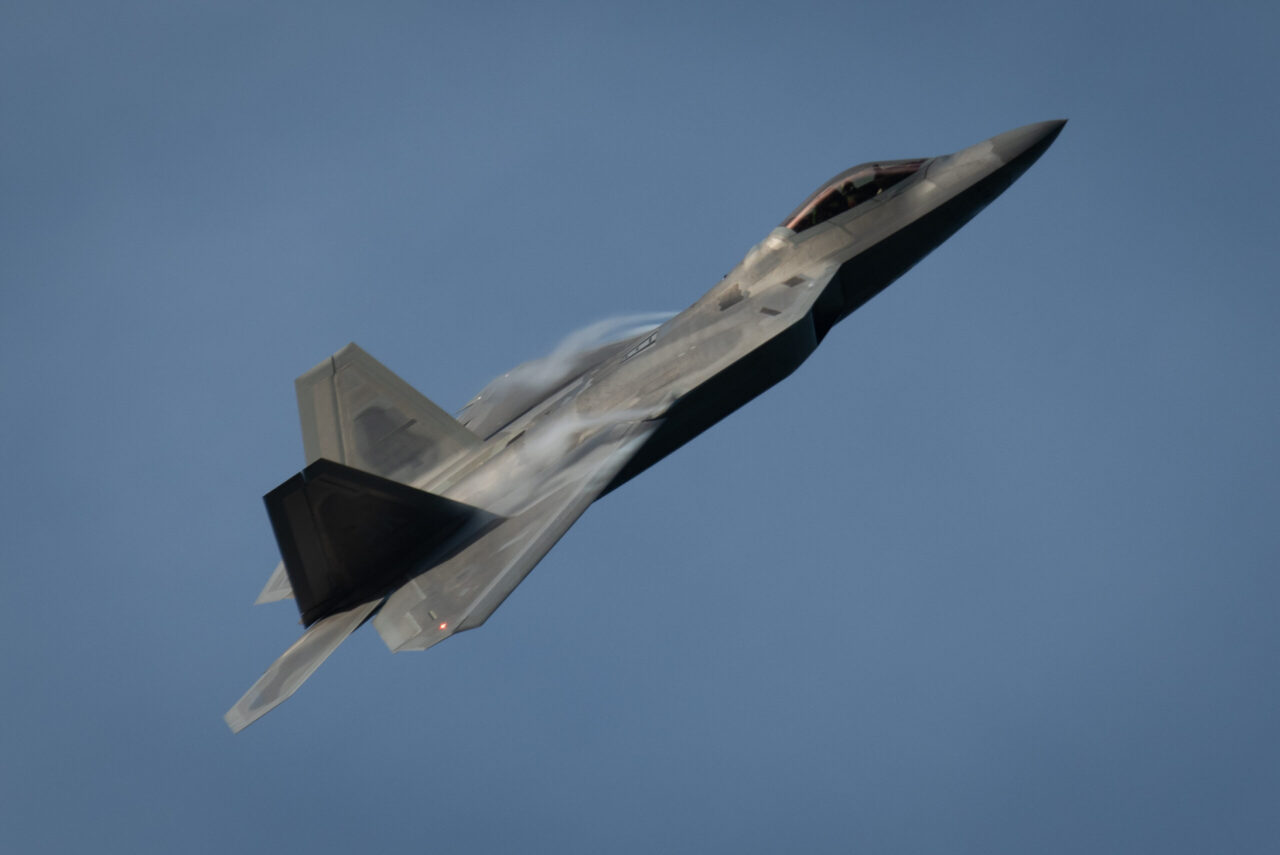
The F-22 Raptor, developed by Lockheed Martin for the United States Air Force, is widely regarded as the world’s premier air superiority fighter. Designed with a focus on stealth, advanced sensor fusion, and superior maneuverability, the F-22 has set the standard for fifth-generation fighters. Its capabilities include supercruise, thrust-vectoring engines, and low-observable materials that allow it to outmaneuver and outfight potential adversaries.
As global threats continue to evolve, especially with the emergence of peer competitors such as China and Russia, the U.S. Air Force has recognized the need to modernize its aging F-22 fleet. While the Trump administration authorized the development of a sixth-generation warplane, the F-47, the program has faced significant delays. In light of these challenges, the Air Force is focused on ensuring that the F-22 remains viable well into the late 2030s and beyond.
Upgrades and Modernization Efforts
To extend the service life of the F-22 into the 2040s, the Air Force has initiated a comprehensive suite of upgrades. These enhancements are supported by billions of dollars in funding, including a $7.8 billion investment plan through 2030. The upgrades aim to improve the aircraft's sensors, software, communications, electronic warfare capabilities, and weapons integration.
One of the most critical areas of modernization is the sensor suite. The F-22 is being equipped with the Infrared Defensive System (IRDS), a distributed set of tactical infrared search and track sensors that replace legacy missile launch detectors. This system enhances the aircraft's ability to detect and track emerging threats at greater ranges while maintaining stealth. Lockheed Martin secured a $270 million contract to integrate these next-generation infrared sensors, which also support threat tracking and countermeasures across multiple platforms.
Complementing this effort, RTX (via Raytheon) was awarded a $1 billion contract in August 2024 to upgrade sensors, including “Group B hardware” that may incorporate stealthy pods for Infrared Search and Track (IRST) capabilities. These podded IRST sensors, with initial production of 30 units slated for delivery by the second quarter of fiscal year 2028, will equip 142 Block 30/35 F-22s, enabling a “first look, first shot, first kill” advantage in air superiority missions.
Software and Technological Advancements
Both the F-22 and the F-35 Lightning II are often described as “flying computer chips,” highlighting the critical role of software in their capabilities. The Air Force is undergoing a drastic software upgrade for the F-22, with Increment 3.2B being the most recent update. This upgrade introduces high-resolution ground mapping SAR, threat geolocation, electronic attack (EA) capabilities, and integration with advanced munitions like the small diameter bomb I, AIM-120D, and AIM-9X.
In terms of weapons and sustainment, efforts under the Reliability, Availability, and Maintainability Program include electrical power improvements, avionic fiber optic replacements, durable low-observable materials, and structural fixes. Stealthy low-drag drop tanks and pylons will extend range while allowing supersonic flight with external fuel, enhancing persistence without sacrificing lethality.
Communications and Multi-Domain Operations
To integrate seamlessly into multi-domain operations, the F-22 is receiving communications upgrades that bridge gaps with legacy and future systems. The addition of Link 16 capability via the Multifunctional Information Distribution System/Joint Tactical Radio System enables two-way networking with fourth-generation warplanes, with fleetwide implementation underway. Broader avionics and communications suite enhancements improve reliability and data sharing, crucial for joint operations.
Collaborative Combat Aircraft Integration
Starting next year, all 142 combat-capable F-22s will be equipped with hardware kits—including tablets, cabling, and support equipment—to allow for the integration of Collaborative Combat Aircraft (CCA), or the “loyal wingman” drones. This will enable pilots to command autonomous drones via the F-22’s Inter-Flight Data Link, with software updates facilitating certification and integration. The F-22 will be the first fighter to command drone swarms, ensuring it remains the most advanced and important warplane in America’s arsenal.
Cybersecurity and Future Enhancements
Cybersecurity enhancements and pilot vehicle interface improvements further streamline pilot interactions, while upgrades to the AIM-120 AMRAAM missile’s guidance software increase processing power and extend flight time, bolstering air dominance. Electronic warfare (EW) suite enhancements, including counter-EW capabilities, address emerging threats, while the aforementioned Increment 3.2B upgrade adds EA functionality for jamming disruption.
Pilot-centric upgrades, such as the Thales Scorpion Helmet Mounted Display and Next Generation Fixed Wing Helmet, improve situational awareness in dynamic combat conditions. Future cryptographic upgrades will secure communications against cyber threats, ensuring the F-22 remains a formidable asset in any conflict.
Conclusion
These enhancements not only counter near-peer threats but also pave the way for seamless integration with future systems like CCAs. With contracts in motion and tests underway, the F-22 is poised to remain the world’s premier air superiority fighter for decades to come. The question remains whether the Pentagon will commit to sixth-generation programs when the F-22 continues to prove its reliability and effectiveness.

Post a Comment for "F-22 Gets New Upgrades—No F-47 Needed"
Post a Comment