Exploring Self-Disclosure in Video and Virtual Reality
Understanding Self-Disclosure in Modern Communication
Self-disclosure is a fundamental aspect of human interaction, involving the act of sharing personal details, thoughts, and emotions with others. It plays a critical role in communication by fostering self-expression, social validation, relationship development, and emotional intimacy. Factors such as reciprocity, trust, and mutual satisfaction are closely tied to the process of self-disclosure. As communication continues to evolve, especially with the rise of digital technologies, it's essential to explore how these changes affect the way people share their innermost thoughts.
In recent years, technological innovations have introduced new ways for people to connect. Video conferencing, virtual reality (VR), and other digital platforms have transformed traditional face-to-face interactions. These advancements have created opportunities for more immersive and dynamic forms of communication. However, they also raise important questions about how these tools influence self-disclosure and, ultimately, mental well-being.
A team of researchers from Japan has conducted a groundbreaking study on the impact of new communication media on self-disclosure. The research was led by Professor Junko Ichino from Waseda University, with contributions from several colleagues across different institutions. Their findings were published in Behaviour & Information Technology in June 2025.
The motivation for this research stemmed from Professor Ichino’s personal experience with VRChat, a popular social VR platform. She observed that users engaged in more direct and open conversations compared to traditional settings, sparking her interest in how virtual environments could influence communication patterns.
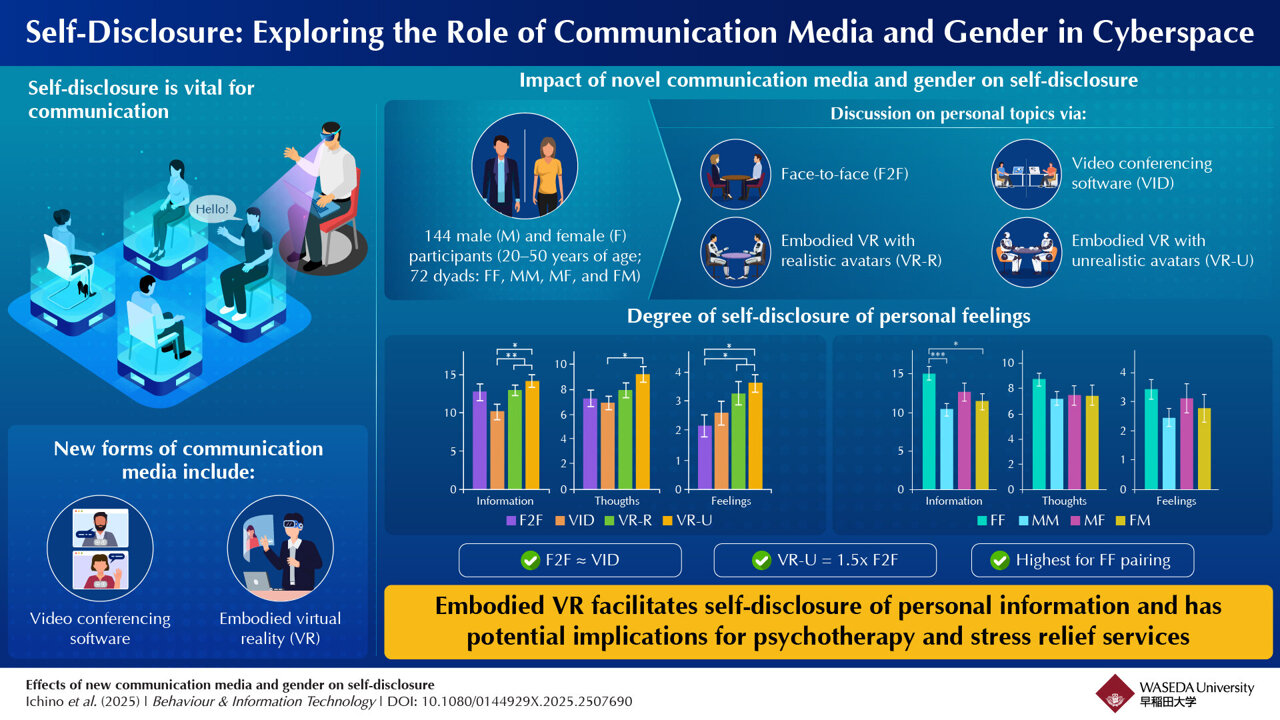
Previous studies have shown that text-based and voice-based communication often encourage greater self-disclosure than face-to-face interactions. However, the effects of newer technologies like video conferencing and embodied VR remained largely unexplored. To address this gap, the researchers designed an experiment involving 144 participants aged between 20 and 50. They were grouped into 72 pairs and asked to engage in conversations using four different communication methods: face-to-face, video, and two types of embodied VR (with realistic and unrealistic avatars).
The results revealed some fascinating insights. Participants in the embodied VR environment, particularly those using unrealistic avatars, showed significantly higher levels of self-disclosure compared to face-to-face interactions. In fact, the level of personal feeling shared in VR was 1.5 times greater than in traditional settings. Interestingly, video communication did not show a significant difference from face-to-face interactions.
Another key finding was the influence of gender pairings on self-disclosure. The researchers categorized the participants into four groups: female-to-female, male-to-male, male-to-female, and female-to-male. They found that female-to-female pairings consistently demonstrated the highest levels of self-disclosure, regardless of the communication medium used.
These findings suggest that embodied VR can be a powerful tool for encouraging deeper emotional connections. The potential applications of this research are vast, ranging from mental health services to support systems for caregivers and individuals experiencing stress or anxiety.
Prof. Ichino envisions a future where remote communication continues to play a vital role in achieving global goals, such as the United Nations’ Sustainable Development Goals. With increasing demand for mental health support, the insights gained from this study could lead to innovative interventions that enhance well-being and foster meaningful connections in digital spaces.
Overall, this research highlights the evolving nature of communication and the importance of understanding how new technologies shape human interaction. As we move further into the digital age, the implications of these findings could have a lasting impact on how we connect, express ourselves, and support one another emotionally.

Post a Comment for "Exploring Self-Disclosure in Video and Virtual Reality"
Post a Comment