European Leaders Meet With Zelensky and Trump on Monday
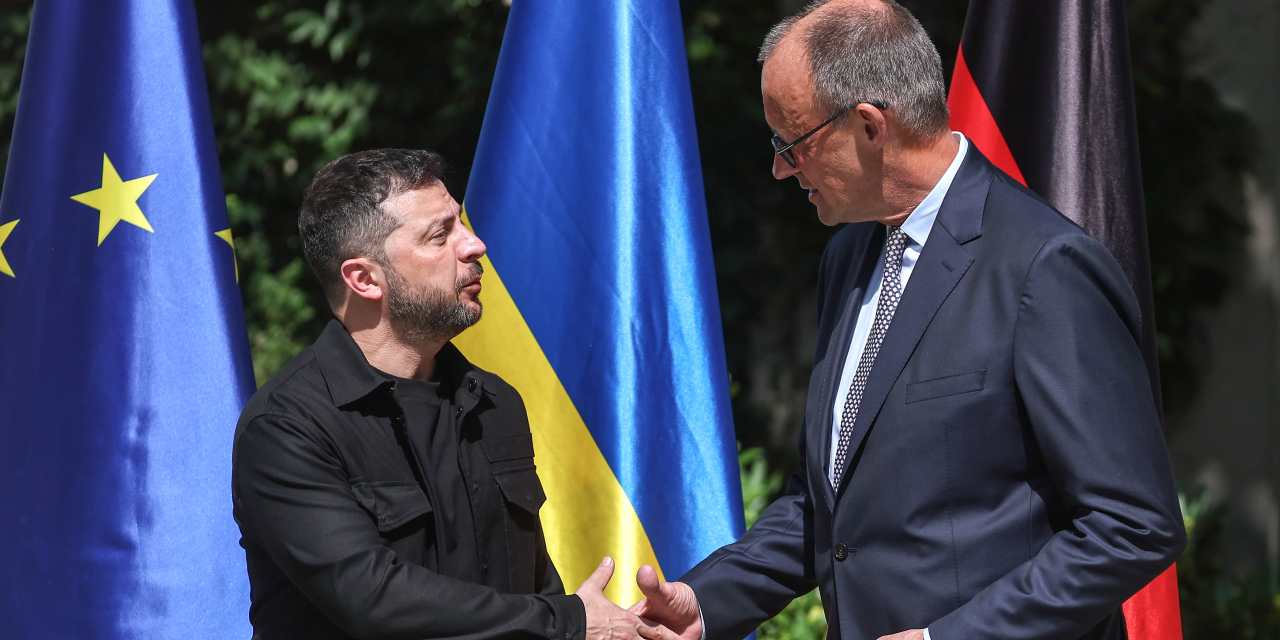
European and NATO Leaders Unite to Support Ukraine in Talks with Trump
European and NATO leaders are set to join Ukrainian President Volodymyr Zelensky in Washington for a high-stakes meeting with former U.S. President Donald Trump. This move comes as part of a coordinated effort to present a united front in discussions aimed at ending the ongoing conflict in Ukraine and securing stronger U.S. security guarantees. The meeting is expected to take place on Monday, following Zelensky’s exclusion from Trump’s recent summit with Russian President Vladimir Putin.
The participation of leaders from Britain, France, Germany, Italy, and Finland underscores the growing concern among European nations about the potential outcomes of the talks. Their decision to stand alongside Zelensky is seen as an attempt to ensure that the upcoming meeting does not repeat the tense encounter in February, when Trump reportedly criticized Zelensky during a private Oval Office meeting.
Retired French General Dominique Trinquand, a former head of France’s military mission at the United Nations, emphasized the importance of this support. “The Europeans are very afraid of the Oval Office scene being repeated and so they want to support Mr. Zelensky to the hilt,” he said. He added that the move could be a strategic position of strength, potentially influencing Trump’s approach.
Key Points from the Discussions
During a recent interview on CNN’s “State of the Union,” special U.S. envoy Steve Witkoff highlighted a significant development: Putin agreed to the possibility of offering Ukraine a security guarantee similar to NATO’s collective defense mandate. This was described as a “game-changing” moment, as it marked the first time the Russians had shown openness to such an arrangement.
French President Emmanuel Macron outlined plans for the European delegation to request U.S. support for measures designed to strengthen Ukraine’s armed forces. These include increased training, equipment, and long-term financial backing. Macron also proposed the establishment of an allied force within Ukraine, away from the front lines, to reinforce the stability of any peace agreement.
“This is what we must discuss with the Americans: Who is ready to do what?” Macron stated. He stressed that theoretical commitments would not suffice, emphasizing the need for concrete actions to ensure a credible security framework for Ukraine.
Broader Coalition and Strategic Considerations
Macron also mentioned a video call with several countries, including Canada, Australia, and Japan, to discuss the “coalition of the willing.” The coalition aims to create a sense of shared responsibility and commitment to Ukraine’s security. The proposed allied force, consisting of several thousand personnel, would signal a deepening of international ties and a shared interest in maintaining peace in the region.
European Commission President Ursula von der Leyen expressed support for Trump’s willingness to provide Article 5-like security guarantees for Ukraine. She noted that the EU and its partners are prepared to contribute their share to this effort.
However, experts caution that the success of these talks depends on the substance of the agreements rather than just the labels attached to them. “A theoretical article isn’t enough, the question is one of substance,” Macron said. He emphasized that a strong Ukrainian army is the first step toward ensuring security.
Challenges and Concerns
Despite the unified stance of European leaders, there are concerns about the potential for conflicting messages. Neil Melvin, director of international security at the Royal United Services Institute, warned that the large number of participants could lead to contradictory signals if not carefully managed. “The risk is they look heavy-handed and are ganging up on Trump,” he said, adding that Trump may resist being put in a corner.
Zelensky has continued to stress the importance of both U.S. and European involvement in negotiations. He highlighted the need for a strong Ukrainian army, which can be supported by European financing and European and domestic production of weapons. However, certain critical resources are only available in the United States.
Zelensky also challenged Trump’s stance on negotiating a complete end to the war without first securing a ceasefire. He argued that a ceasefire would provide much-needed breathing room to assess Putin’s demands and prevent further escalation.
Conclusion
As the situation in Ukraine remains volatile, the unity among European and NATO leaders is a critical factor in shaping the future of the conflict. The upcoming talks in Washington will be closely watched, with the hope that they can lead to a more stable and secure future for Ukraine and the broader region.

Post a Comment for "European Leaders Meet With Zelensky and Trump on Monday"
Post a Comment