Europe and China Commit to Climate Action in Tense Beijing Summit
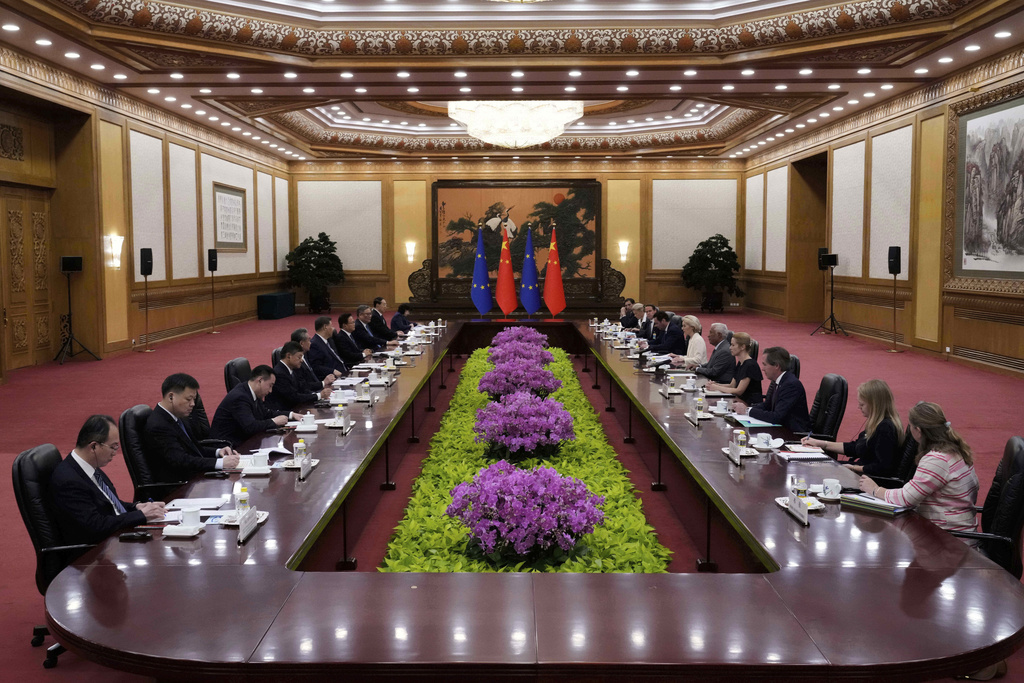
Joint Climate Call Amid Tensions in EU-China Talks
During a bilateral summit in Beijing, China and the European Union issued a joint statement on climate change, highlighting the importance of reducing emissions and promoting green technology. This collaboration came despite significant disagreements over trade and the ongoing conflict in Ukraine.
The joint statement emphasized the need for major economies to maintain policy stability and work together to address climate challenges. Both parties reaffirmed their commitment to the Paris Climate Agreement and called for strong action at the upcoming COP30 climate summit in Brazil. The statement underscored the importance of global cooperation in the face of an uncertain international landscape.
Trade Disparities and Calls for Balance
European leaders, including Ursula von der Leyen, President of the European Commission, stressed the need for a more balanced relationship with China during the talks. They pointed out growing imbalances in their economic relationship, noting that cooperation has deepened but so have the disparities. Von der Leyen stated that rebalancing their bilateral relations is essential for sustainability and mutual benefit.
However, expectations for meaningful progress were low. The summit, initially planned for two days, was shortened to one. This was due to global financial uncertainties, ongoing conflicts in the Middle East and Ukraine, and the looming threat of U.S. tariffs. Neither side is expected to make significant concessions on key issues.
EU’s Concerns About China's Influence
European Council President António Costa urged China to use its influence over Russia to end the war in Ukraine. This request, which has been made repeatedly by European leaders, is likely to go unheeded. Chinese President Xi Jinping emphasized the need for deeper cooperation between China and Europe to provide stability in a complex world. He called for setting aside differences and seeking common ground, a sentiment he often expresses in diplomatic engagements.
China expressed willingness to strengthen coordination on climate issues but pushed back against EU restrictions on Chinese exports. It urged the EU to keep its markets open and avoid using restrictive economic tools that could hinder Chinese companies operating in Europe.
US Tariff Threats and EU-China Cooperation
Beyond trade and the Ukraine war, EU leaders were expected to raise concerns about Chinese cyberattacks, espionage activities, and restrictions on the export of rare earth minerals. Additionally, they addressed human rights issues in regions such as Tibet, Hong Kong, and Xinjiang.
The EU also faces potential trade tensions with the United States, which complicates its relationship with China. Analysts suggest that the EU is cautious about appearing too close to China, especially given the possibility of further actions from a Trump administration.
China's Hardened Stance and Diplomatic Moves
Despite some gestures, such as lifting sanctions on European lawmakers who criticized China’s human rights record in Xinjiang, China's stance has become more rigid. Analysts note that the summit ended without significant progress on major issues like trade, electric vehicles, or Russia.
European frustration was evident, as their concerns have largely been ignored by Beijing. In response, the EU may employ more trade defense tools, including expanding safeguards and initiating new cases under its foreign subsidies regulation.
Trade Disputes and Economic Leverage
The EU runs a substantial trade deficit with China, estimated at around 300 billion euros last year. The bloc relies heavily on China for critical minerals used in cars and appliances. When China restricted exports in response to U.S. tariffs, European automakers raised concerns. During the summit, China agreed to start an upgraded export supply mechanism for critical minerals, though details remain unclear.
The EU has imposed tariffs on Chinese electric vehicles to support its own carmakers, while China seeks these tariffs to be lifted. The rapid growth of China’s market share in Europe has sparked fears that it could undermine the EU’s ability to develop its own green technology.
New Alliances and Strategic Shifts
Amid pressures from both the U.S. and China, the EU has sought new alliances. It has signed a trade pact with Indonesia and is working on agreements with South America and Mexico. Leaders from the EU also visited Tokyo, launching an alliance with Japan to boost economic cooperation and counter unfair trade practices.
Both Europe and Japan recognize the growing trend of protectionism and the exploitation of dependencies. Their partnership aims to strengthen each other in this challenging environment.

Post a Comment for "Europe and China Commit to Climate Action in Tense Beijing Summit"
Post a Comment