EPA Weakens Environmental Regulations
EPA Director Challenges Legal Authority to Regulate Greenhouse Gases
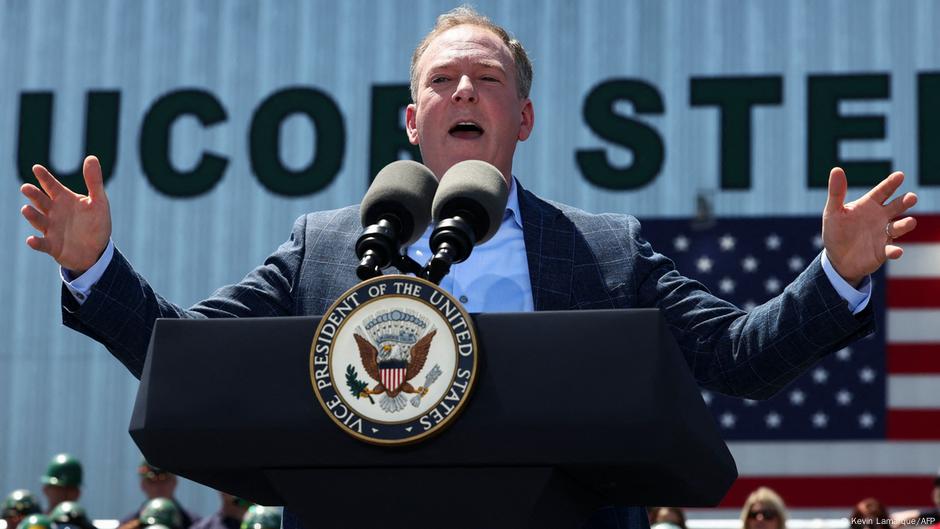
US Environmental Protection Agency (EPA) Director Lee Zeldin has made a bold statement regarding the agency's role in addressing climate change. During a recent address, Zeldin argued that the EPA does not have the legal authority to regulate greenhouse gas emissions. He emphasized that the foundational 2009 scientific assessment, known as the "endangerment finding," which supports federal efforts to control emissions, was based on flawed reasoning.
Zeldin pointed to the Supreme Court’s 2024 ruling on the "Chevron deference" as a critical factor in this debate. According to him, this decision means that the responsibility for regulating vehicle and energy emissions should rest with Congress rather than the EPA. “We do not have that power on our own to decide as an agency that we are going to combat global climate change because we give ourselves that power,” he stated.
The director also claimed that strict environmental regulations have significantly hindered the US economy. He pledged that the government would reduce emissions standards, suggesting that the proposed changes could be the most significant deregulatory action in American history. This announcement was made during a speech at the Kenworth Truck Factory in Indianapolis, Indiana.
A Shift in Perspective on Climate Policy
Zeldin, a Republican from New York, criticized previous Democratic administrations for what he described as an ideological approach to assessing the health threats posed by greenhouse gases. He highlighted the presence of Energy Secretary Chris Wright, a former executive in the gas industry, during his remarks.
An EPA press release noted that both the Obama and Biden administrations used the endangerment finding to justify over $1 trillion in regulations. The statement also claimed that scrapping the finding could save $54 billion annually. However, no supporting evidence was provided for these assertions.
Legal and Scientific Implications
The endangerment finding was a peer-reviewed assessment based on scientific consensus following the Supreme Court's landmark Massachusetts v. EPA case in 2007. In that case, the court ruled that the Clean Air Act gave the EPA the authority to regulate greenhouse gas emissions and ordered the administration to determine whether these gases endangered public health.
Zeldin suggested that repealing the endangerment finding would eliminate electric vehicle mandates and “drive a dagger into the heart of the climate change religion.” This move is expected to face legal challenges, with the administration likely hoping that the Supreme Court will overturn its 2007 decision.
Dan Becker, a representative from the Center for Biological Diversity, noted that it is unusual for the government to argue against stricter regulations rather than the industry itself. He expressed hope that the court would recognize the scientific basis of the endangerment finding and not allow political considerations to override it.
“There was a good reason for that [2007] precedent and no good reason to revoke it,” Becker said. However, he added, “this is a very political court.”
Next Steps and Public Input
The proposed changes will undergo a 45-day public comment period. Since returning to the White House in January, President Donald Trump has taken steps to withdraw the US from the Paris Agreement and has focused on expanding fossil fuel industries.
This shift in policy reflects a broader movement towards reducing regulatory burdens on businesses and prioritizing economic growth over environmental concerns. As the debate over the EPA’s role in climate policy continues, the outcome of this legal and political battle will have significant implications for the future of environmental regulation in the United States.

Post a Comment for "EPA Weakens Environmental Regulations"
Post a Comment