DOJ Seeks Supreme Court Help to Block Migrant Parole at Appeals Court
The Justice Department's Argument in the Appeals Court
The Justice Department (DOJ) presented its case before a three-judge panel of the United States Court of Appeals for the First Circuit on Tuesday, advocating that the Trump administration should be allowed to continue with a Biden-era mass parole program for hundreds of thousands of migrants. This argument was supported by a Supreme Court order issued in May, which stayed a lower court’s injunction against the program.
The case centers around the revocation of work permits and legal status for over 530,000 migrants who were brought into the U.S. under a Biden administration initiative. The DOJ is appealing a lower court’s decision to block this revocation, and the Supreme Court’s stay of the injunction remains in effect until the appellate process concludes.
The Supreme Court's Role in the Case
Deputy Assistant Attorney General Drew Ensign argued that the appeals court should follow the lead of the Supreme Court and reverse the lower court’s decision. He referenced the unsigned May 30 order from the high court, which stayed the district court’s injunction. Ensign emphasized that the Supreme Court’s decision, though not elaborating on its reasoning, indicated that the government is likely to prevail on appeal.
He also addressed concerns about the lack of clarity in the Supreme Court’s order, stating that while it was not a conclusive opinion, it suggested that a majority of justices believed the government had a strong case. Ensign further claimed that Homeland Security Secretary Kristi Noem’s decision to end the mass parole program was lawful and not subject to judicial review.
The Judges’ Questions and Concerns
The appeals court panel included two judges appointed by former President Joe Biden—Gustavo Gelpi and Lara Montecalvo—and one judge appointed by former President Barack Obama, William Kayatta. All three judges questioned the DOJ lawyer about the courts' ability to review the Trump administration’s decision to terminate the parole program.
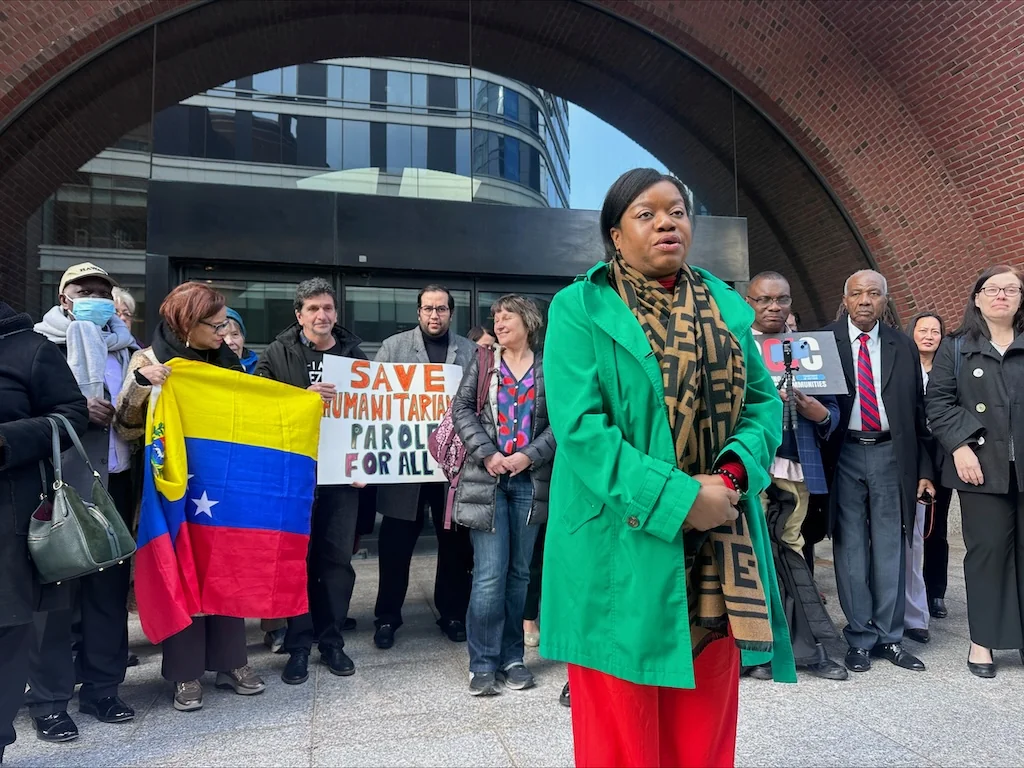
Justin Cox, a lawyer representing the coalition of groups challenging the termination of the program, faced scrutiny from the judges. He argued that Noem did not address the two grounds for which the parole program was established when she ordered its termination. Cox contended that the humanitarian conditions, one of the two reasons for the program, had not changed, and thus the termination was unjustified.
Cox also pointed out that the Supreme Court’s order lacked reasoning, making it difficult for the appeals court to rely on it. He argued that the court would have to speculate about the justices’ reasoning to give the order weight.
The Hearing and Next Steps
After a 90-minute hearing, the appeals court panel did not provide a timeline for ruling on the case. The outcome of the appeal could have significant implications for the future of the mass parole program and the broader debate over immigration policy.
The Supreme Court’s Emergency Docket
The Supreme Court has become a key player in several cases involving Trump administration policies. Its emergency docket has seen an increase in appeals from the DOJ seeking to pause lower court orders. The Court has issued several stays benefiting the Justice Department, including a recent one that referenced a previous stay in a similar case.
The unsigned majority opinion stated that emergency orders from the high court should guide how courts exercise their equitable discretion in similar cases. However, the Court acknowledged that these orders are not definitive opinions and should not be interpreted as such.
This ongoing legal battle highlights the complex interplay between federal agencies, the judiciary, and the Supreme Court in shaping immigration policy and its implementation. As the case moves forward, the decisions made at each level will continue to influence the fate of the mass parole program and the rights of the migrants involved.

Post a Comment for "DOJ Seeks Supreme Court Help to Block Migrant Parole at Appeals Court"
Post a Comment