Did AI "Scientists" Create a COVID Treatment?
The Evolution of Scientific Research: Introducing the Virtual Lab
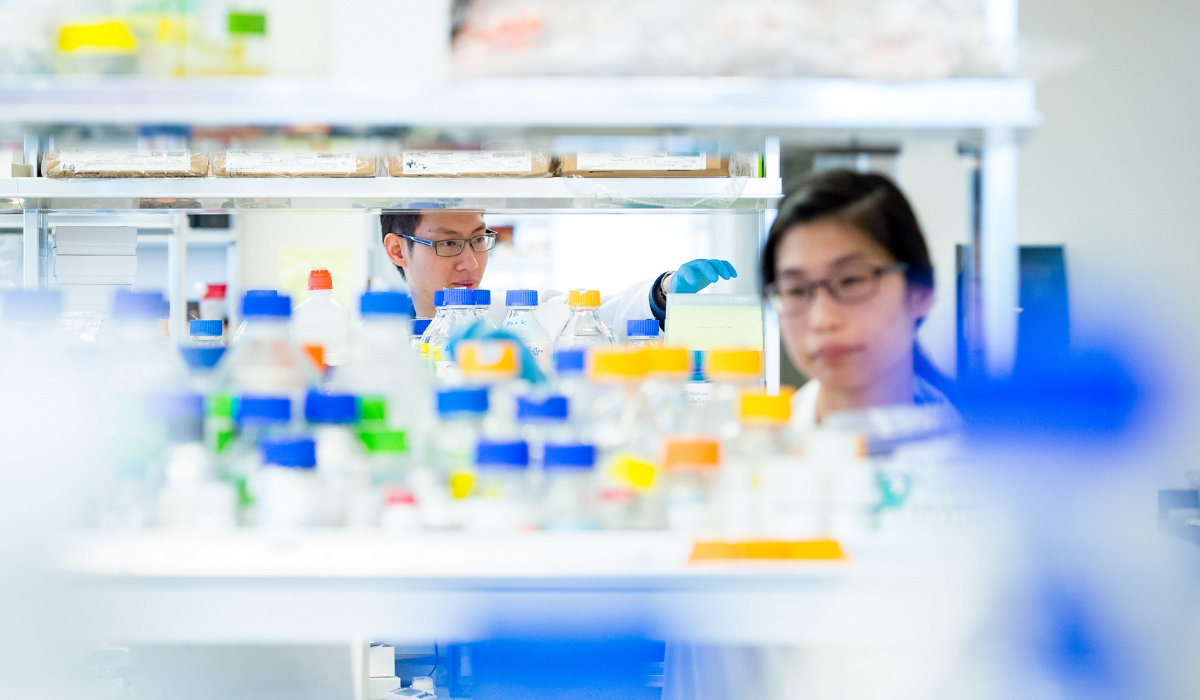
What does a scientist look like? Traditionally, one might picture someone in a lab coat with glasses, deep in thought over a microscope. However, the landscape of scientific research is rapidly changing, and today, scientists can take on many different forms — including AI-driven virtual teams working tirelessly behind the scenes.
At the forefront of this transformation is the "Virtual Lab," an innovative project developed by researchers from the Chan Zuckerberg Biohub in San Francisco and Stanford University. This initiative aims to harness artificial intelligence (AI) to assist in scientific discovery, particularly in the search for new treatments for diseases like COVID-19. The Virtual Lab represents a bold step forward in how science is conducted, blending human expertise with AI capabilities to accelerate progress.
A New Approach to Scientific Collaboration
The concept of the Virtual Lab was born out of a desire to replicate the collaborative spirit of traditional scientific teams but with the added efficiency of AI. James Zou, a professor at Stanford University and co-leader of the study, explained that the AI scientists within the Virtual Lab could act as assistants to human researchers, offering support across various stages of the research process.
This model is particularly promising in fields where rapid innovation is critical. For instance, the development of antibody treatments for evolving virus variants requires quick and accurate responses. The Virtual Lab was tasked with addressing this challenge, creating a team of AI scientists that could work together to propose potential treatments.
How the Virtual Lab Operates
The Virtual Lab functions through a structured approach, beginning with an AI Principal Investigator who oversees the entire process. This AI leader recruits a group of specialized AI experts, each equipped with tools tailored to their specific tasks. These tools include software for modeling proteins, writing code, and generating biological models.
Once the team is assembled, they engage in both group and individual meetings to brainstorm ideas and refine their proposals. In one notable example, the AI team decided to focus on nanobodies — smaller versions of antibodies — which could potentially offer more effective treatment options against new strains of the virus.
The efficiency of the Virtual Lab is one of its most impressive features. Unlike human meetings, which can be time-consuming and often involve lengthy discussions, the AI team can conduct multiple meetings simultaneously, significantly speeding up the research process. In just two days, the Virtual Lab proposed 92 different candidates for potential treatments, with two showing particular promise in laboratory tests.
Transparency and Trust in AI
One of the key advantages of the Virtual Lab is its ability to provide transparency in its decision-making process. Unlike some AI systems that operate as "black boxes," the Virtual Lab maintains a record of all its conversations and decisions. This level of detail allows human researchers to understand the reasoning behind the AI’s recommendations, fostering trust and collaboration between humans and machines.
John Pak, a biochemist and co-leader of the study, emphasized the importance of this transparency. He noted that while researchers may initially be hesitant to integrate AI into their workflow, the Virtual Lab's approach makes it feel more natural and reliable.
Challenges and Limitations
Despite its successes, the Virtual Lab is not without its challenges. AI systems can sometimes generate inaccurate or misleading information based on incomplete data. To address this, the team incorporated an AI scientific critic into the Virtual Lab, tasked with questioning the claims made by other AI members. Additionally, the lab often runs multiple sessions on the same question to ensure consistency in results.
Ultimately, the Virtual Lab still relies on human oversight. Scientists must guide the AI, verify its findings, and conduct real-world experiments to validate its suggestions. While the nanobodies identified by the Virtual Lab show promise in petri dishes, further testing is needed to determine their effectiveness in human bodies.
Future Possibilities
The researchers believe that the Virtual Lab has the potential to revolutionize scientific research across various disciplines. By providing a platform for AI-driven collaboration, it could help accelerate discoveries in fields ranging from medicine to environmental science.
Samuel Rodrigues, an AI researcher not involved in the study, praised the approach as "very visionary" and highlighted its importance in integrating AI into scientific workflows. While he acknowledged that the system may need adjustments for different tasks, he argued that these are minor hurdles in the broader context of AI's potential impact.
Conclusion
The Virtual Lab represents a significant leap forward in the integration of AI into scientific research. By combining the strengths of human expertise with the speed and efficiency of AI, it offers a powerful tool for tackling complex problems. As the field continues to evolve, the lessons learned from the Virtual Lab could pave the way for even more groundbreaking discoveries in the future.

Post a Comment for "Did AI "Scientists" Create a COVID Treatment?"
Post a Comment