Democrats Receive Police Protection to Stop Redistricting Protest as California Retaliates
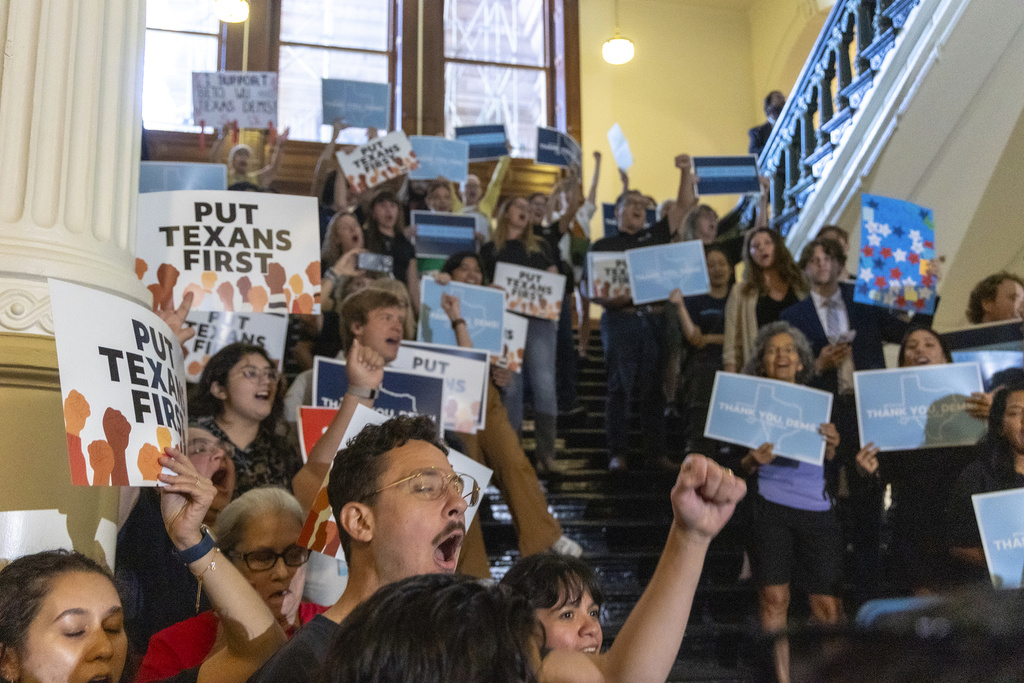
Texas Democrats Return Amid Surveillance and Political Tensions
Texas Democrats, who had previously walked out of the state legislature to block Republican efforts to redraw congressional districts, returned to Austin on Monday. Their return came with a heavy presence of law enforcement officers, as Republicans sought to ensure that the Democrats would not disrupt the redistricting process again. This move was part of a broader effort to fulfill President Donald Trump’s goal of reshaping U.S. House maps in favor of the Republican Party.
The situation escalated when Republican lawmakers required returning Democrats to sign what they called “permission slips,” allowing for around-the-clock surveillance by state Department of Public Safety officers. However, Democratic Rep. Nicole Collier of Fort Worth refused to comply, choosing to remain on the House floor even as the surveillance intensified.
The return of the Democrats has placed the Republican-led legislature in a position to finalize the redistricting process, potentially as early as later this week. Meanwhile, California Democrats are advancing their own congressional boundary proposals in response to the Texas developments. This tit-for-tat dynamic has placed the two most populous states at the center of an expanding fight over control of Congress ahead of the 2026 midterm elections.
A New Era of Partisan Conflict
The conflict between Texas Republicans and Democrats has drawn national attention, especially after dozens of Texas Democratic lawmakers left the state in August to prevent Republicans from passing the redistricting maps. By doing so, they denied the Republicans the necessary quorum to vote on the proposed changes. Republicans currently hold 25 of Texas’ 38 U.S. House seats, and the new maps could increase that number further.
California's actions have added another layer to the political battle. The state’s Democratic leadership introduced new congressional boundaries, aiming to expand their party’s advantage by five seats. This move follows the precedent set by California’s independent redistricting commission, which is expected to face challenges from the proposed changes.
Democratic lawmakers in Texas have vowed to challenge the new maps in court, even as they acknowledge that Republicans can now approve the redistricting. State House Minority Leader Gene Wu emphasized that the fight will continue, highlighting the importance of protecting fair representation for all constituents.
Law Enforcement and Surveillance Intensify
The return of the Democrats did not come without its challenges. Lawmakers were accompanied by law enforcement officers outside their Capitol offices, creating an atmosphere of tension. Representative Mihaela Plesa of suburban Dallas shared her experience of being followed by an officer during her evening commute, including a staff lunch and even restroom breaks. While she found some humor in the situation, she described it as a waste of taxpayer dollars and performative theater.
Collier, who represents a minority-majority district, made it clear that she would not "sign away my dignity" or allow Republicans to monitor her movements. She expressed concerns that the new maps would harm her constituents and vowed to resist what she sees as intimidation and discrimination.
National Implications of Redistricting
Redistricting has become a critical issue across the country, with both parties recognizing its impact on future elections. Trump has urged other Republican-run states to consider similar redistricting efforts, while Democratic governors have signaled their intent to follow California’s lead. In California, Governor Gavin Newsom announced plans for a Nov. 4 special referendum on the redrawn districts, adding another layer of complexity to the process.
The current partisan makeup of existing district lines puts Democrats within three seats of a majority in the U.S. House. With only a handful of competitive districts, even small changes in key states could shift the balance of power. Redistricting typically occurs once every decade following the census, but the process remains highly politicized.
Texas Governor Joins the Battle
Texas Governor Greg Abbott played a central role in escalating the conflict by adding redistricting to the agenda of a special session that also included measures addressing devastating floods. Abbott has blamed Democrats for delaying action on these issues, while Democrats argue that the governor unfairly linked the partisan matter to nonpartisan flood relief efforts.
Abbott, along with other Republicans, has used various legal and political tactics to pressure Democrats to return. Despite threats and legal maneuvers, the lawmakers who left Texas were able to return without facing detention. They now face fines for each legislative day they missed, and Republicans have insisted that the Democrats will also cover the costs of law enforcement efforts during the walkout.
Ongoing Struggles and Future Outlook
As the political battle continues, both parties remain committed to their respective strategies. Democrats in California have introduced new maps aimed at expanding their influence, while Republicans in Texas are preparing to finalize their redistricting plans. The outcome of these efforts will have lasting implications for the balance of power in Congress and the future of American politics.
With the 2026 midterms on the horizon, the stakes have never been higher. The fight over redistricting is not just about maps—it’s about the future of representation, democracy, and the ability of each party to shape the political landscape in their favor.

Post a Comment for "Democrats Receive Police Protection to Stop Redistricting Protest as California Retaliates"
Post a Comment