Democrats leverage competitive districts for limited budget gains
A Historic Budget Deal in Wisconsin
Wisconsin’s recent state budget marked a significant shift in the political landscape of the state. For the first time in nearly two decades, the University of Wisconsin System received its largest funding increase. Additionally, over $360 million was allocated to support the child care industry, and public schools saw a $1.4 billion revenue boost. These developments were made possible through a bipartisan effort that saw Senate Democrats trading their votes for key policy wins.
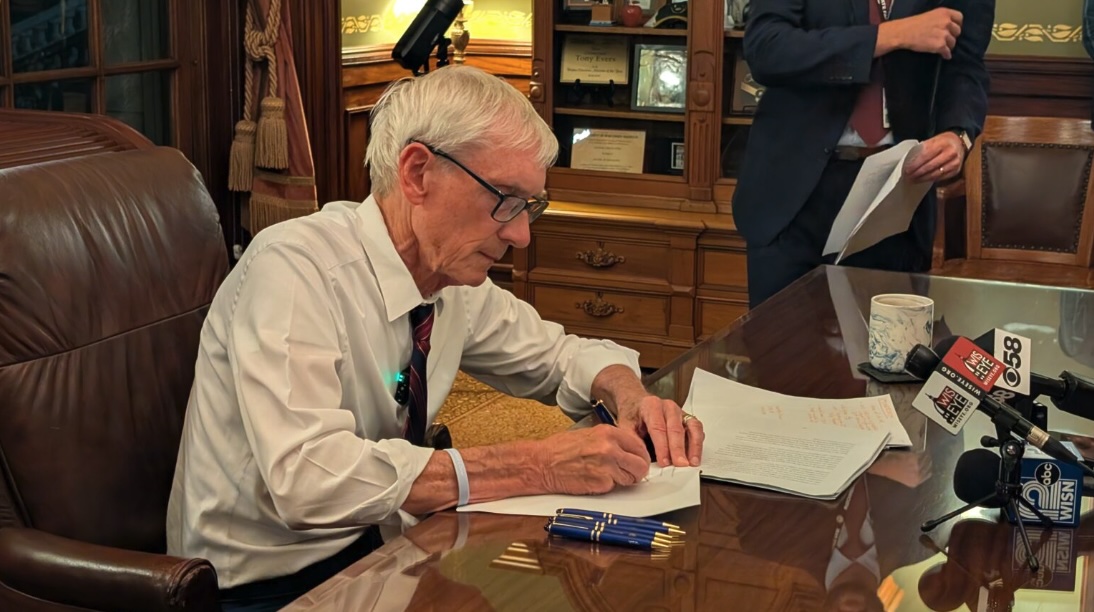
Governor Tony Evers, who is not seeking re-election in 2026, signed the $111 billion, two-year budget on July 3, just a day before President Donald Trump signed his “One Big Beautiful Bill.” The budget passed with bipartisan support, highlighting the changing dynamics in the state legislature.
Evers initially proposed an $119 billion budget in February, but the Republican-controlled Joint Finance Committee significantly reduced many of his proposals when they began their work in May. Despite this, the Republicans needed Democratic support to pass the budget, as they struggled to secure enough votes on their own.
The new political districts, which were established following a 2023 ruling by the state Supreme Court, led to Democrats gaining 10 more seats in the Assembly and four in the Senate. This shift created a more competitive environment, giving Democrats some leverage in negotiations.
However, not all Democrats were satisfied with the final outcome. State Rep. Francesca Hong criticized the budget, calling it a "false compromise" that failed to address the needs of working families. She argued that the deal allowed Republicans to avoid accountability while underinvesting in communities.
Experts like Ed Miller, a professor emeritus at UW-Stevens Point, noted that the budget was a result of the tight margins in the legislature and the need to meet a deadline. He pointed out that if the budget had not been passed, Wisconsin could have lost federal health payments.
Key Points of the Budget
- University of Wisconsin System: Received $256 million in state funding, though this falls short of the $800 million requested.
- Child Care Industry: Over $360 million was allocated, with a third going directly to providers.
- Public Schools: A $1.4 billion increase in revenue, although experts note that the funding primarily benefits special education rather than general school aid.
Despite these allocations, concerns remain about the long-term impact on public education. According to a report from the Wisconsin Policy Forum, the state's per-pupil spending has dropped from No. 11 in 2002 to No. 26 in 2023.
Bipartisan Efforts and Compromises
The budget was passed with a 59-39 margin in the Assembly and a 19-14 vote in the Senate. Several Senate Democrats, including Minority Leader Dianne Hesselbein, supported the budget, emphasizing the importance of addressing key priorities such as public schools, child care affordability, and investment in the UW System.
While the budget included tax relief measures, some lawmakers expressed disappointment with the lack of broader investments. Senator Brad Pfaff, who voted for the budget, acknowledged the targeted tax cuts but voiced concerns about the lack of funding for general school aid.
Assistant Senate Majority Leader Dan Feyen highlighted the budget's focus on tax relief and reforms, stating that it delivered meaningful investments across key areas. He emphasized the need for a Republican governor to manage the divided state government effectively.
The Impact of Competitive Districts
The new political landscape has forced both parties to find common ground. With Democrats gaining more seats, the need for compromise has become more apparent. This shift has also encouraged discussions about the potential for a legislative flip in future elections.
Local news sources, such as the Racine County Eye, continue to play a vital role in keeping communities informed. Their coverage highlights the importance of local journalism in reflecting the diverse perspectives of the region.
In conclusion, the recent budget deal in Wisconsin represents a significant step toward bipartisan cooperation. While it may not fully satisfy all stakeholders, it underscores the evolving political dynamics in the state and the importance of finding balanced solutions to address critical issues.

Post a Comment for "Democrats leverage competitive districts for limited budget gains"
Post a Comment