DC Students Return to School as Trump Targets Juvenile Crime Reform
Community Celebrates Back-to-School with Concerns Over Federal Presence
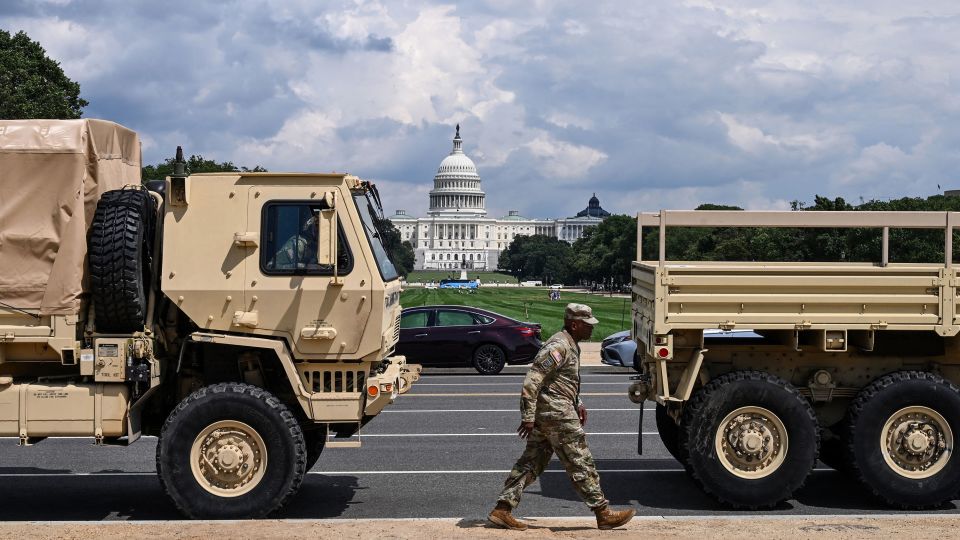
In southeast Washington, DC, children gathered in line on a Friday morning to receive new backpacks filled with school supplies. Alongside the event, community organizers handed out free hot dogs and hamburgers to teenagers as a way to celebrate the last days of summer. However, just a few blocks away, the sight of National Guard trucks disrupted the festive atmosphere, serving as a stark reminder that the start of the school year would be accompanied by a visible federal military presence.
Activists and parents are expressing concerns about how this deployment might affect students, particularly those from marginalized communities. Dara Baldwin, an activist on the Free DC advisory council, shared her fears with HAWXTECH, highlighting that many middle school students walk to school alone and may now have to pass through soldiers and police. She warned that this could lead to fear among students, potentially causing them to avoid school or react negatively to the presence of law enforcement in their neighborhoods.
President Donald Trump’s decision to place the District of Columbia’s police department under federal control and deploy National Guard troops has sparked worry among parents, activists, and youth advocates. The administration claims that this move is necessary to combat what it describes as “roving mobs of wild youth.” However, data from the DC Policy Center shows that the juvenile arrest rate in DC is nearly double the national average. Despite this, recent statistics from the Criminal Justice Coordinating Council indicate that total juvenile arrests have remained relatively stable since 2023.
Looking at specific trends, juvenile arrests for violent offenses dropped between 2019 and 2020 but saw a rise again in 2022 and 2023 before decreasing slightly in 2024. Youth advocates suggest that the city's investment in programs targeting young people has contributed to the decline in violent crime. In 2023, Mayor Muriel Bowser declared a juvenile crime emergency, directing resources toward addressing the issue.
This year, the DC Council approved stricter juvenile curfews, giving the police chief more authority to implement emergency measures. These curfews have been enforced around areas like Navy Yard, raising concerns among activists that Black and Latino youth are being disproportionately targeted.
Kelsye Adams, an activist for DC statehood, expressed her frustration during a rally outside the Metropolitan Police Department headquarters, stating that the focus seems to be on inner-city youth. She noted that police checkpoints and increased patrols are directly affecting young Black and brown individuals.
The White House defends its policies, claiming they aim to make DC safer. A spokesperson stated that previous efforts to address juvenile crime had not been effective and that Trump’s actions are intended to improve public safety for all residents.
While some parents support the increased presence of law enforcement, others remain skeptical. Kim Hall, a longtime resident with three children in the DC public school system, believes the police presence could reduce violence in certain areas. Similarly, Anthony Motley, a DC resident with ten grandchildren in the school system, supports any measure that protects the future of young people.
However, educators like Sharelle Stagg are unsure if increased patrols will truly benefit students. Tahir Duckett, an expert at Georgetown Law School, warns that heavy-handed tactics can lead to distrust between communities and law enforcement, potentially increasing crime rates.
Youth advocates emphasize that Black and Latino youth are most likely to be affected by the heightened law enforcement presence. Carlos Wilson, who works with a group supporting inner-city youth, argues that resources and opportunities, rather than police, are needed to create lasting change.
As the school year approaches, the debate over the best way to ensure safety and support for DC’s youth continues to unfold.

Post a Comment for "DC Students Return to School as Trump Targets Juvenile Crime Reform"
Post a Comment