CT Joins 20 States in Suing DOJ Over Immigration Fund Rules
A Coalition of Attorneys General Challenges Federal Funding Conditions
A coalition of attorneys general from 20 states and Washington, D.C., has taken legal action against the U.S. Department of Justice (DOJ) over its attempt to condition federal funds for crime victims on state cooperation with immigration enforcement efforts. The lawsuit was filed in a federal court in Rhode Island and seeks to block the DOJ from withholding these funds if states do not comply with certain conditions.
The core issue revolves around the conditions imposed by the Trump administration, which would cut funding to a state or subgrantee if it refuses to honor civil immigration enforcement requests, denies access to facilities for U.S. Immigration and Customs Enforcement (ICE) officers, or fails to provide advance notice of release dates for individuals potentially wanted by ICE due to their immigration status. The attorneys general argue that these conditions are unconstitutional and exceed the administrative authority of the DOJ.
They claim that the requirements are not outlined in the Victims of Crime Act (VOCA), which governs the distribution of these funds. VOCA provides over $1 billion annually to states for victim compensation programs and grants that support organizations assisting crime victims. These funds come entirely from fines and penalties in federal court cases, not from taxpayer dollars.
The lawsuit emphasizes that the conditions would interfere with policies designed to ensure victims and witnesses report crimes without fear of deportation. This is particularly concerning for marginalized communities, including newly arrived immigrants, who may be more vulnerable to crime and less likely to seek help if they fear repercussions.
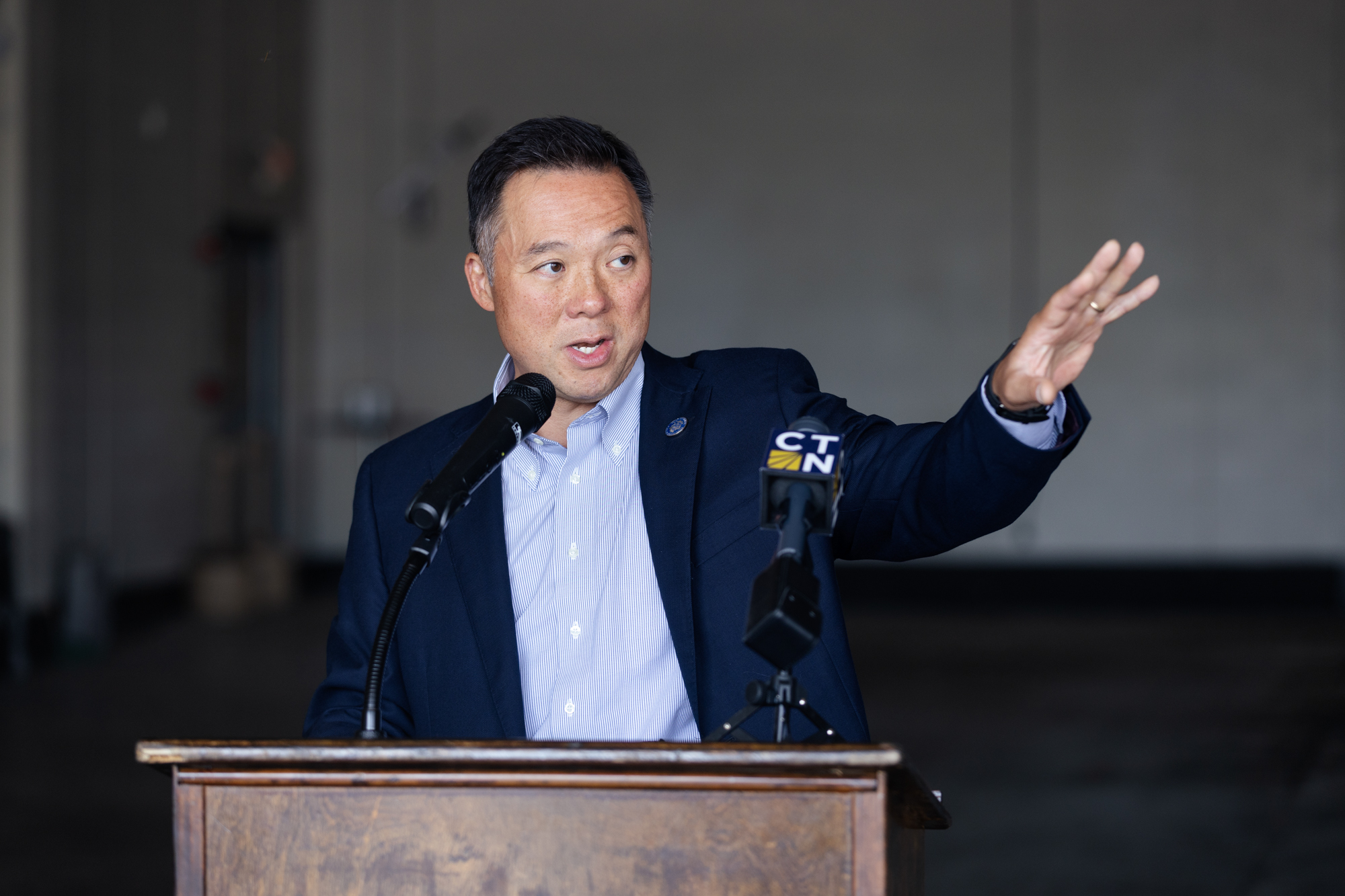
New Jersey Attorney General Matthew J. Platkin described the administration’s threat to withhold funds as “the most heinous act” he has seen in politics. He stressed that crime victims did not ask for their status and that they should not be penalized for seeking help. Connecticut Attorney General William Tong echoed similar sentiments, calling the conditions an insult to survivors and law enforcement.
Tong’s office noted that $14.5 million in federal funding was at stake for Connecticut. He criticized the administration’s approach, stating that tactics such as rounding up parents on their way to school or seizing children at summer jobs do not enhance public safety but instead create fear and instability.
VOCA funds are used to support various services, including medical expense reimbursement, crime scene cleanup, counseling, and funeral costs for homicide victims. They also cover about 75% of state compensation program awards. Additionally, these funds are used to test rape kits, support domestic violence recovery organizations, and fund trauma recovery centers.
Advocates argue that the system must protect all victims regardless of their immigration status and ensure that reporting a crime does not lead to deportation threats. New York Attorney General Letitia James, who joined the lawsuit, stated that the grants were created to help survivors heal and recover, and her office will fight to ensure they continue to serve this purpose.
The Trump administration has previously sought to withhold or cancel federal funding, citing disagreements with recipients' priorities. In April, it canceled about $800 million in DOJ grants, some of which were awarded to victims service and survivor organizations. In June, states filed a lawsuit over added requirements in Violence Against Women Act funding that mandated applicants agree not to promote "gender ideology" or run diversity, equity, and inclusion programs.
Several attorneys general believe the VOCA conditions are another strategy to target sanctuary jurisdictions—areas that limit cooperation with federal immigration authorities. While there is no clear definition of what constitutes a sanctuary state or city, the Trump administration has released updated lists of such jurisdictions. U.S. Attorney General Pam Bondi emphasized the administration’s commitment to litigating against these policies and working with the Department of Homeland Security to eliminate them.
As of Monday, attorneys general from California, Colorado, Connecticut, Delaware, District of Columbia, Hawaii, Illinois, Maine, Maryland, Massachusetts, Michigan, Minnesota, Nevada, New Jersey, New Mexico, New York, Oregon, Rhode Island, Vermont, Washington, and Wisconsin—all Democrats—had signed on to the lawsuit. Their unified stance reflects a strong opposition to the administration’s approach and a commitment to protecting crime victims and ensuring public safety.

Post a Comment for "CT Joins 20 States in Suing DOJ Over Immigration Fund Rules"
Post a Comment