Critics Demand Closure of 'Alligator Alcatraz' Over Environmental Fears
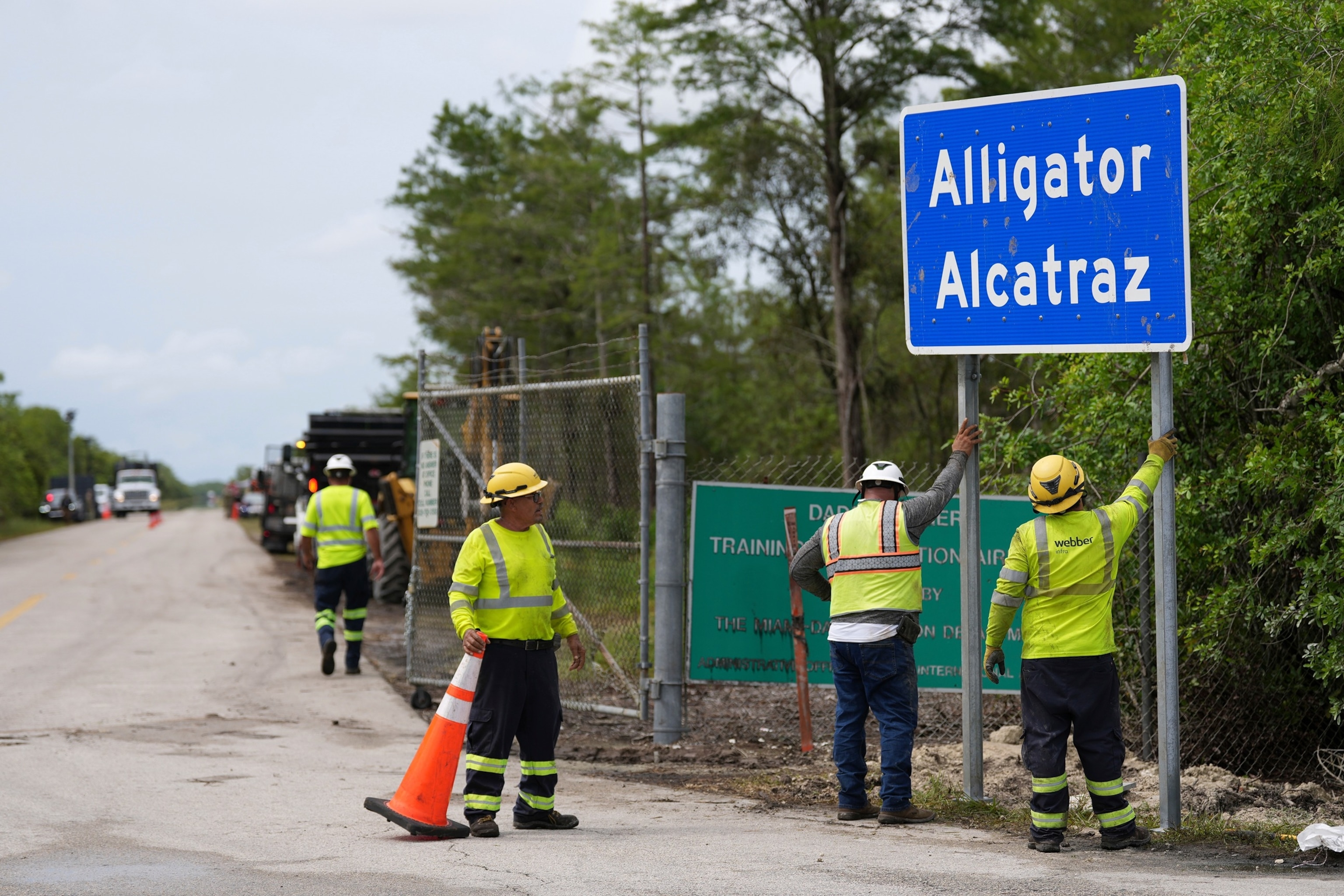
Environmental Concerns and Legal Uncertainty Surround "Alligator Alcatraz"
An eight-hour hearing focused on environmentalists' concerns about the Florida migrant detention center known as "Alligator Alcatraz" concluded on Wednesday with more questions than answers regarding the facility's management. The hearing was intended to address whether federal and state officials bypassed legally required environmental impact studies during the construction of the facility, which plaintiffs argue should prevent it from operating as a detention center.
The judge overseeing the case, U.S. District Judge Kathleen Mary Williams, initially expected to hear from multiple state and federal officials but only managed to hear from five witnesses called by the environmental groups that filed the lawsuit. This led to frustration among those involved, with the judge stating at one point, "I have still no idea what is going on."
The hearing was originally scheduled to last one day but has been extended to Thursday, with additional environmental witnesses set to testify. Following this, witnesses from the state of Florida and the Department of Homeland Security are expected to provide their input on Tuesday, August 12.
Environmental Impact and Local Concerns
Environmental groups presented a series of witnesses who highlighted the potential harm caused by the facility. One witness, Jessica Namath, described the constant flow of vehicles entering the site, including heavy construction trucks. She noted that the facility has become a hub of activity, with up to 30-40 vehicles arriving per hour.
Randy Kautz, an expert in Florida wildlife, testified that the detention center is located in a "core area" for the endangered Florida panther. He warned that increased human activity could threaten the recovery efforts for the species. Kautz explained that the area has supported a stable population of panthers for over 30 years and that the facility’s presence could reduce the usable terrain for these animals by approximately 19%.
Amber Crooks, a member of the Center for Biological Diversity, also spoke about the impact of the facility on the Big Cypress Preserve. She expressed concern about the lack of a public comment period before construction began, emphasizing her love for the preserve and its wildlife.
Legal and Political Disputes
Attorneys representing Florida officials argued that the facility was initially funded, constructed, and managed by the state, making it exempt from the National Environmental Policy Act (NEPA). However, environmental groups countered this claim by calling Florida state Rep. Anna Eskamani, who testified that the Department of Homeland Security played a key role in the facility’s establishment.
During a guided tour of the facility, Florida Division of Emergency Management Executive Kevin Guthrie allegedly told Eskamani and other lawmakers that the facility was built at the direct request of the Department of Homeland Security. Eskamani also criticized the facility, describing it as a "half-billion-dollar anti-immigrant grift" in the past.
Eve Samples, executive director of the nonprofit Friends of the Everglades, testified that the environmental impact of the facility has already been felt. She pointed out the increased traffic and high-power lights that make the facility visible from miles away.
Ongoing Jurisdictional Issues
The facility has operated in what immigration advocates describe as a jurisdictional gray zone, with funding coming from the federal government but operations managed by the state of Florida. This ambiguity has raised concerns about whether legal requirements are being followed.
Florida Governor Ron DeSantis has claimed that the state is "implementing" the federal government’s immigration policy, expecting full reimbursement for the costs of Alligator Alcatraz. However, officials have yet to clarify who is actually in charge of the facility.
Broader Implications
The hearing comes amid heightened scrutiny of the facility, which was once described as a "one-stop shop to carry out President Trump's mass deportation agenda." The Miccosukee Indian Tribe recently joined the lawsuit, arguing that the facility threatens nearby tribal villages, including sacred sites and traditional hunting areas.
As the legal battle continues, the question of who controls the facility and whether it complies with environmental laws remains unresolved. The outcome of this case could have significant implications for future detention centers and the protection of sensitive ecosystems.

Post a Comment for "Critics Demand Closure of 'Alligator Alcatraz' Over Environmental Fears"
Post a Comment