Cracking Moonseed's Chemical Mystery to Redefine Plant Evolution
A New Breakthrough in Plant Evolution and Drug Development
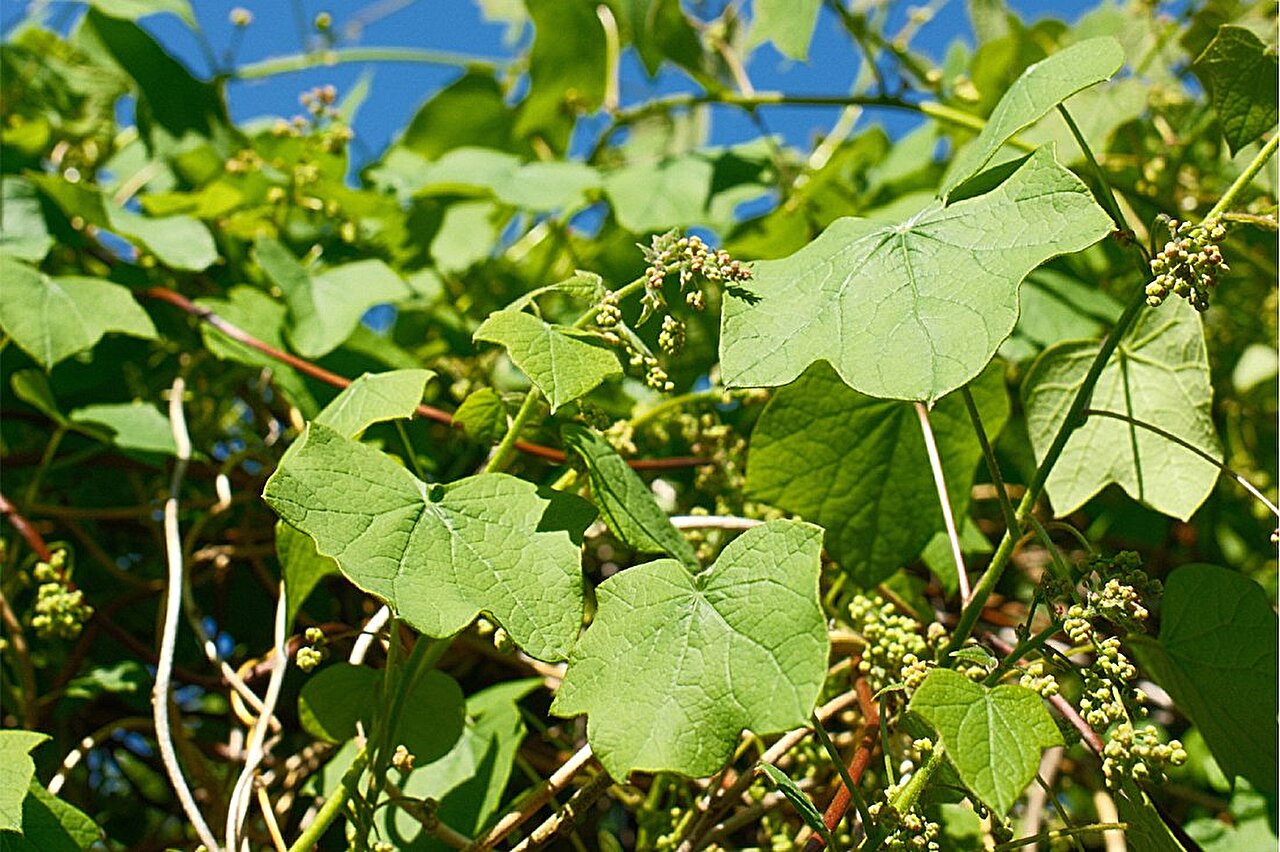
A recent discovery by researchers at Northeastern University has unveiled new insights into the evolution of plants, with significant implications for the development of life-saving drugs. This breakthrough has traced, for the first time, the genetic and molecular path that a specific plant, known as Canadian moonseed, took to perform a chemical reaction that was previously thought impossible for a plant to do naturally: adding a chlorine atom to a molecule.
The findings, published in Science Advances, highlight potential opportunities for creating more efficient methods of pharmaceutical development. According to Jing-Ke Weng, a professor of chemistry, chemical biology, and chemical engineering at Northeastern, this research is akin to "a molecular detective story millions of years in the making."
Weng describes the work as molecular archaeology, emphasizing how understanding past evolutionary processes can help explain current biological states. The study focused on an enzyme called dechloroacutumine halogenase, or DAH, which enables moonseed to produce acutumine—a compound that helps the plant defend against predators and disease.
"Acutumine has been found to have some really interesting medicinal properties," Weng explains. "It shows selective cancer-killing activity towards leukemia cells, and some studies suggest it may have applications in neuroscience, particularly in regulating GABA receptors for memory loss."
What makes DAH unique is its ability to incorporate a halogen atom, specifically chlorine, into an organic molecule. This is extremely rare in plants, as chlorine is often used to enhance the potency and stability of drugs and agrochemicals. For Weng and his team, the central question was: How did a plant evolve the ability to perform such a seemingly impossible task?
The answer to this question could lead scientists to use evolution as a model for creating their own designer enzymes. To uncover this mystery, the researchers sequenced the entire moonseed genome, providing a genetic map that allowed them to trace the plant's evolutionary history step by step.
"This genomic information gives us the first glimpse of how the DAH gene could emerge," Weng says. By tracing DAH back to a gene found in other plants, flavonol synthase (FLS), they discovered that DAH originated from a more common enzyme. Over hundreds of millions of years, moonseed underwent a series of gene duplications, losses, and mutations, eventually leading to an enzyme that could swap oxygen for chlorine.
Weng refers to the intermediate steps between FLS and DAH as "evolutionary relics." These non-functional genes represent a complex process that required multiple steps rather than a single transformation. While the exact functions of these intermediates remain unclear, they provide a crucial link in understanding how evolution shaped this unique enzyme.
Once the evolutionary path of DAH was identified, Weng’s team worked to recreate this process in the lab. They were able to recover about 1% to 2% of the halogenase activity by starting from the ancestral state. This suggests that evolution took a narrow and highly optimized path to achieve the final function.
The discovery could have far-reaching implications for industries that rely on enzymes to catalyze chemical processes in drug creation. Pharmaceutical companies often struggle to find the right enzyme for the right drug, but the molecular archaeology conducted by Weng’s lab offers valuable insights from millions of years ago.
"One approach is to evolve such enzymes based on our understanding of enzymology and how things evolved," Weng says. "This case provides knowledge that can help design novel catalysts for making new molecules."
The research, led by Weng and his team, not only sheds light on plant evolution but also opens new possibilities for biotechnology and drug development. As scientists continue to explore the potential of designer enzymes, discoveries like this could revolutionize the way we create medicines and therapeutics.

Post a Comment for "Cracking Moonseed's Chemical Mystery to Redefine Plant Evolution"
Post a Comment