Court Blocks Land Swap for Resolution Copper Mine at Oak Flat
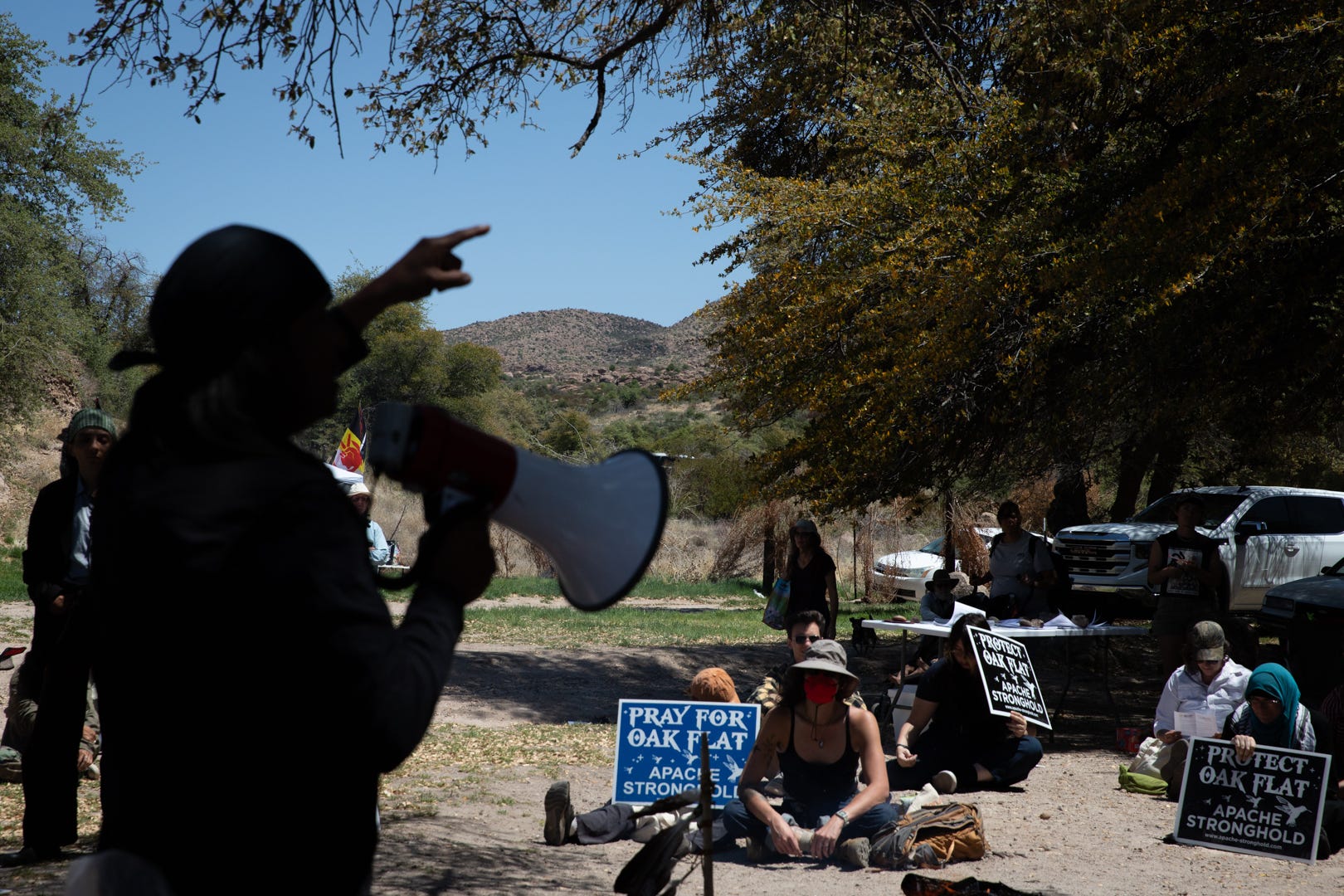
The Legal Battle Over Oak Flat: A Sacred Site Under Threat
A federal judge has ruled against a legal effort by the San Carlos Apache Tribe and environmental groups to block a controversial land exchange that would allow the Resolution Copper mining project to proceed. The decision, issued on August 15, highlights the complex intersection of religious rights, environmental concerns, and economic interests in a long-standing dispute over a sacred site.
Judge Dominic W. Lanza acknowledged the potential harm that the mine could cause, including the destruction of one of the most sacred sites for the Apache people, significant environmental damage, and the use of large amounts of water during a severe drought in Arizona. However, he concluded that the plaintiffs had not met the legal threshold required to halt the exchange.
This ruling paves the way for the transfer of Oak Flat, a 2,200-acre campground in the Tonto National Forest, to Resolution Copper. The handover is expected to occur as early as August 19, following the expiration of an earlier injunction that had delayed the process.
A Decision Based on Congressional Priorities
In his 94-page opinion, Judge Lanza emphasized that the legislation authorizing the land swap reflected Congress’ priorities, which include promoting economic growth and national security. He noted that these goals may come at the cost of damaging the religious practices of the San Carlos Apache Tribe and harming the environment.
Resolution Copper, a joint venture between Rio Tinto and BHP, has argued that the mine could generate up to $1 billion annually for Arizona’s economy and create thousands of jobs in the region. The company also pointed to the U.S. Supreme Court’s refusal to hear an appeal from the grassroots group Apache Stronghold in May as a factor influencing the decision.
Lanza’s ruling was particularly critical of the tribe’s legal arguments, stating that while the land exchange would severely impact the Apache people’s ability to practice their religion, the plaintiffs had not presented any formal religious-based claims in their motions. As a result, the judge barred further attempts to seek an injunction to stop the exchange, even as the tribe and environmentalists prepare to appeal the decision.
Appeals and Continued Resistance
The environmental groups and the Inter Tribal Association of Arizona have already filed an appeal with the 9th U.S. Circuit Court of Appeals. Sandy Bahr, director of the Sierra Club’s Grand Canyon Chapter, expressed disappointment with the ruling but vowed continued efforts to protect Oak Flat.
“We are not giving up,” she said, emphasizing the importance of preserving the area’s cultural, recreational, and ecological values. “We remain committed to doing everything we can to ensure Oak Flat is here for future generations.”
Resolution Copper welcomed the court’s decision, stating it aligns with “settled” law that supports the land exchange and the development of the mine. The company reiterated that the U.S. Forest Service’s Final Environmental Impact Statement mandates the exchange and is not discretionary.
Russ McSpadden of the Center for Biological Diversity, another plaintiff in the case, echoed the sentiment that the fight is far from over. “The clock to save this extraordinary place is ticking,” he said, expressing hope that an appeals court will allow the cases to be heard.
A Longstanding Struggle for Sacred Land
The battle over Oak Flat has spanned more than two decades, involving Native American tribes, environmental advocates, and local communities. Known to the Apache as Chi’chil Biłdagoteel, or “the place where the Emory oak grows,” the site holds deep cultural and spiritual significance.
Oak Flat is located within the Tonto National Forest, about 60 miles east of Phoenix, and sits atop one of the nation’s largest remaining copper deposits. For years, tribes and environmental groups have opposed the land exchange, fearing the destruction of the area’s unique ecosystem and its cultural heritage.
Resolution Copper, which has pursued the land exchange with the U.S. Forest Service for over a decade, plans to use block cave mining—a method that involves drilling tunnels beneath the ore body and collapsing them to extract the mineral. This process would leave behind a massive crater, effectively erasing Oak Flat from the landscape.
Legal Challenges and New Developments
The fight has seen numerous legal challenges. In January 2021, the grassroots group Apache Stronghold filed a lawsuit in federal court, citing religious rights under the First Amendment and the Religious Freedom Restoration Act. The Becket Fund for Religious Liberty took on the case, representing Apache Stronghold and other Native allies.
The Biden administration initially rescinded the environmental impact statement in March 2021, leading to further consultations with tribes. The Forest Service later concluded its consultation in 2023, and Resolution Copper was granted permission to join the lawsuit.
In 2024, the 9th U.S. Circuit Court of Appeals ruled against Apache Stronghold in a narrow 6-5 decision. The group then appealed to the U.S. Supreme Court, which declined to take the case in May.
Following this, the U.S. District Court for the District of Arizona temporarily halted the land exchange until the Supreme Court made a final decision. When the court refused to intervene, the process resumed, setting the stage for the August 19 deadline.
Ongoing Efforts to Protect Oak Flat
Despite the recent setback, efforts to protect Oak Flat continue. In July, a group of Apache women filed a new lawsuit in the U.S. District Court for the District of Columbia, arguing that the land exchange violates the Religious Freedom Restoration Act and other legal protections.
The case also introduced new factors, including a recent Supreme Court decision affirming parental rights to direct their children’s religious education and references to Justice Neil Gorsuch’s dissent in the Apache Stronghold case.
As the legal battle unfolds, the fate of Oak Flat remains uncertain. For the San Carlos Apache Tribe and their allies, the fight is not just about preserving a piece of land—it’s about protecting their heritage, their faith, and the natural world that sustains them.

Post a Comment for "Court Blocks Land Swap for Resolution Copper Mine at Oak Flat"
Post a Comment