Could East Germany's S-200 Vega Have Stopped NATO in WWIII?
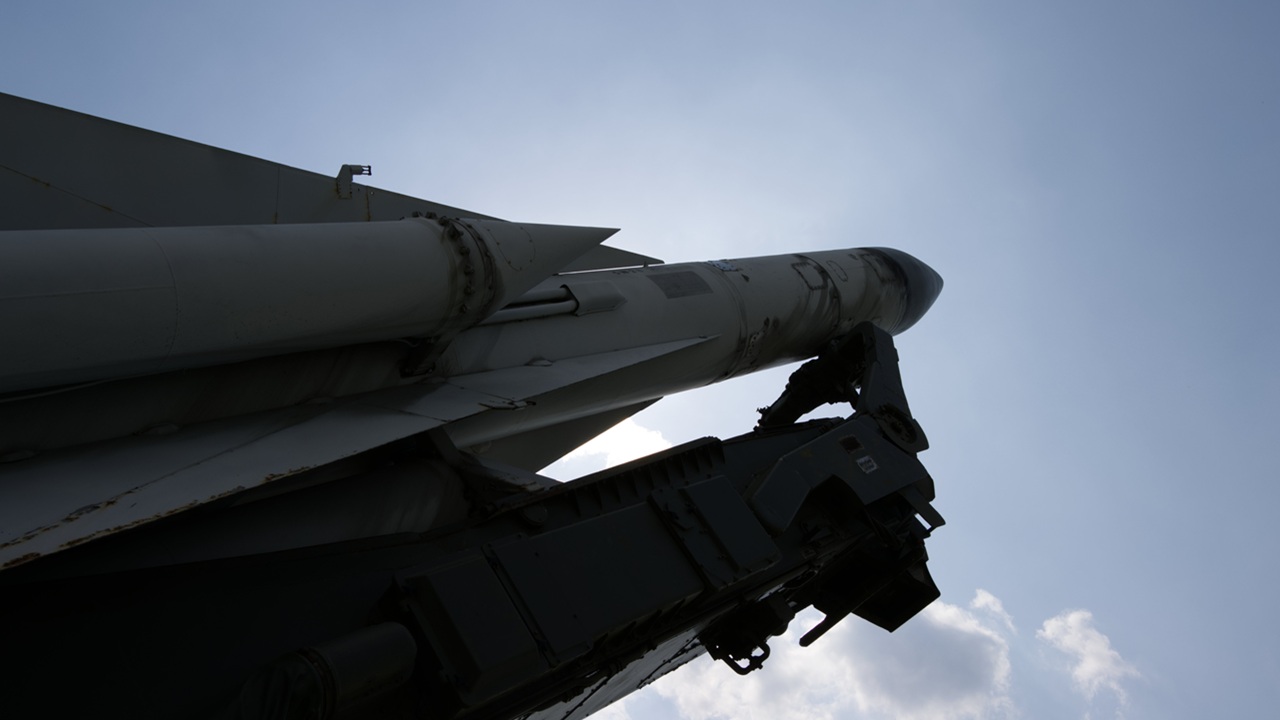
The Strategic Role of the S-200 Vega in East Germany
During the Cold War, East Germany played a critical role as a frontline state for the Soviet Union, positioned between the Eastern Bloc and the West. While there were no major combat incidents within the German Democratic Republic (GDR), the presence of advanced military systems like the S-200 Vega air defense system served as a powerful deterrent against potential aggression. This system was not just a military asset but also a symbol of the GDR's deep integration with the Soviet Union and its strategic alignment with Warsaw Pact objectives.
Origins and Development of the S-200 Vega
The S-200 Vega, also known as the SA-5 Gammon, was developed by the Soviet Union to counter high-altitude threats from Western aircraft, including bombers and reconnaissance planes. Initially conceptualized in the 1950s, the system evolved through several variants, each improving upon the previous one. The first version, the Angara (S-200A), had a range of 160 kilometers, while the later Vega (S-200V) extended this to 250 kilometers. Export models like the S-200VE were tailored for allied nations, featuring high-explosive warheads designed for maximum effectiveness against aerial targets.
By the 1980s, the S-200 had become a key component of the Soviet Union’s air defense strategy. It was deployed to various Warsaw Pact countries, including East Germany, as part of a broader effort to create an "intelligence, surveillance, and reconnaissance (ISR) lockout" zone. This network aimed to neutralize NATO’s ability to gather intelligence and conduct operations over Eastern Europe.
Military Doctrine and Deployment in the GDR
East Germany’s military doctrine was deeply influenced by Soviet strategies, which emphasized the importance of air superiority and the need to protect key infrastructure and population centers. The S-200 Vega was integrated into the National People’s Army (NVA) under the First and Third Air Defense Divisions (LVD). Four S-200VE battalions were stationed across the GDR, with key locations including Cammin-Prangendorf, Badingen-Osterne, Eckolstädt, and a Soviet-operated site at Wendgräben.
These deployments were strategically placed along the border regions and industrial hubs, providing coverage across the entire GDR and even extending into West German airspace. Each site was equipped with multiple engagement radars, allowing for simultaneous targeting of enemy aircraft. The system typically operated at the battalion level, consisting of six 5P72 launchers, a 5N62 “Square Pair” fire control radar, and support radars like the P-14 “Tall King” for early warning.
Technological Capabilities of the S-200 Vega
The S-200 Vega was a formidable long-range surface-to-air missile (SAM) system, capable of reaching speeds up to Mach 4 and engaging targets at altitudes of up to 40.8 kilometers. The Vega-E variant, commonly used in East Germany, fired the V-880E/5V28E missile, a massive weapon weighing 7,018 kilograms with a 217-kilogram fragmentation-high-explosive warhead. The missile was propelled by liquid-fueled engines combined with four solid-propellant boosters, giving it a range of 240 to 255 kilometers.
This technological prowess made the S-200 Vega a significant threat to NATO forces. Its presence in East Germany helped create a dense SAM network that stretched through Czechoslovakia and Hungary, making it extremely difficult for Western aircraft to penetrate without suffering heavy losses.
Impact on the Cold War and Beyond
While the S-200 Vega never saw direct combat in the GDR, its mere existence acted as a strong deterrent against potential aggression. It aligned with Warsaw Pact exercises and Soviet oversight, reinforcing the strategic balance of power during the Cold War. The system also influenced modern air defense technologies, paving the way for more advanced systems like the S-300.
After the reunification of Germany in 1990, the S-200 battalions were phased out as NATO integration progressed. However, the legacy of the S-200 Vega remains, particularly in its influence on contemporary air defense strategies. In recent years, Ukraine has reportedly modified some S-200 systems for use in its ongoing conflict, highlighting the enduring relevance of this Cold War-era technology.
Conclusion
The S-200 Vega was more than just a military system; it was a symbol of the ideological struggle between the Soviet Union and the West. Its deployment in East Germany underscored the country’s role as a vassal state and its reliance on Soviet technology for security. While the Cold War ultimately ended without direct conflict, the S-200 Vega played a crucial role in maintaining the delicate balance of power that defined the era.

Post a Comment for "Could East Germany's S-200 Vega Have Stopped NATO in WWIII?"
Post a Comment