Could China's Quantum Radar Penetrate US Stealth? How the Technology Works
The Evolution of Stealth Technology and the Rise of Quantum Radar
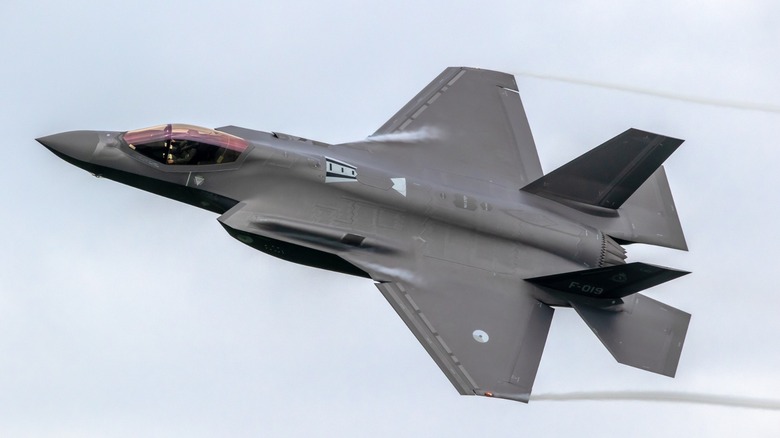
For decades, stealth technology has been a cornerstone of American military superiority in the air. Aircraft such as the B-2 Spirit, F-22 Raptor, and F-35 Lightning II have allowed the U.S. to maintain an edge by making their planes nearly invisible to radar systems. The underlying principle is straightforward: when radar signals hit these aircraft, they either absorb the signal completely or reflect it away from the radar dish, preventing any return echo. This makes them appear as small blips—or even nothing at all—on enemy radar screens.
However, this technological advantage may be under threat. Reports suggest that China is making significant strides in developing quantum radar, a technology that could challenge the effectiveness of current stealth systems. Unlike traditional radar, which relies on radio waves bouncing off objects, quantum radar uses principles from quantum physics, particularly entanglement and coherence. It aims to detect even the slightest interaction between a photon and a stealth object, effectively capturing its "quantum fingerprint." This could make it far more difficult for stealth aircraft to remain undetected.
Quantum Radar: A New Frontier in Detection
China isn’t the only country exploring quantum radar. In 2018, Canada made headlines with its commitment to researching this emerging technology. Although the project remained experimental, it indicated that there was real potential in the field. This raises an important question: how close are we to making quantum radar a practical reality, and what would happen if it does?
Quantum radar operates on the concept of quantum entanglement, where two particles—such as photons—are deeply connected. Whatever happens to one instantly affects the other, regardless of distance. In theory, quantum radar creates pairs of these entangled photons. One is sent into the air, while the other remains as a reference. If the traveling photon interacts with an object, like a stealth aircraft, it gathers information. This data is then transmitted to its twin, allowing scientists to detect and analyze what it encountered—even if the object is designed to avoid traditional radar detection.
Traditional radar systems rely on signals bouncing back, but stealth aircraft are engineered to absorb or deflect those signals. While this makes them hard to detect, it doesn’t eliminate their presence entirely. That’s where quantum radar could offer an advantage. Instead of depending on the strength of a returning signal, it uses the quantum link between the entangled photons to detect interactions, potentially revealing stealth aircraft that would otherwise go unnoticed.
China’s Unique Approach to Quantum Radar
One notable difference in China’s approach is that researchers at Tsinghua University are reportedly developing a quantum radar prototype that doesn’t use photons. Instead, their system employs an electron accelerator, essentially a large electromagnetic gun that fires high-energy electrons near the speed of light. This creates an electromagnetic storm that can interact with stealth aircraft in ways traditional radar cannot. Unlike photon-based systems, which struggle with long distances or adverse weather conditions, this method might be more resilient in real-world scenarios.
Chinese media reports suggest that test systems could detect objects up to 100 kilometers away. However, no peer-reviewed studies have confirmed their reliability against advanced fighter jets like the F-35. Despite this, the U.S. is not standing still. DARPA, the Defense Department's research agency, has supported quantum radar research for years. Institutions like MIT Lincoln Lab and Lockheed Martin have also been exploring various forms of quantum-enhanced detection systems.
The Future of Stealth and Air Defense
The question remains: how much of this technology has become operational? The U.S. typically keeps its experimental projects confidential, so the extent of its progress is unclear. Experts around the world remain skeptical about China’s claims, arguing that while the research sounds promising, the results may be exaggerated. If quantum radar becomes reliable, it could force a major shift in how stealth strategies are developed, influencing everything from war planning to air defense structures and future aircraft design.
As the arms race continues, the implications of quantum radar could reshape the landscape of modern warfare. Whether it’s through photons, electrons, or some other mechanism, the pursuit of detection technologies that can pierce the veil of stealth is likely to drive innovation for years to come.

Post a Comment for "Could China's Quantum Radar Penetrate US Stealth? How the Technology Works"
Post a Comment