Commission Supports Advancement of Gun Microstamping Tech
Massachusetts Commission Recommends Microstamping Technology for Gun Safety
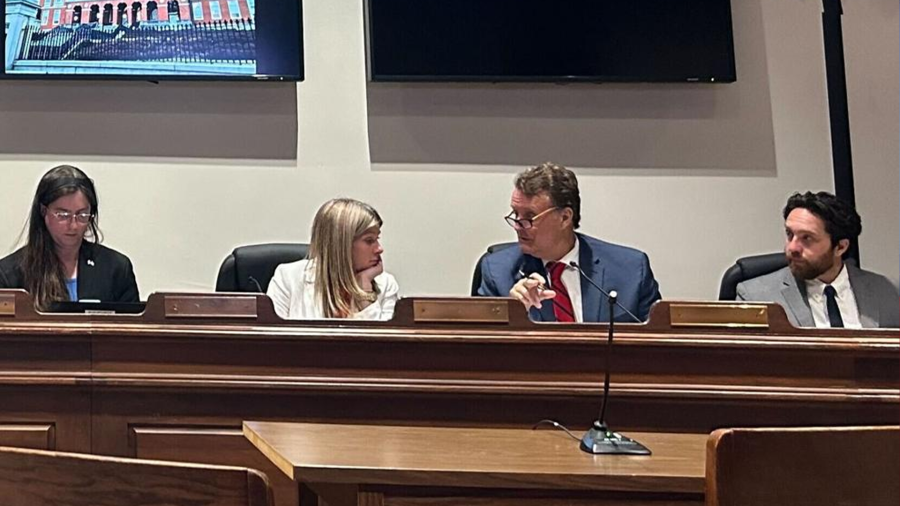
A commission focused on emerging firearm technology has released a report that could shape future gun safety policies in Massachusetts. The Special Legislative Commission on Emerging Firearm Technology approved its recommendations and accepted the final report, which addresses the potential use of advanced technologies in firearms.
The co-chairs of the commission, Rep. Kate Lipper-Garabedian and Sen. Michael Moore, noted that they would include a dissenting policy brief from Republican members Sen. Peter Durant and Rep. Donald Berthiaume as an appendix to the report. This document outlines concerns about the feasibility and legal implications of implementing certain technologies.
The commission was established under a major 2024 gun law and met for the first time in January. Over six prior meetings, the group studied various technologies, including personalized firearm technology and microstamp technology. These innovations aim to improve forensic capabilities and aid in criminal investigations.
Microstamping technology, which engraves a unique code on the inside of a firearm, is highlighted in the report. Each time the gun is fired, the code is stamped onto the cartridge casing. The commission found that this technology could significantly assist law enforcement in solving firearm crimes.
Nine commissioners voted to recommend that the Legislature pursue legislation modeled after California and New York laws. However, three members—Durant, Berthiaume, and Jake McGuigan of the National Shooting Sports Foundation—voted against it. Christina Ronan, chief of the Enterprise and Major Crimes Division in the attorney general’s office, abstained from voting.
Lipper-Garabedian expressed optimism about the technology, noting that California recently completed a feasibility study confirming its effectiveness. She emphasized the need for the Executive Office of Public Safety and Security (EOPSS) to evaluate the technology's viability and establish standards for testing microstamped firearms.
The recommendations also call for funding to support the implementation of microstamping technology. This includes training for forensic practitioners and laboratory equipment necessary to recover data from microstamped cartridges. Additionally, penalties would be imposed on manufacturers, distributors, and merchants who fail to comply with the law.
Durant raised concerns about the unproven nature of the technology and the potential legal challenges it might face. He argued that Massachusetts should wait and see how other states handle similar initiatives before moving forward.
Despite these concerns, the commission supported a recommendation related to sales tax exemptions for personalized firearms. These are designed to reduce accidents and deaths by ensuring only authorized users can operate the weapons. The report suggests that manufacturing such firearms is four times more expensive than traditional models.
Seven commissioners voted in favor of a sales tax exemption for personalized firearms with the trade-in of a non-personalized firearm. However, several members, including Durant and Berthiaume, opposed the proposal.
Moore acknowledged the challenges ahead, particularly regarding public perception and misinformation. He emphasized the importance of leveraging current technological advancements while remaining cautious about legal uncertainties.
The report is not yet formally filed, but its release marks a significant step in Massachusetts' ongoing efforts to address gun safety. The commission's work builds on the 2024 gun law and may influence future legislation, especially if a ballot referendum in 2026 seeks to repeal parts of the existing law.
Lipper-Garabedian remains committed to exploring new legislative approaches that keep pace with technological developments. She stressed the need for policymakers to adapt to evolving circumstances, even as the U.S. Supreme Court continues to shape the legal landscape.
As the debate over gun safety continues, the commission’s findings highlight the complex interplay between innovation, public safety, and constitutional rights. The final report will serve as a foundation for further discussions and potential legislative action in the coming years.

Post a Comment for "Commission Supports Advancement of Gun Microstamping Tech"
Post a Comment