Cold clues and twisted confessions: Who murdered Eula Mae Kay Miller?
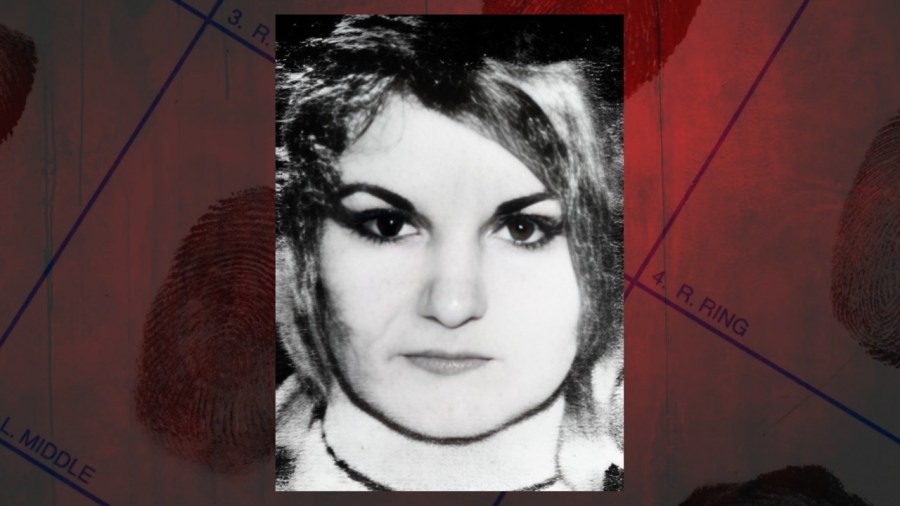
A Tragic Discovery in Odessa
On a sweltering summer afternoon in July 1970, something was amiss at the Hilltop Apartments in Odessa. Brenda O’Neill noticed an unusual gathering of flies around the window of Apartment L1, accompanied by a strong odor. This wasn’t just a disturbing smell; it signaled a tragic event had occurred to her friend.
Inside that unit, 26-year-old Eula Mae “Kay” Miller was found nude and decomposing on her bed. The assistant manager, who entered the apartment with Brenda, later described the scene in a police report: Kay’s body lay at an angle on the unmade mattress, her feet hanging off the edge, surrounded by bunched-up bedding and the kind of silence only death brings.
“She was on her bed at an angle with her feet hanging off the bed. She was completely nude and was already in a state of decomposition,” said Odessa Cold Case Detective Lauren Gonzalez in The Deck podcast. “They couldn’t even really tell what injuries she had just by looking at her at that time. The bed was unmade, and there was bunched up sheets or bedding on the edge of the bed.”
Kay had been stabbed six times in the face, chest, and neck. The wound to her neck caused massive, fatal hemorrhaging. Oddly, there were no signs of a struggle in the apartment, no defensive wounds on her body, and no confirmed evidence of sexual assault.
Still, the implications were grim.
A Mysterious Note and a Lost Clue
Police quickly found a note on the floor just inside the door. It was a folded piece of yellow paper, handwritten.
“Just come on in, I’m in bed and might not hear you — Kay,” it read. On the back, someone had scribbled, “Write me soon.” That someone turned out to be a man named Don Barnett, who told police he had visited after Kay had already died, and simply wrote on the note after finding her apartment locked. Investigators ultimately cleared him.
As news of the murder spread, friends and neighbors began to recall the pain hiding behind Kay’s “beautiful” and “outgoing” exterior. She’d been living in Odessa for less than a year, working as a go-go dancer at the Tempo Club, a popular venue off Dobbs. To most who met her, she was known simply as “Kay.”
But those closest to her said she carried a quiet sorrow.
“She acted like she had no reason for living. Maybe she missed her children,” one friend told The Odessa American in July 1970.
She was separated from her husband and four children, three daughters and one son. Though few people knew the details of her family life, friends said she didn’t talk much about them or about her past. But they sensed the loneliness beneath her carefree personality.
“She didn’t have friends in for visits, like company. She loved to go out dancing and partying. At different times she went out with different types. She would take up with anybody,” one woman told the newspaper. “She was real carefree; she didn’t think anyone in the world would hurt her.”
Another friend said Kay was “supposed to get married to this guy.” After a disagreement, she moved back in with her sister at the Hilltop Apartments in April or May.
During her time in Odessa, Kay had only two close friends. One recalled her fondness for fixing wigs and doing hair. “She liked fixing wigs and combing hair. All of the time she was trimming and fixing my hair. She put stuff on her hair (Mrs. Miller was blond). All of us do.”
“I was about the only one Kay would have anything to do with,” the same woman added. “This may have been because we lived close together.”
Her best friend also mentioned that “her husband had come to see her and sent her some money when she had an operation six or seven weeks ago in Odessa.”
Despite the warmth she gave others, Kay’s circle was small, and her death stirred painful questions for those who loved her.
A Complex Investigation
Back in Odessa, the investigation quickly became complex. Dozens of names were considered. The original case file included a manila envelope labeled “Photos of Suspects,” containing 27 male photographs.
Reports showed that police found a Church’s Chicken box in Kay’s apartment with a fingerprint on it. A neighbor also recalled seeing a man arrive at her door carrying two chicken boxes, saying “It’s me” when Kay asked who was there. But when police questioned him again, he recanted and said he wasn’t sure what day it had happened. No one has ever been able to identify that mystery man, and the fingerprint has yet to match anyone in a national database.
Multiple men were questioned, including a new acquaintance named Michael Taylor, who admitted to spending the night with Kay on July 11 and into the early hours of the 12th. He described the go-go outfit she was wearing, claimed they had ‘sex several times,’ and said he left around 4 p.m. on Sunday. He was polygraphed and eventually cleared.
Another man named Lonnie was brought into the investigation after an anonymous tip suggested he had tried to borrow a knife the night Kay was killed. One witness also claimed that Kay owed Lonnie $250. She had reportedly earned that exact amount at the Tempo Club shortly before her death. When police questioned Lonnie, he admitted to knowing her socially but denied any deeper connection. He also passed a polygraph.
Even more curious was a lead out of Kermit, Texas, where a man reported finding Kay’s old wallet in his attic. He explained that he had once dated her, she’d left her wallet in his car, and he hid it in the attic so his wife wouldn’t find out. His story checked out, and police had already recovered another wallet belonging to Kay in her apartment, along with a duplicate driver’s license.
But none of the stories led to an arrest.
A Haunting Turn
One of the most haunting turns came when a familiar name entered the frame: Johnny Meadows. At the time, he was already a convicted murderer in Odessa and confessed to Kay’s murder along with several others. But a change of venue to Dallas led to a judge throwing out those confessions, and investigators began to question their validity.
“Convicted killer Johnny Meadows actually originally confessed to Kay’s murder, but he was never convicted of that,” Susan Rogers said. “And I don’t know that investigators were ever completely sold on the fact that he was the one that did it.” “He confessed to several different things,” she added. “But only convicted of one, and it never got any further.”
Meadows died in prison.
The killing of Eula Mae Miller happened during a dark time in Odessa’s history. Between 1968 and 1971, a series of violent deaths of women shook the city. Many were go-go dancers or women in vulnerable professions. In a 1971 article from The Corpus Christi Times, Kay’s photograph was grouped with five other women whose cases were either unsolved or involved suspicious deaths.
“Yes, there were like four or five murders at one time in that year,” Rogers said, “and that’s back when Odessa was one of the murder capitals of the world kind of thing was going on.”
While the public speculated about a serial killer, modern investigators believe Kay’s case is not linked to the others.
A Legacy of Justice
The killing of Eula Mae “Kay” Miller happened during a dark time in Odessa’s history. Between 1968 and 1971, a series of violent deaths of women shook the city. Many were go-go dancers or women in vulnerable professions. In a 1971 article from The Corpus Christi Times, Kay’s photograph was grouped with five other women whose cases were either unsolved or involved suspicious deaths.
“Yes, there were like four or five murders at one time in that year,” Rogers said, “and that’s back when Odessa was one of the murder capitals of the world kind of thing was going on.”
While the public speculated about a serial killer, modern investigators believe Kay’s case is not linked to the others.
What is clear, however, is that Kay’s story didn’t end in 1970. It lives on, not only in the pages of yellowed newspaper clippings and aging case files, but on the desk of Detective Lauren Gonzalez.
Today, she’s the one responsible for solving what others couldn’t.
“The good thing about cold case investigations is sometimes the passage of time can give us the advantage,” Gonzalez said in The Deck. “People change over time. Their lifestyles change… and they may be more forthcoming.”
For both Rogers and Gonzalez, the message to the killer is clear.
“You may have thought you’ve gotten away with it, but we haven’t ever quit looking, and we’re not going to quit looking,” Rogers said. “Now’s the time. I mean, you have to be up there in age as well… You need to clear your conscience and get straight with God, because there’s a price to pay one way or the other.”
If you know anything about the 1970 murder of Eula Mae “Kay” Miller, please contact the Odessa Police Department Cold Case Division at 432-335-4926 or Odessa Crime Stoppers at 432-333-TIPS. Anonymous tips can also be submitted online at www.333tips.org. A cash reward is available for information that leads to an arrest.

Post a Comment for "Cold clues and twisted confessions: Who murdered Eula Mae Kay Miller?"
Post a Comment