China's Export Surge as U.S. Tariff Deadline Looms
China's Export Growth Amid Trade Tensions
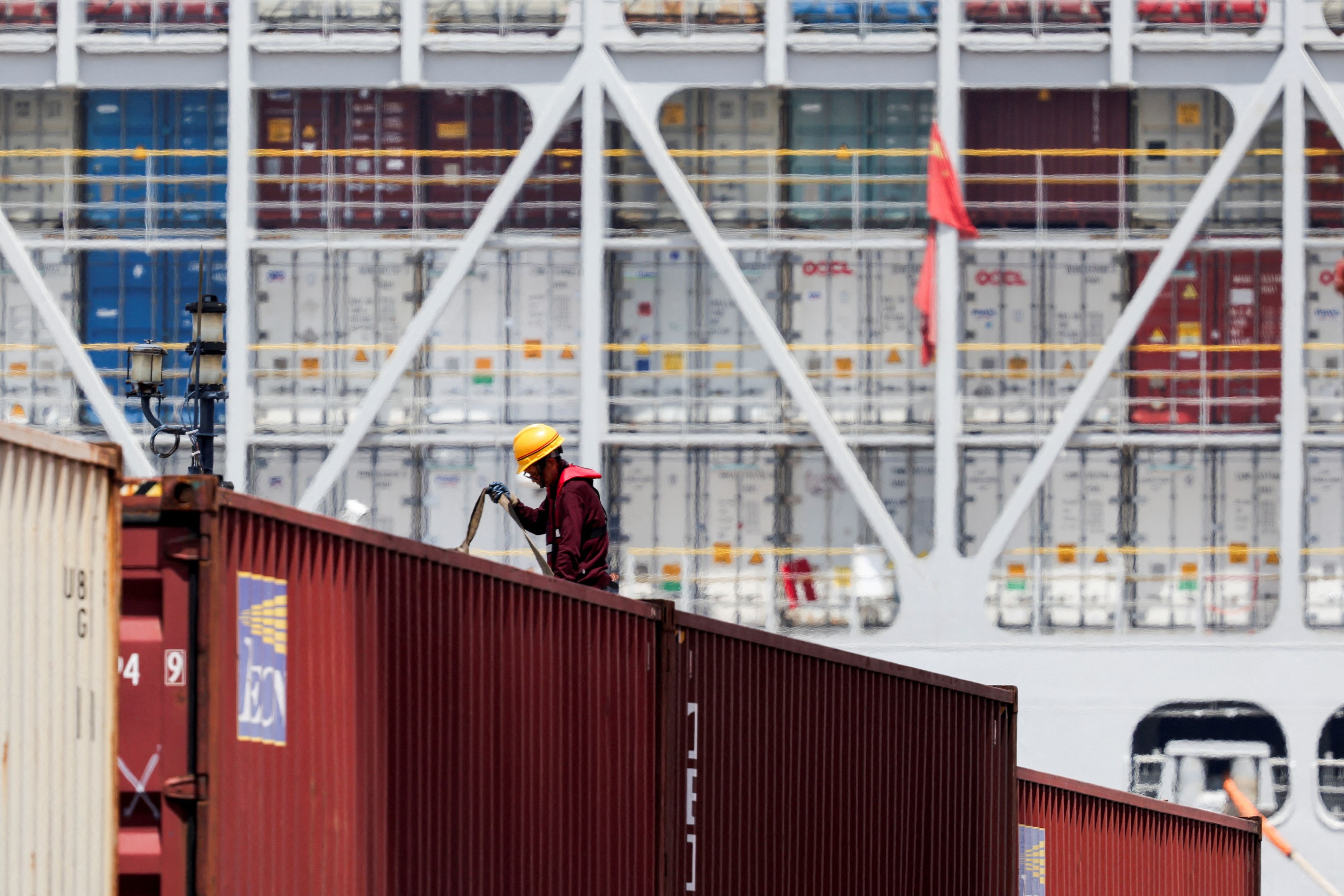
China has once again demonstrated its ability to withstand the impact of trade tensions, with exports rising at a faster-than-expected rate of 7.2 percent in July, according to recent government statistics. This growth comes despite ongoing pressure from President Donald Trump’s tariff policies, which have significantly affected international trade dynamics.
Experts, however, caution that this resilience may not be sustainable in the long term. The latest data is released just days before the 90-day trade truce between Washington and Beijing is set to expire. This agreement was reached after the two sides failed to reach a clear resolution during their third round of talks last month. As the deadline approaches, Trump appears to have softened his stance, which could influence the upcoming potential summit with Chinese leader Xi Jinping later this year.
The strong export figures might reinforce Xi Jinping's determination to maintain a firm position in negotiations. Henry Gao, a trade expert at Singapore Management University, suggests that these numbers could be interpreted as evidence of China's economic strength and its capacity to endure external pressures. While the overall export growth surpassed expectations, there was a notable decline in exports to the United States, which fell by 22 percent compared to the previous year.
Meanwhile, imports saw an increase for the second consecutive month, reaching the highest growth rate in a year at 4.1 percent. This follows earlier data showing that China's economy outperformed its annual growth target of "about 5 percent," expanding by 5.3 percent in the first half of 2025.
Chinese state media praised the July numbers, highlighting the country's ability to grow its foreign trade amidst a complex external environment. However, Gao warns that the results may be a "temporary distortion" and could lead to overconfidence among Chinese trade negotiators. He explains that the sharp rise in exports in July is largely due to companies accelerating shipments ahead of potential renewed U.S. tariffs, taking advantage of the current reprieve.
Other analysts agree that the optimism may not last. Zichun Huang, a China economist at Capital Economics, notes that the temporary boost from the U.S.-China trade truce is fading, and rising tariffs on goods rerouted through other countries are likely to keep exports under pressure in the near future.
Gao also points to China's ongoing challenges with domestic consumption, which continues to rely heavily on exports for economic momentum. Despite years of policy rhetoric about shifting focus to domestic consumption, exports remain the primary driver of China's growth.
Recent efforts by Washington and Beijing to ease trade tensions, including a summit in Stockholm, have not resulted in an extension of the truce. Analysts suggest an extension is likely, but if no agreement is reached before August 12, the U.S. could impose 145 percent tariffs on Chinese goods, while Beijing might reinstate its 125 percent duties, potentially disrupting global supply chains.
China has managed Trump's tariff war by redirecting its manufacturing surplus to other countries, such as Vietnam, Malaysia, Indonesia, and Thailand. This shift is evident in the significant increase in shipments to Southeast Asia. Additionally, exports to Africa, Latin America, and the European Union have also seen robust growth.
The U.S. has called on its partners to crack down on transshipment, leading to the implementation of an additional 40 percent tariff on transshipped goods. China has responded with a hardline approach to Trump's demands, but both sides have shown a willingness to de-escalate recently.
Beijing has eased some restrictions on rare earth sales to the U.S., allowing more exports of materials crucial for military equipment, consumer electronics, and hospital devices. In turn, Washington reversed its stance by permitting U.S. tech giant Nvidia to resume selling its H20 artificial intelligence chips to China.
Xu Tianchen, a senior economist at the Economist Intelligence Unit, highlights that China still has several strategic advantages, particularly in rare earths, which serve as a reminder to Trump that neither side should engage in escalatory measures.

Post a Comment for "China's Export Surge as U.S. Tariff Deadline Looms"
Post a Comment