CBS News Analysis: DOGE Cuts Costs, But Claims Are Exaggerated
Understanding the Claims and Realities Behind DOGE’s Cost-Cutting Reports
The Department of Government Efficiency (DOGE), established under the Trump administration, has continued to highlight its efforts in reducing federal spending even after Elon Musk stepped down from his advisory role. The agency has been promoting its so-called "wall of receipts," a platform that claims to track and report savings from cost-cutting measures across the government. However, recent investigations have raised questions about the accuracy of these claims.
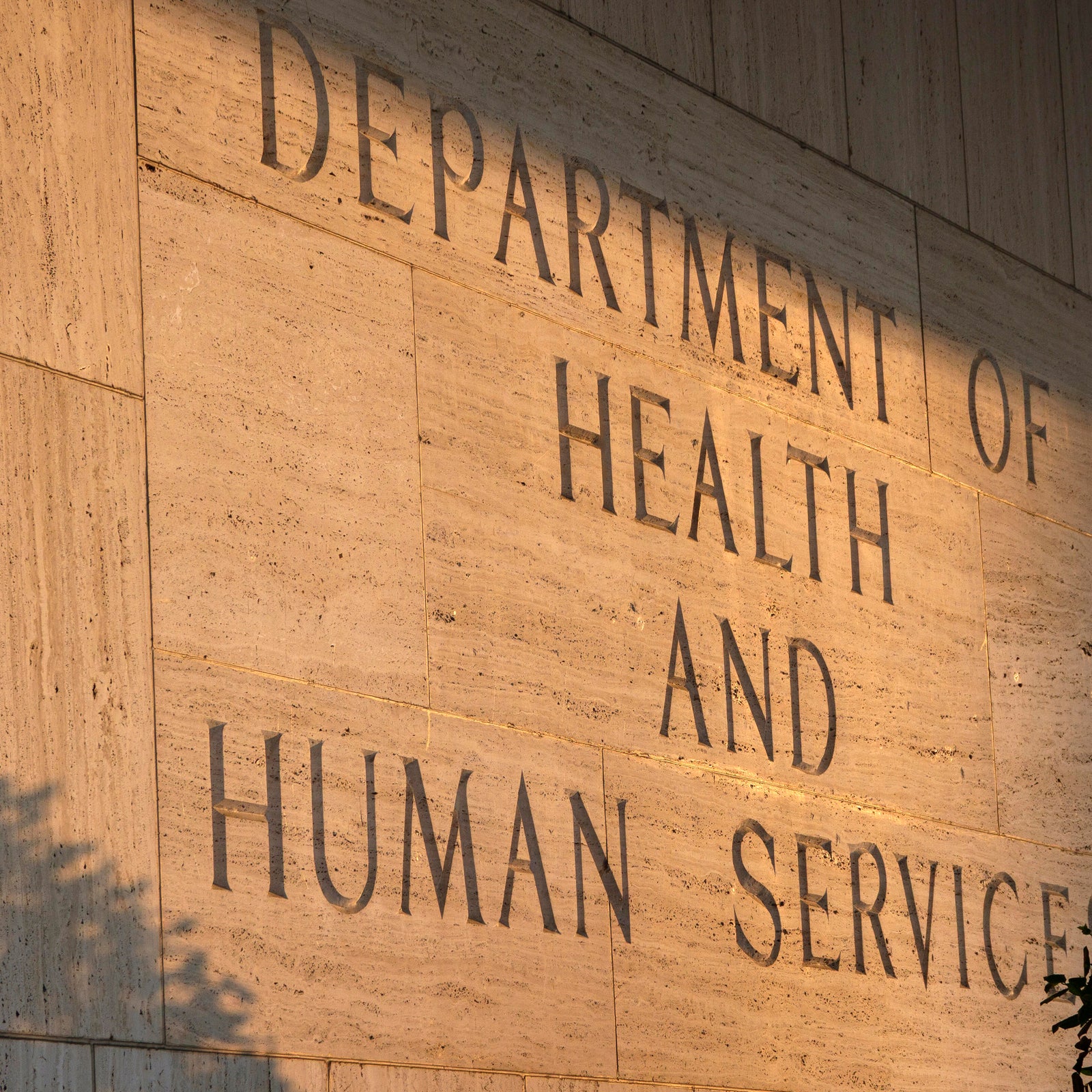
According to a review by CBS News, the savings reported by DOGE appear to be significantly overstated. The analysis focused on three of the largest cuts claimed by the agency, all related to contracts within the Department of Health and Human Services (HHS). These contracts were designed to fund COVID-19 testing and treatment for uninsured or underinsured individuals during the pandemic. DOGE asserted that canceling these contracts saved $6.4 billion. However, the actual savings, based on transaction records, are estimated to be only around $165 million.
This discrepancy arises from how DOGE calculated the savings. The agency adjusted down the total potential value of the contracts by $6.4 billion and then reported it as actual savings. However, experts suggest that this figure was an upper limit, which is rarely reached in practice. With the pandemic over and the contracts set to expire, it is unlikely that the contractors—such as Walgreens and CVS—would have spent anywhere near that amount on testing and treatment.
Nat Malkus, a senior fellow at the American Enterprise Institute, pointed out that the government could have simply stopped obligating additional funds without needing to terminate the contracts. He criticized the approach, calling it “transparency theater.”
Since its launch, multiple news outlets, including CBS News, have highlighted issues with DOGE's accounting practices. The agency now claims to have saved $52.2 billion from canceled contracts. However, Malkus, who analyzed the actual implications of the cancellations, estimates the number closer to $17.8 billion—assuming Congress agrees to rescind the funds already approved for spending.
DOGE also reports a total of $199 billion in savings when considering real estate lease cancellations and other reductions. However, the agency provides no documentation for roughly half of this amount. According to DOGE, this translates to $1,236.02 per person in the U.S., a figure that Malkus dismisses as “fiction.”
A significant portion of these purported savings comes from cuts to the United States Agency for International Development (USAID). A recent study published in The Lancet suggests that these cuts could have severe consequences, potentially leading to 14 million child deaths under the age of five by 2030 due to reduced humanitarian aid.
Malkus noted that while DOGE emphasizes the scale of its savings, it often frames the trade-offs as worth the cost. “Their claims are generally to say, 'Hey this is a lot of pain, but it's worth it,'” he said.
The latest update from DOGE is only the second since Musk left his role in the White House. Shortly before his term ended, Musk stated that the work of DOGE was just beginning. “The DOGE team will only grow stronger over time. The DOGE influence will only grow stronger,” he said, expressing confidence that the group would eventually save $1 trillion.
However, the functioning of DOGE has become unclear since Musk’s departure. In late June, The Washington Post reported that federal officials were instructed to stop routing grant-making processes through DOGE, effectively removing the group's control over the online clearinghouse for grant opportunities. In DOGE's most recent update, only one additional canceled grant was added.
Several DOGE-associated employees have also left their positions in recent weeks. For example, Tyler Hassen, a former DOGE staffer tasked with cutting costs at the Department of the Interior, resigned. Under his leadership, there were claims of a $1 billion survey being cut, a statement repeated by both Musk and Interior Secretary Doug Burgum. However, no evidence was ever provided to support this claim.
As DOGE continues to operate under new leadership, the accuracy of its cost-cutting reports remains under scrutiny. The debate over whether these savings are real or exaggerated highlights broader concerns about transparency and accountability in federal spending.

Post a Comment for "CBS News Analysis: DOGE Cuts Costs, But Claims Are Exaggerated"
Post a Comment