California's Top Prosecutor Proposes Path to Expand Democratic Majority
California's Legal Strategy for Redistricting
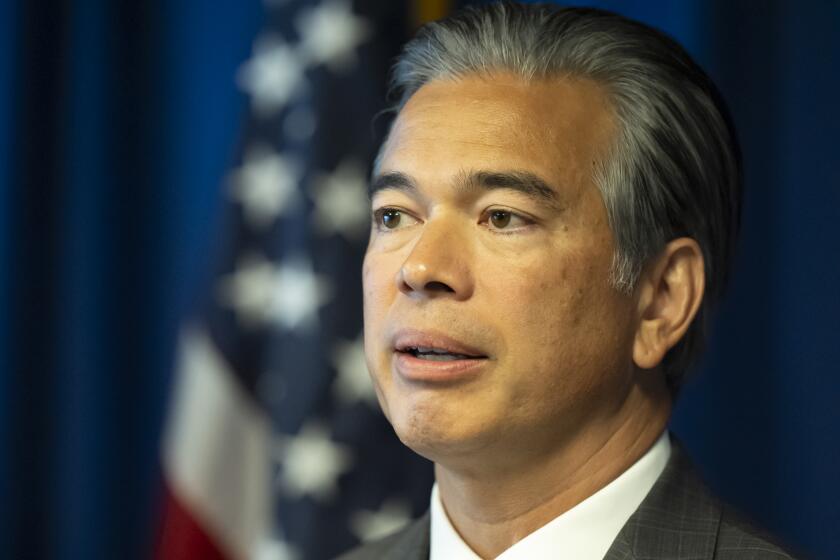
California Attorney General Rob Bonta has proposed a potential legal strategy that could allow Democrats to present new congressional district maps directly to voters through a statewide ballot initiative. This approach would bypass the state’s independent redistricting commission, which is designed to ensure fair and neutral boundary drawing. Bonta believes this move could counter Republican efforts to influence the next year’s midterm elections by favoring conservative states like Texas.
The goal of such an initiative, according to Bonta, would be to prevent Republicans from maintaining their slim majority in the U.S. House of Representatives and to protect President Trump’s ability to implement his agenda. He suggested that the governor could call for a special election where voters would have the opportunity to approve or reject new district maps drawn by the state legislature.
Bonta emphasized that his team has been in discussions with Governor Gavin Newsom’s office regarding this possibility. However, the details of the proposed ballot measure remain vague, with Bonta only stating that the state legislature could draw new district boundaries and present them to voters in a special election. The measure would ask voters to revoke the authority granted to the independent redistricting commission, at least temporarily.
Republican Opposition and Concerns
Republicans, who are likely to lose seats if such a proposal were approved, have expressed strong opposition to Bonta’s idea. GOP Assembly Leader James Gallagher criticized the proposal as a “strange legal theory to undermine CA voters.” He argued that the plan is undemocratic and would harm the state’s democratic process.
Gallagher claimed that if Democrats proceed with this approach, it could lead to significant unrest within the state and even the nation. His comments reflect the broader concerns among Republicans about the potential consequences of shifting control over redistricting away from the independent commission.
Redistricting Process and Political Implications
Redistricting, the process of redrawing political boundaries, typically occurs once a decade following the U.S. Census. However, it has recently gained attention due to former President Donald Trump’s push for mid-decade redistricting in Texas to secure more Republican representation in the 2026 midterm elections. This move aims to support his agenda during his final two years in office.
Historically, California lawmakers engaged in gerrymandering to favor political parties and protect incumbents, resulting in oddly shaped districts with little in common among voters. In 2010, voters passed a ballot measure to establish an independent redistricting commission. This commission was designed to focus on creating districts that preserve communities of interest, respect minority voting rights, and maintain geographical coherence.
Both the Republican and Democratic parties opposed the creation of the commission because it reduced their influence over the redistricting process. Now, with the Trump administration urging GOP states to redraw district lines to strengthen their party’s control of Congress, Democrats are pushing back. In California, a partisan redrawing of the districts could potentially add half a dozen seats to the Democratic delegation, which currently includes nine Republicans out of 52 total.
Legal and Practical Challenges
Several steps must be taken before any changes can be presented to voters. The legislature would need to approve placing the matter before voters in a special election and create new maps under a compressed timeline. Legal challenges are expected, given the complexity and sensitivity of redistricting issues.
Bonta highlighted the importance of ensuring a legal pathway for California to respond to actions taken by other states, such as Texas. He emphasized the need for confidence that any changes made would be lawful and defensible in court. This approach reflects a broader effort by Democrats to safeguard their electoral advantages in the face of increasing political competition.
The debate over redistricting underscores the ongoing struggle between political parties to shape the electoral landscape in their favor. As California continues to navigate this complex issue, the outcome will have significant implications for the state’s political future and its role in national elections.

Post a Comment for "California's Top Prosecutor Proposes Path to Expand Democratic Majority"
Post a Comment