California Sues Over Trump's Planned Parenthood Funding Cut
Legal Challenge Against Trump-Era Law
A significant legal battle has emerged against a law enacted during the Trump administration, with California Attorney General Rob Bonta leading the charge alongside 22 other states and the District of Columbia. The lawsuit, filed in the U.S. District Court in Massachusetts, accuses the U.S. Department of Health and Human Services (HHS) of exceeding its authority and violating constitutional protections by attempting to defund Planned Parenthood.
The law in question, referred to as the “One Big Beautiful Bill Act,” is alleged to be unconstitutionally vague and requires states to violate Planned Parenthood’s First Amendment rights. This law, which became effective on July 4, prohibits Medicaid reimbursements for any health services conducted at large nonprofit health clinics that “primarily” provide abortions.
Bonta emphasized the importance of upholding the rule of law and preventing what he described as an attempt to roll back progress and silence opposition. He stated, “We won’t sit back while Congress and this federal administration tries to roll back our progress.”
Key Legal Arguments
The lawsuit argues that the law violates federal rules requiring the government to give states “clear notice” of major Medicaid funding restrictions. Additionally, it claims that the law forces states to enforce provisions that infringe upon Planned Parenthood’s constitutionally protected freedoms of speech and assembly.
Despite the legal challenges, HHS did not immediately respond to requests for comment, nor had it filed a legal response at the time of publication.
Impact on California Clinics
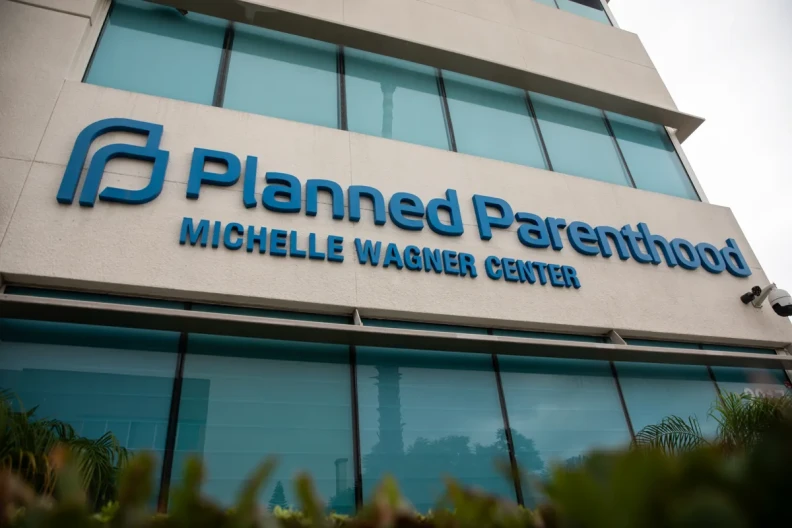
The impact of the law has been felt in California, where five Planned Parenthood clinics have closed, citing the loss of $100 million in Medicaid payments. Critics argue that the law is a “backdoor abortion ban” designed to target Planned Parenthood in states where abortion is legal.
Federal law already prohibits the use of federal funds to pay for abortions except in extremely limited circumstances. However, nearly 80% of Planned Parenthood patients in California use Medicaid, also known as Medi-Cal, the federal health insurance program for low-income people and those with disabilities.
Bonta clarified that the issue is not about federal funding going toward abortions but rather the broader implications of the law on access to healthcare. According to the complaint, Congress has never before restricted Medicaid spending based on health care provided outside of the Medicaid program.
Recent Developments
Planned Parenthood Federation of America previously filed a separate lawsuit challenging the law. U.S. District Judge Indira Talwani in Boston recently reversed a ruling that had effectively cut Medicaid reimbursements for all but a few Planned Parenthood operations around the nation.
Despite this new ruling, five Planned Parenthood centers in California will remain closed. Andrew Adams, chief of staff for Planned Parenthood Mar Monte, noted that the court order was a “key victory” in the fight to preserve reproductive health access, but the network needs to maintain financial stability.
Ongoing Legal Battles
Bonta is asking the court to prevent the implementation of the law, arguing that the state’s Medicaid program is harmed by the law. He stated that it was appropriate for the state to pursue separate legal action, as the complaints challenge different constitutional protections.
In a statement, a spokesperson for HHS said, “we strongly disagree with the court’s decision” and reiterated an argument from last week that states should not have to reimburse organizations that have “chosen political advocacy over patient care.”
Broader Implications
Medicaid is jointly administered by states and the federal government, with each generally paying for 50% of the cost of health services. In its lawsuit, Planned Parenthood Federation of America argues that withholding funding violates its First Amendment rights and the Due Process Clause of the Fifth Amendment.
Adams emphasized that Planned Parenthood Mar Monte will continue to fight any attempts to restrict abortion and reproductive health care access. He stated, “We will not back down, but we must have the resources to continue this fight while keeping as many doors open to patient care as possible.”
Judge Talwani reasoned that disruptions to patient care are likely to result in “adverse health consequences,” including an increase in unintended pregnancies, pregnancy complications, and undiagnosed cancers and sexually transmitted infections.
Conclusion
The clinics that closed last week are located in South San Francisco, San Mateo, Gilroy, Santa Cruz, and Madera. Together they served 22,000 patients, according to Planned Parenthood Mar Monte. The organization also ended primary care, behavioral health, and prenatal care services as a result of the federal budget cuts. Those cuts total roughly $100 million for the Mar Monte clinics, according to a news release.
Leaders for Planned Parenthood Affiliates of California, which represents more than 100 clinics throughout the state, said the Trump administration's tax law will cost the system about $300 million in Medicaid reimbursements. Jodi Hicks, president and chief executive of Planned Parenthood Affiliates of California, stated that the “economic sanctions” imposed by the Trump administration have “jeopardized access for countless Californians” to critical health care services. Still, the organization remains committed to continuing to provide patient care.

Post a Comment for "California Sues Over Trump's Planned Parenthood Funding Cut"
Post a Comment