Caledonia Data Center Proposal Sparks Concern and Delays Community Vote
Community Tensions Rise Over Caledonia Data Center Proposal
A contentious proposal to rezone over 240 acres of farmland and rural homesteads into a data center campus has been put on hold following extensive public testimony that highlighted emotional appeals, environmental worries, and doubts about transparency. The project, known as Project Nova, was set to be considered by the Village of Caledonia Plan Commission during its July 28 meeting. However, the commission decided to extend the public hearing until August 25, allowing more time for revisions and addressing community concerns.
The land in question is located across from the We Energies Oak Creek Power Plant. Previously, the area had homes, but it was acquired by We Energies to create a buffer zone after residents raised concerns about groundwater contamination. This history adds another layer of complexity to the current proposal.
What’s Proposed for the Caledonia Data Center
The plan, presented by Dewberry, an engineering firm hired on behalf of a private developer, includes several key elements:
- Amending the Village’s 2035 Comprehensive Land Use Plan to designate 244 acres near Douglas Avenue and Botting Road as “Transition Light Industrial.”
- Rezoning those parcels from A-2 Agricultural to M-1 Light Manufacturing and Office District to accommodate a multi-building data center campus.
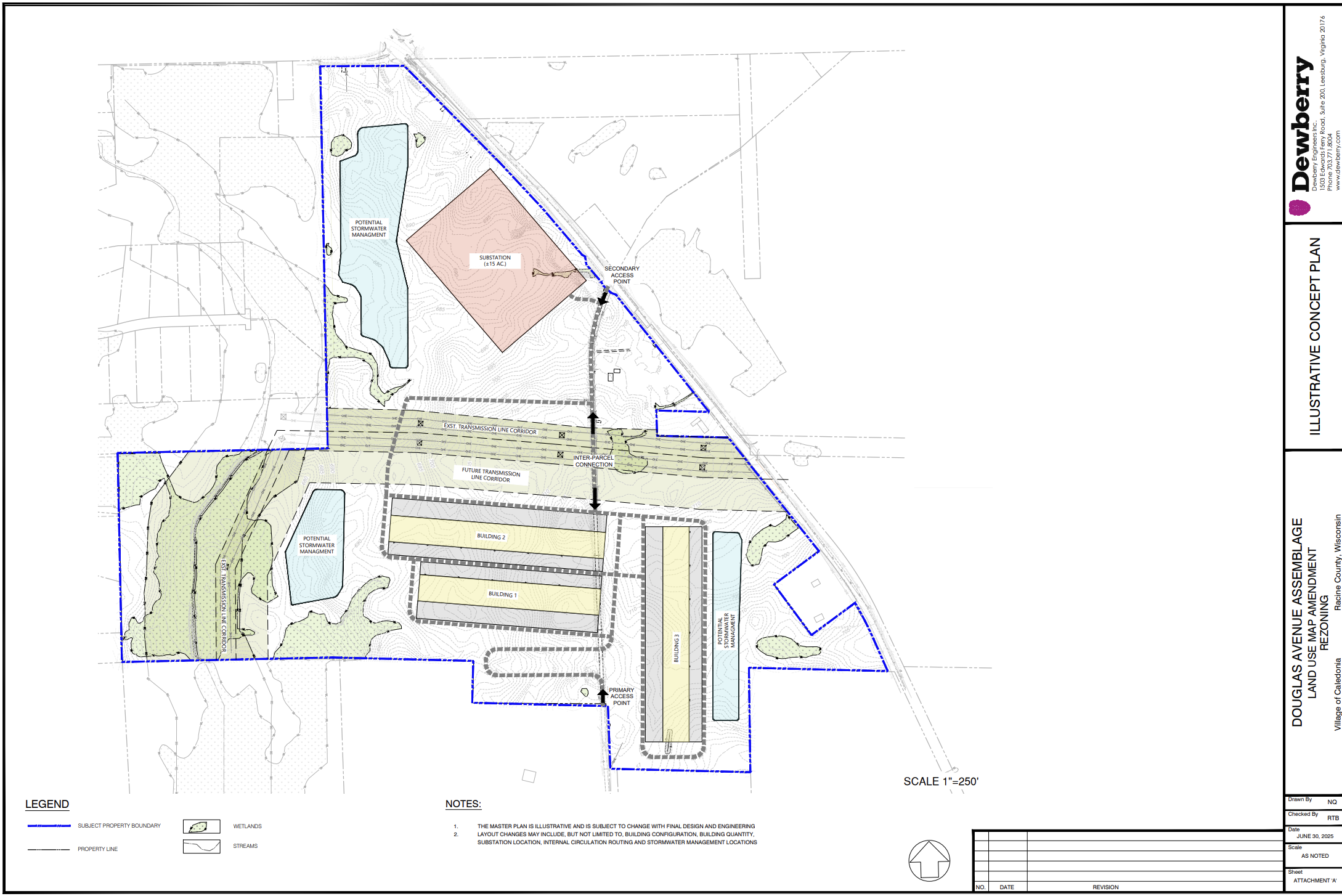
- Site concepts show three large data center buildings, a 15-acre electrical substation, stormwater retention areas, and a request to vacate a portion of Botting Road.
This initiative would mark the first major test of the Village’s new “Transition Light Industrial” land use category, which was introduced earlier this year to attract low-traffic, high-value developments such as data centers.
No Vote — Hearing Continued to August 25
Rich Brittingham, the project’s lead representative, requested a delay in the vote, citing the need for more time to review newly drafted conditions of approval and revise the conceptual site plan based on resident input. He emphasized the importance of not rushing into a decision when the conditions of approval are still being finalized.
“We don’t feel it’s appropriate to rush into a vote when the conditions of approval are fairly new — both to us and to you,” Brittingham said. “We want to come together with conditions that are amenable to all parties.”
The Plan Commission agreed to the delay, formally adjourning the public hearing until August 25, with the scope limited to reviewing proposed conditions and deed restrictions.
A Community Speaks Out
Residents spoke for over an hour, nearly all in opposition to the project. Their testimonies revealed deep tensions between preserving rural character and embracing industrial development.
Tiffany Hammond, who lives at 8937 Foley Road and works in construction, expressed her frustration: “If you guys are waiting for the older people to die off, the younger people are not going to put up with it. We moved here because we don’t want to live in an industrial park.”
John Pintar warned of potential consequences if the rezoning proceeds. “Once this gets put in, what’s going to stop more people from coming in with high-rise condos and everything else?”
Barbara Hugier, who has studied groundwater issues in the area, highlighted risks to wetlands, aquifers, and existing wells. “Every time a house has come into the area, our wells changed. We are complaining of contamination. If you’re digging deep holes, you could be changing the levels of our wells — again.”
Residents also raised concerns about runoff, noise, and traffic impacts, emphasizing fears of unchecked expansion and the loss of rural character.
Developer Responds to Concerns
In his closing remarks, Brittingham acknowledged the feedback and expressed a willingness to revise the plans accordingly. He addressed several points raised by residents:
- Water usage: Newer data center technologies use closed-loop liquid cooling systems with minimal water consumption, comparable to that of office buildings.
- Stormwater and wetlands: Development must meet Army Corps of Engineers and Wisconsin DNR environmental standards, including runoff treatment and water quality controls.
- Visual and sound buffers: The plan includes 500–1,500-foot setbacks from nearby homes and will include berms and landscaping to mitigate impact.
- Lighting and noise standards: The Village is updating its zoning ordinance to include performance standards, which the project will follow once finalized.
What’s Next
The Plan Commission will resume the public hearing on August 25, 2025. The discussion will focus on revised conditions of approval, draft deed restrictions, and potential adjustments to the site plan. Residents can continue submitting feedback and will have another opportunity to speak at the continued hearing.
How to Get Involved
Residents interested in participating can contact the Village Clerk at (262) 835-6414 or submit a public comment via email at info@caledonia-wi.gov. Additional meeting details are available at https://caledonia-wi.gov.

Post a Comment for "Caledonia Data Center Proposal Sparks Concern and Delays Community Vote"
Post a Comment