Business Leaders Back Trump, But Financial Records Tell Another Story
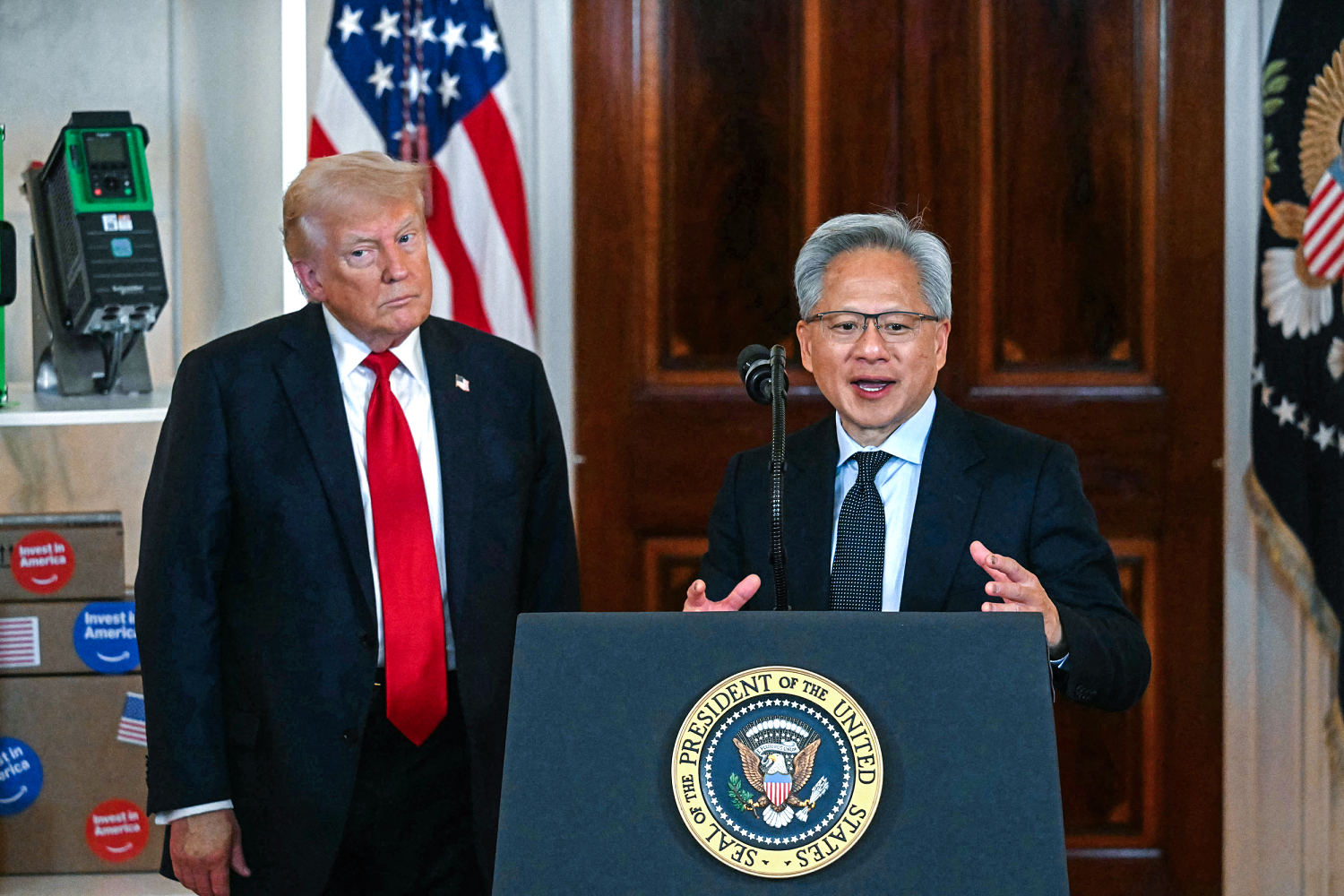
The Duality of Jensen Huang’s Public and Private Statements
Jensen Huang, the CEO of Nvidia, has been making headlines for his public praise of former President Donald Trump. According to Huang, Trump is a bold visionary who is leading America toward business success. This sentiment was recently echoed in an interview with USA Today, where he downplayed concerns about tariffs and emphasized the importance of Trump's leadership.
Huang also made a notable appearance at a major artificial intelligence summit in Washington, where Trump signed executive orders aimed at boosting AI development. During this event, Huang expressed strong support for the president, stating, “America’s unique advantage that no country could possibly have is President Trump.” These comments were later shared by an official White House social media account, highlighting the administration's interest in showcasing endorsements from influential business leaders.
However, the tone of Huang’s company's corporate filings tells a different story. A review of Nvidia’s latest quarterly filing with the Securities and Exchange Commission (SEC) from April reveals a more cautious outlook. The document does not shy away from discussing the challenging business environment facing the $4 trillion company, which became the first publicly traded firm to reach such a monumental market value due to its computer chips powering AI programs.
In these filings, the risks associated with tariffs are clearly outlined. The term "tariffs" appears seven times, indicating that they are considered a significant risk factor that could impact Nvidia's revenue. This contrasts with previous filings from late 2024, which mentioned tariffs only three times and did not highlight them as a major threat to the company's financial stability.
Other companies have also faced similar challenges. Ford CEO Jim Farley appeared on Fox News shortly after Trump initiated his global trade war, claiming that tariffs presented an opportunity to gain some business. However, just over a month later, Ford disclosed a $1.5 billion hit from the tariffs. Similarly, Harley Davidson, once a target of Trump's criticism, revealed that the tariffs could cost it between $130 million and $175 million this year.
Nvidia itself faced a significant challenge when it disclosed a $5.5 billion hit due to new restrictions on H20 AI chip exports to the Chinese market. In response, Huang reportedly lobbied Trump to restart chip sales, arguing that the restrictions benefited Chinese competitors like Huawei. His efforts paid off, as the administration reversed its decision this month.
For a company like Nvidia looking to expand into markets such as Italy, Spain, and the United Arab Emirates, Huang's approach to dealing with Trump is crucial. His so-called “first-buddy” diplomacy demonstrates the careful maneuvering of chief executives trying to avoid provoking the former president. David Rubenstein, co-chair of Carlyle, noted in April that Trump's aggressiveness toward critics was making business leaders hesitant to speak out against his economic policies.
Instead, many executives are focusing on promoting their “Made in America” credentials during earnings calls. This shift reflects the broader reality that Trump is not anchored by small-government principles. He has shown a willingness to expand his personal power without regard for institutional safeguards. At one point earlier this year, Trump even considered breaking up Nvidia, briefly showing a Sanders-like desire to curb monopolies.
“I figured we could go in and we could sort of break them up a little bit, get them a little competition, and I found out it’s not easy in that business,” Trump said at the AI summit this week. Despite this, he praised Huang's achievements, saying, “What a job you’ve done.”
There is one red line that major business executives do not want Trump to cross. The Chamber of Commerce recently defended the Federal Reserve, which is facing a fierce campaign from Trump over its decision to maintain steady interest rates. The Chamber stated, “The independence of the Fed has a long tradition, that has served the country well for 250 years. There is no reason to change it now.”
Nvidia exemplifies the complex position of many companies. While it continues to push forward with its vision of dominating the AI industry, its success remains vulnerable to a president who views tariffs as a tool of personal grudges. For Huang, navigating this landscape may require presenting a different narrative to Trump in public than to investors, all while hoping that the discrepancy goes unnoticed.

Post a Comment for "Business Leaders Back Trump, But Financial Records Tell Another Story"
Post a Comment