Bush's 1940s Vision 'Memex' Foreshadowed Modern AI
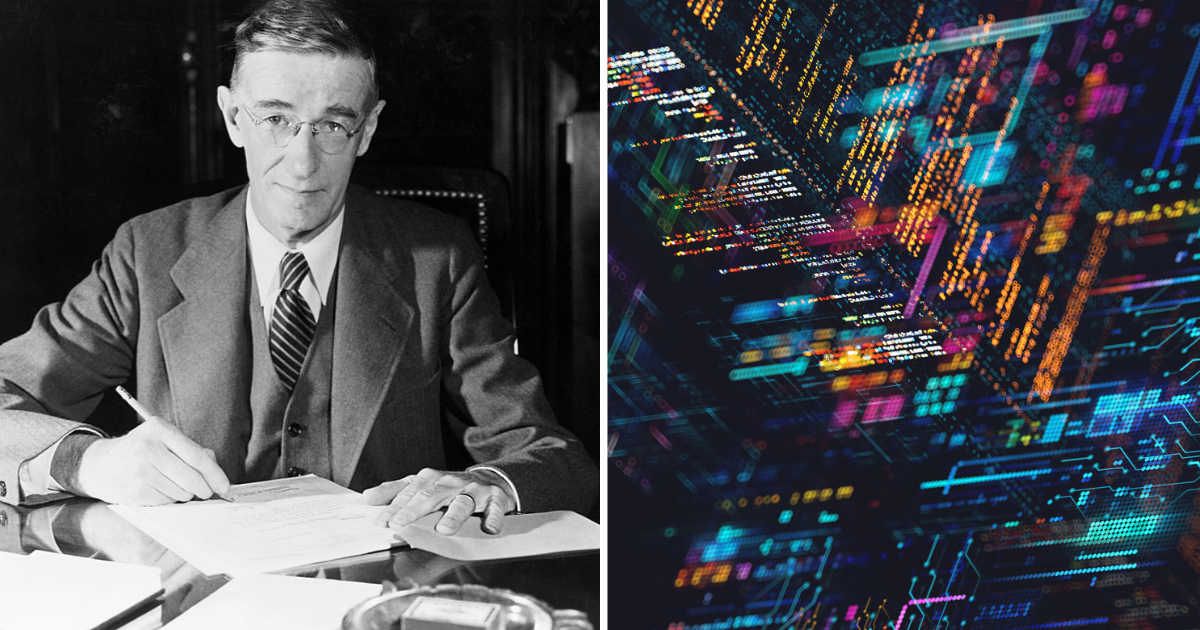
The Visionary Concept of Vannevar Bush and Its Impact on Modern Technology
In the early days of research, before the internet and artificial intelligence (AI) became part of daily life, people had to physically visit libraries to access information. This process was time-consuming and inefficient, especially during a period when the number of research publications grew rapidly in the 1940s. American engineer Vannevar Bush recognized this challenge and introduced an innovative solution that could be seen as a precursor to modern AI. His invention, known as the "Memex," aimed to revolutionize the way people searched for and organized research data.
A Device Designed for Research Efficiency
The Memex was envisioned as a personal device that would be integrated into a desk. It utilized microfilm as a storage medium, allowing for the compact storage of vast amounts of documents. These documents could be projected onto translucent screens, making it easier for users to access and review information. One of the key features of the Memex was its associative indexing system, which allowed users to link related items together. For example, a user could click on a code within a document to view related materials instantly, without needing to go through a traditional index.
Although Bush acknowledged that the technology of his time could not fully realize the Memex, he believed that it was a concept that could become a reality in the future. In his essay titled “As We May Think,” he outlined his vision for a tool that would enhance human cognition and make research more efficient.
Laying the Foundation for the World Wide Web
The concept of the Memex is considered to have laid the groundwork for what would eventually become the World Wide Web. According to some sources, the idea of a personal research library that could create a chain of interconnected documents closely resembled the structure of modern platforms like Wikipedia. The notion of linking information through a series of references inspired later inventors, such as Ted Nelson and Douglas Engelbart, who developed hypertext systems. These systems introduced hyperlinks, allowing users to navigate between documents seamlessly. This innovation became the basis for the internet as we know it today, enabling a more interactive and dynamic way of accessing information.
Balancing Machine Thinking and Human Creativity
Bush also foresaw the potential of machines to assist with repetitive tasks, a concept that has now been realized through advancements in AI. However, he was concerned about the direction of technological progress. While machines today can perform complex calculations and automate tasks, Bush worried that they might overshadow human creativity and reasoning. He expressed his concerns in writings that reflect a deep philosophical understanding of technology's role in society. He once stated, “In 1945, I dreamed of machines that would think with us. Now, I see machines that think for us, or worse, control us.”
This sentiment remains relevant today as society grapples with the implications of AI and automation. The question of whether technology should serve as a tool to enhance human capabilities or replace them entirely continues to be a topic of discussion.
The Ongoing Dialogue Between Technology and Human Effort
Bush’s ideas remind us to consider the intent behind technological innovations. The goal should be to enhance human skills rather than diminish them. As more tasks are delegated to machines, there is a risk of losing essential skills that were once fundamental to human development. This raises important questions about how future generations will learn and adapt in an increasingly automated world.
Bush, who held influential positions at institutions such as the Massachusetts Institute of Technology (MIT) and the Carnegie Institute, emphasized the importance of designing technology with a human-centered approach. He believed that automation should support human creativity and reasoning rather than hinder it. His vision continues to inspire discussions about the ethical use of technology and the need to balance innovation with human values.

Post a Comment for "Bush's 1940s Vision 'Memex' Foreshadowed Modern AI"
Post a Comment