Bukele's Unchecked Power Draws Global Backlash
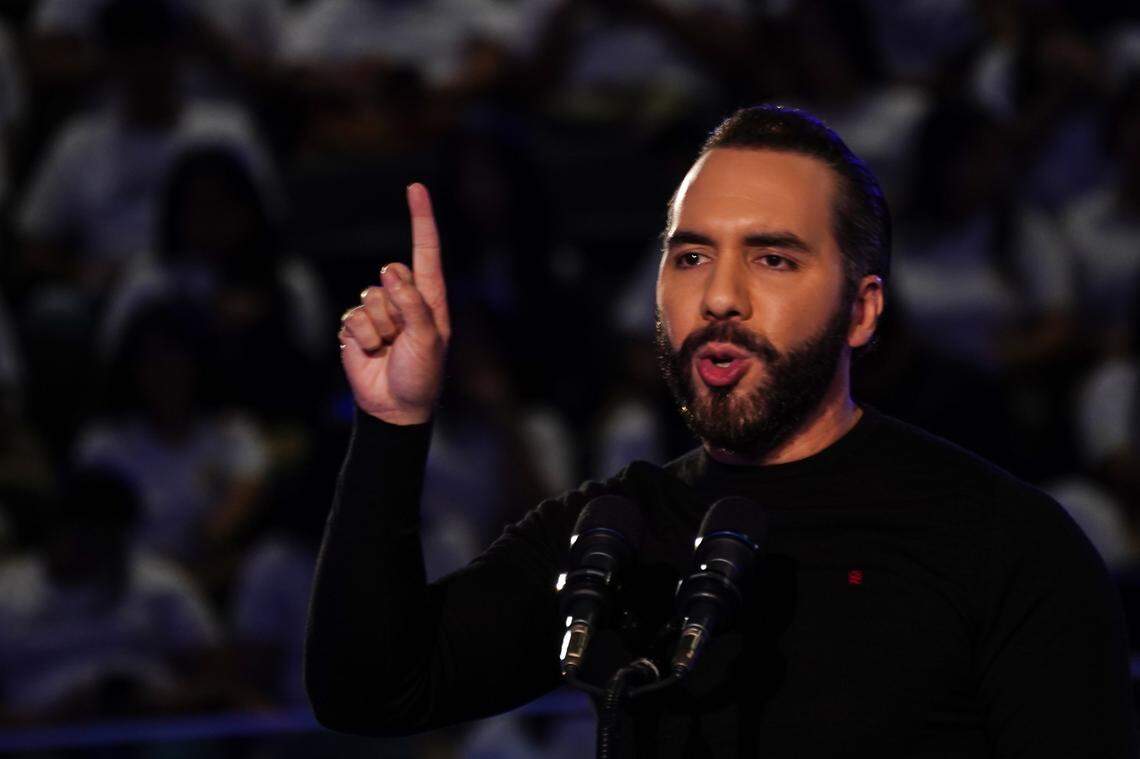
El Salvador's Constitutional Reforms Spark International Debate
El Salvador's recent constitutional reforms have ignited a global conversation about democracy, governance, and the balance of power. The changes, which allow for indefinite presidential re-election, extend the president's term to six years, and eliminate run-off elections, have drawn both support and sharp criticism from various international actors.
The legislative assembly, where President Nayib Bukele’s New Ideas party holds a supermajority of 54 out of 60 seats, approved the reforms on Thursday. This move has raised concerns among human rights organizations and international observers who argue that it undermines democratic principles and concentrates power in the executive branch.
Criticism from Human Rights Organizations
The Washington Office on Latin America (WOLA) has criticized the legislative assembly, stating that it "has ceased to be an autonomous body and acts fully aligned with the interests of the Executive Branch, without allowing dissent or democratic debate." Similarly, Amnesty International has expressed alarm over the reforms, warning that they could lead to increased risks of human rights violations and the imposition of future policies without regard for the population.
César Marín, deputy regional director for the Americas at Amnesty International, said: “This practice seeks to concentrate power in the executive branch and increases the risk of human rights violations and the imposition of future reforms without regard for the population and its rights.”
U.S. Government's Stance
Despite these concerns, the Trump administration has publicly supported the reforms. A U.S. government spokesperson defended the decision by El Salvador's legislative assembly, stating that the body was democratically elected and had the right to make constitutional changes. The spokesperson added, “We reject the comparison of El Salvador's democratically based and constitutionally sound legislative process with illegitimate dictatorial regimes elsewhere in our region.”
These comments, which were shared by Bukele on social media, have been met with strong opposition from human rights groups. The Latin America Working Group, an advocacy organization, called the U.S. stance an “affront” to anyone who supports democracy and civil rights. They emphasized that the reforms were passed in just six hours without public debate, making Bukele no less of a dictator than other leaders in the region.
Concerns from International Human Rights Groups
The International Federation for Human Rights (FIDH) also voiced concern over the U.S. comments, arguing that they distract from the real danger of democratic backsliding in El Salvador. FIDH urged the Salvadoran authorities to uphold the rule of law, ensure genuine separation of powers, and preserve democratic institutions. They also called on international partners to remain vigilant in defending democratic norms and human rights throughout the region.
Political Context and U.S.-El Salvador Relations
Bukele’s rise to power has been marked by a landslide victory in last year’s election, where he received over 80% of the votes despite a constitutional ban on immediate re-election. His ability to run was enabled by the Supreme Court, which ruled in 2021 that it was his human right to do so.
The strong relationship between Bukele and former U.S. President Donald Trump has further complicated the situation. Earlier this year, the Trump administration paid Bukele’s government $6 million to detain hundreds of Venezuelan deportees in CECOT, a megaprison known for extreme overcrowding, poor sanitary conditions, and violence.
During a meeting at the White House in April, Trump praised Bukele for his “effective” crackdown on crime, while Bukele commended Trump for his efforts to reduce illegal immigration. This close alliance has led some to question the U.S. government’s commitment to democratic values, especially given Trump’s own controversial remarks about running for a third term.
Trump’s Ambitions and Public Statements
Trump himself has hinted at the possibility of running for a third term, despite the U.S. Constitution prohibiting such a move. In March, he told NBC that there were “methods” to allow him to run again, adding, “I am not joking.” However, in a more recent interview with CNBC’s Squawkbox, Trump conceded that he will “probably not” seek re-election, though he still expressed a desire to run, claiming, “I have the best poll numbers I've ever had.”
This ongoing discussion highlights the complex interplay between domestic politics, international relations, and the preservation of democratic institutions. As El Salvador continues to navigate its political landscape, the global community remains watchful, balancing support for democratic processes with concerns about the erosion of checks and balances.

Post a Comment for "Bukele's Unchecked Power Draws Global Backlash"
Post a Comment