Bronx Students Outperform Public Schools in Math and Reading by 25%
Charter Schools in the Bronx Show Remarkable Academic Success
Charter schools in the Bronx are making significant strides in academic performance, particularly in the borough’s most economically disadvantaged areas. New data reveals that students attending these schools have achieved pass rates exceeding 90% in certain classrooms on state reading and math exams. These results far outperform those of students in traditional public schools, with a gap of at least 25% in some cases.
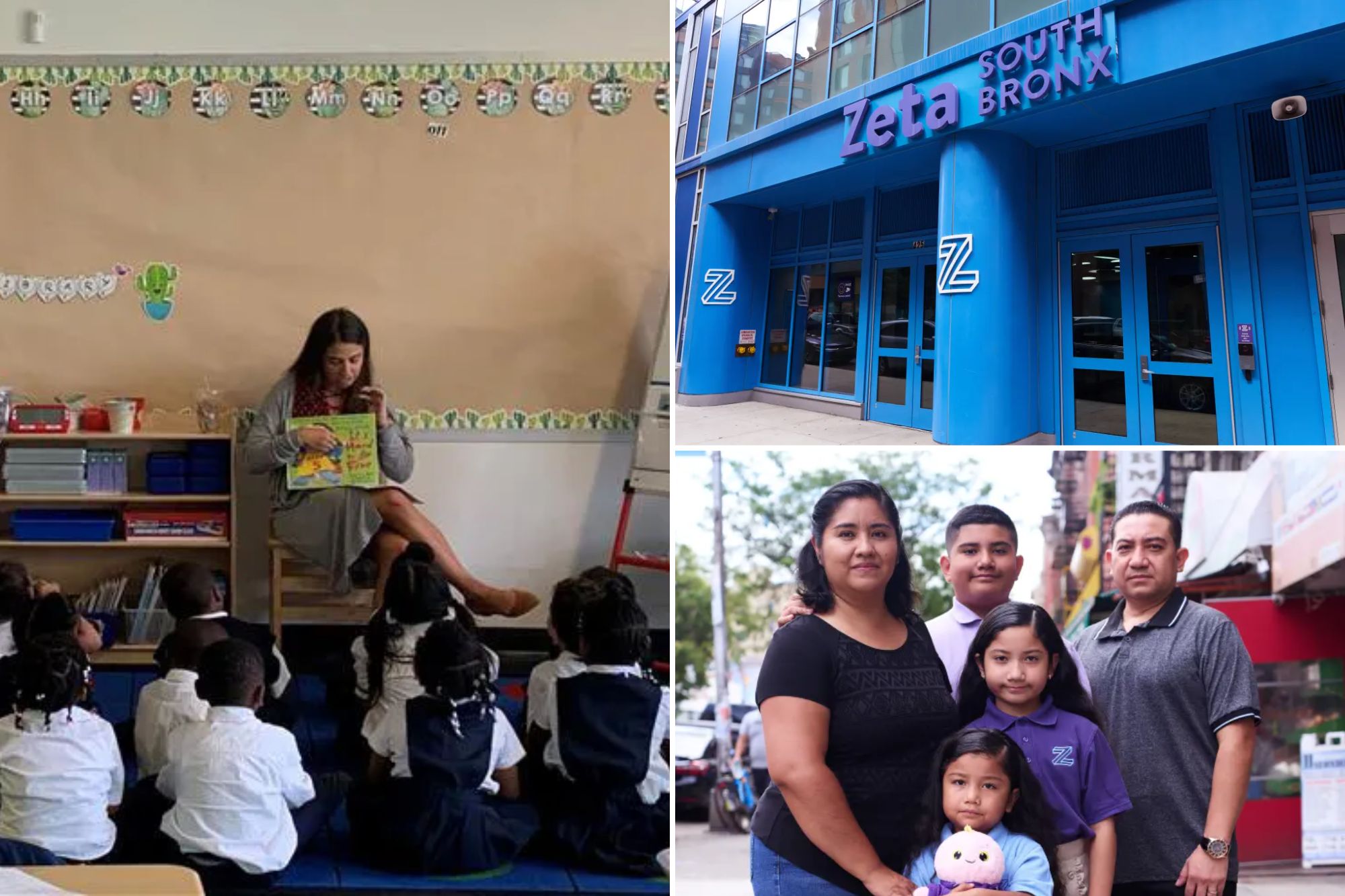
At Zeta Charter Schools, which operates four schools in The Bronx and two in northern Manhattan, an average of 91.9% of students in grades 3-8 passed the reading exam, while 94.8% aced the math test. Parents like Laura Manzano, whose three children attend Zeta South Bronx K-to-8 school, praise the school for its focus on the "whole child" approach. At this particular school, 93.8% of students passed the reading test, and 93.5% scored proficient in math.
Across all 99 charter schools in The Bronx, 68.6% of students in grades 3-8 passed the English Language Arts (ELA) exams, compared to just 43.6% for students in traditional public schools. The disparity widened further in math, with 69.2% of charter school students scoring proficient, versus 43.3% for their counterparts in traditional schools.
Several charter school networks have shown exceptional results. Success Academy’s five Bronx schools saw remarkable success, with 100% of pupils passing the math test at Success Academy IV and V. ELA scores ranged from 92% to 99% across all five schools. Similarly, all four South Bronx Classical Charter schools reported that 95% or more of students passed the ELA exam, and 96% or more scored proficient in math.
The Icahn Charter Schools network also performed well, with 99.5% of students passing both ELA and math exams at Icahn Charter Schools I and IV. Six of the seven schools had ELA pass rates of 80% or higher, and five of them achieved 80% or more in math.
Lawford Cunningham, superintendent of the Icahn charter network, referenced the infamous “The Bronx is Burning” headline from the 1970s, noting that the borough is now seeing significant progress. He emphasized that the focus is always on the students, starting with hiring and training dedicated teachers, adopting a rigorous curriculum, and using technology and data analysis to support learning.
Citywide, 67.5% of charter school students scored proficient on ELA exams, compared to 56.3% for traditional public school students. In math, 68.6% of charter school students scored proficient, versus 56.9% for public school students.
Critics argue that despite some improvements, the performance of traditional public schools remains disappointing given the city's massive education budget. Over 40% of students in traditional public schools scored below proficient in both math and reading.
James Merriman, CEO of the NYC Charter School Center, highlighted the positive impact of charter schools, emphasizing the role of dedicated teachers and leaders who challenge and support students. He noted that when families have access to quality public school options, students tend to perform better.
New York City has 285 public charter schools serving approximately 150,000 students—about 15% of the total student population in the city's 1,800 public schools. Nearly 90% of charter school students are Black or Latino, 83% come from low-income families, and 19% have special needs.
Charter schools are publicly funded but privately managed, often offering longer school days and years than traditional public schools. Most staff are not union members, which is a key difference from traditional schools.
Despite their success, the Democratic-run state legislature has not lifted the cap on new charter schools, a move opposed by the United Federation of Teachers. This has limited the expansion of charter schools in the city.
Manzano, a parent at Zeta Charter Schools, praised the school’s emphasis on parental involvement and small group instruction for struggling students. The school also hosts fun events before exams to reduce stress and includes class trips to cultural landmarks like Radio City Music Hall.
Emily Kim, founder and CEO of Zeta Charter Schools, expressed excitement about the recent results and announced plans to expand into Queens with new schools opening in Jamaica and Elmhurst this fall. She emphasized that the school’s model—combining academic rigor with creative encouragement and emotional support—has proven effective.
Cunningham, who has been with the Icahn network since its founding in 2002, stressed the importance of teacher preparation and accountability. He noted that competition and a culture of high expectations drive the network’s success.
Bronx State Senator Luis Sepulveda, who represents many charter schools in his district, commended the achievements of these institutions. However, he also expressed support for traditional public schools, highlighting the need for balanced educational opportunities.
While several mayoral candidates have not promoted charter schools, some have taken positions on the issue. Socialist Democratic nominee Zohran Mamdani opposes charter schools, while Mayor Eric Adams and former Governor Andrew Cuomo have shifted their stances. Republican nominee Curtis Sliwa has previously supported lifting the charter school cap but has not included it in his current platform.

Post a Comment for "Bronx Students Outperform Public Schools in Math and Reading by 25%"
Post a Comment