Brain-Driven AI Leap: Machines Learn to See Smarter
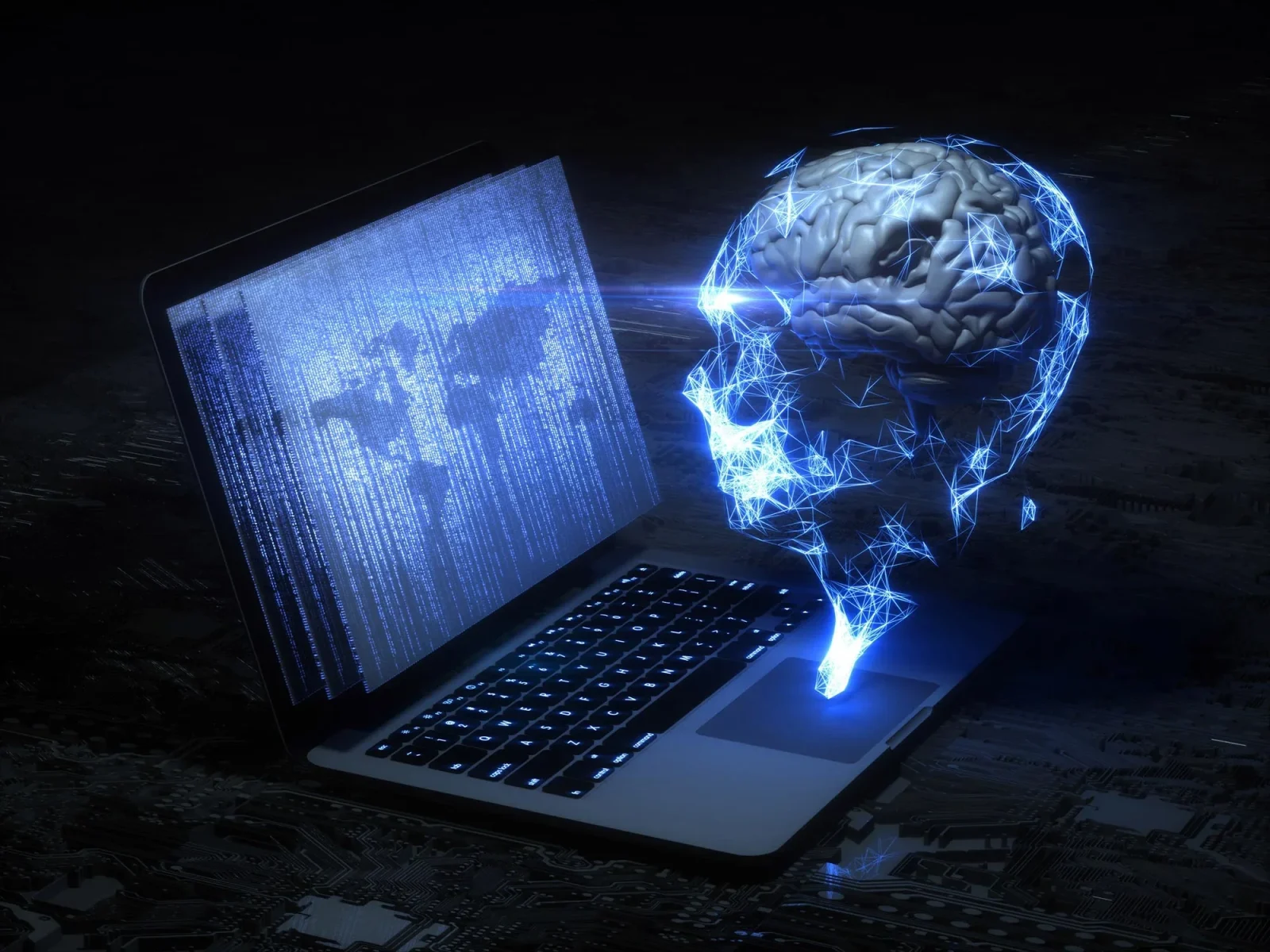
The Evolution of AI Vision: A Step Closer to Human-like Perception
Artificial intelligence has made significant strides in understanding and interpreting visual data, but it still lacks the nuanced perception that humans possess. However, a recent breakthrough in AI technology is bringing machines closer to human-like vision. Researchers have developed a technique called Lp-Convolution, which allows machines to focus on critical elements within an image—mirroring how the human brain processes visual information. This innovation could enhance AI's capabilities in areas such as autonomous driving, medical diagnostics, and robotics.
The research team behind this advancement includes scientists from various global institutions, including the Institute for Basic Science. Their goal was to address one of the major challenges in AI: processing complex images efficiently while maintaining accuracy and minimizing computational resources. Inspired by the way the human brain perceives visuals, they created a new approach that enables AI to adjust its focus dynamically.
Why Traditional AI Struggles with Image Recognition
To grasp the significance of this new method, it's essential to understand how current AI systems handle image recognition. Most image recognition tools rely on Convolutional Neural Networks (CNNs), which use small, fixed square filters to detect patterns in images. While effective in many cases, these systems can miss broader details or more intricate shapes. It’s akin to examining a forest one leaf at a time, hoping to discern the entire scene.
Another type of AI, known as Vision Transformers (ViTs), takes a different approach by analyzing the entire image at once. This method often yields better results but requires substantial computing power and large datasets for training. As a result, ViTs are not always practical for everyday applications such as mobile apps, security cameras, or medical devices that lack access to supercomputers.
In contrast, the human brain doesn’t process visual information in the same rigid manner. It uses selective and flexible connections to quickly identify what's important in any given scene—whether it's recognizing a familiar face in a crowd or tracking a ball moving toward you.
The researchers asked a fundamental question: Can a machine replicate this ability?
Lp-Convolution: Flexible Filters That Mimic the Brain
The answer came in the form of Lp-Convolution, a method that redefines how CNNs apply filters. Instead of using fixed square shapes, Lp-Convolution allows filters to stretch in various directions—horizontally, vertically, or in any shape in between. This flexibility is based on a mathematical formula known as the multivariate p-generalized normal distribution (MPND).
These filters adapt depending on the task, much like how the human brain focuses on specific elements in a scene. For instance, when reading, the brain emphasizes lines of text, while during sports, it tracks motion. Lp-Convolution replicates this adaptability, addressing a long-standing issue in AI known as the “large kernel” problem.
In traditional CNNs, increasing filter size often leads to more data without improved results, making the system slower. Lp-Convolution avoids this by reshaping filters more intelligently, using fewer resources while enhancing accuracy.
Testing the Brain-Like Approach
To validate the effectiveness of Lp-Convolution, the team tested it on standard image sets, including CIFAR-100 and TinyImageNet—popular benchmarks used to evaluate AI's object recognition capabilities. In these tests, Lp-Convolution outperformed older models like AlexNet and even surpassed advanced systems such as RepLKNet. Moreover, it delivered strong results even when dealing with blurry, noisy, or corrupted images—real-world conditions where perfect images are rare.
Surprisingly, the researchers observed a pattern in how Lp-Convolution processed data that resembled activity in animal brains, specifically mouse brain signals. When the AI filters took on a shape close to a bell curve, or Gaussian distribution, their behavior mirrored the firing of biological neurons.
“We humans quickly spot what matters in a crowded scene,” said Dr. C. Justin Lee, one of the study’s leaders. “Our Lp-Convolution mimics this ability, allowing AI to flexibly focus on the most relevant parts of an image—just like the brain does.”
Real-World Applications: Safer Cars, Better Diagnoses, Smarter Robots
The benefits of Lp-Convolution extend beyond laboratory testing. Its efficiency and speed make it suitable for integration into everyday technologies. For example, self-driving cars require split-second decisions, and if their cameras cannot process images quickly enough, the consequences could be severe. Lp-Convolution helps vehicles detect obstacles faster and more accurately.
In healthcare, doctors often use AI to analyze scans or X-rays. Traditional systems may overlook subtle signs of illness. Lp-Convolution can highlight minute details, aiding in early disease detection.
Robots, too, stand to gain from this technology. They need to see and react in dynamic environments. Whether sorting packages or assisting in disaster zones, flexible vision is crucial. “This work is a powerful contribution to both AI and neuroscience,” said Dr. Lee. “By aligning AI more closely with the brain, we’ve unlocked new potential for CNNs, making them smarter, more adaptable, and more biologically realistic.”
The Future of Lp-Convolution
The research team plans to continue refining the technology. Their next step involves testing Lp-Convolution in more complex tasks, such as solving visual puzzles or making real-time decisions. They aim to bring AI even closer to human-like thinking without requiring supercomputers or vast amounts of data.
Their work highlights the potential of emulating the brain’s design to create better machines. Rather than relying solely on raw power, intelligent structure offers a more effective solution. As Lp-Convolution demonstrates, a flexible and focused system can achieve more by working less.

Post a Comment for "Brain-Driven AI Leap: Machines Learn to See Smarter"
Post a Comment