Black Mayors Cite Big Crime Drops in Cities Trump Calls 'Lawless'
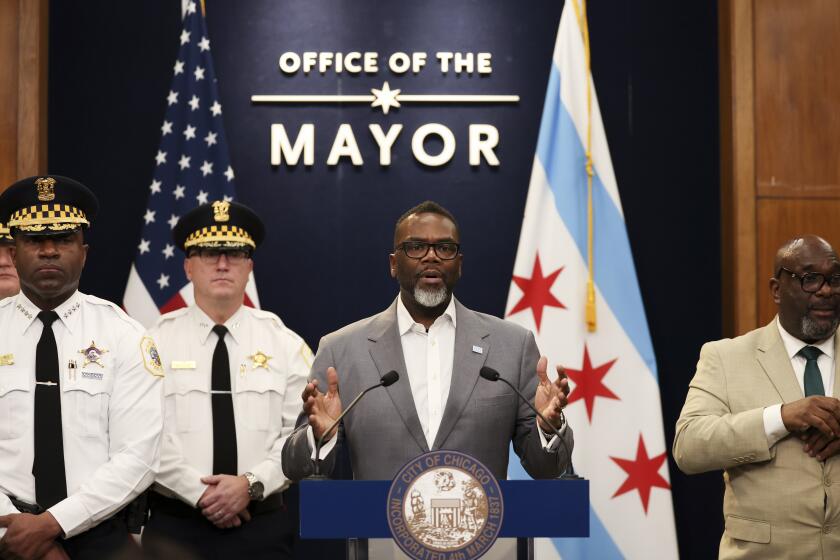
Mayors Challenge Trump’s Narrative on Crime in Black-Led Cities
As President Donald Trump continued to paint Washington, D.C. as a crime-ridden city in need of federal intervention, several mayors across the country began to voice their concerns. They pointed out that their cities had seen significant declines in violent crime over the past year, despite the initial spike during the pandemic. This trend was attributed to various factors such as increased youth engagement, successful gun buyback programs, and stronger community partnerships.
The African American Mayors Association (AAMA) has been particularly vocal in its efforts to counter Trump's claims. They believe that the president's rhetoric is not only misleading but also undermines the progress made in their communities. The AAMA sees the federal government's recent actions in Washington, D.C., as an opportunity to highlight the effectiveness of local strategies in reducing crime.
“It gives us an opportunity to say we need to amplify our voices to confront the rhetoric that crime is just running rampant around major U.S. cities. It’s just not true,” said Van Johnson, mayor of Savannah, Georgia, and president of the AAMA. “It’s not supported by any evidence or statistics whatsoever.”
Trump has deployed the first of 800 National Guard members to the nation's capital, with Republican governors from West Virginia, South Carolina, and Ohio pledging additional support. This move marks a significant escalation of the federal intervention, raising concerns among city leaders about the potential impact on local governance and community relations.
Cities with Black Mayors Face Similar Criticisms
Trump has also criticized other cities, including Baltimore, Chicago, Los Angeles, and Oakland, labeling them as crime-ridden and "horribly run." What these cities have in common is that they are all led by Black mayors. This has not gone unnoticed by the AAMA, which believes that the president's comments reflect a pattern of racial bias and political targeting.
“Not lost on any member of our organization that the mayors either were Black or perceived to be Democrats,” Johnson said. “And that’s unfortunate. For mayors, we play with whoever’s on the field.”
The federal government's actions have prompted some mayors to emphasize the strategies that have helped reduce crime in their cities. These include public health approaches, community-based interventions, and investments in social services. For example, in Chicago, Mayor Brandon Johnson highlighted a historic drop in homicides and shootings, while Los Angeles Mayor Karen Bass noted a decline in violence since 2023.
Community Efforts Play a Key Role
In Baltimore, officials reported significant decreases in homicides and nonfatal shootings, with trends showing improvement since 2022. Carjackings and other major crimes have also declined, although burglaries have slightly increased. City leaders credit this progress to a comprehensive approach that includes community violence prevention initiatives and investment in social services.
Mayor Brandon Scott, who spearheaded the creation of a Comprehensive Violence Prevention Plan in 2021, accused Trump of using crime as a wedge issue rather than focusing on real solutions. He criticized the administration for cutting funding for community anti-violence measures and vowed to continue making progress despite the challenges.
Oakland officials also reported a sharp decline in crime, with a 21% drop in homicides and a 29% decrease in violent crime in the first half of the year. The city attributes this success to collaborations with community organizations and crisis response services through its Department of Violence Prevention.
Concerns About Federal Intervention
While some mayors support federal assistance for specific issues like gun trafficking and cybercrime, there is concern about the broader implications of military-style interventions. In Washington, federal agencies and National Guard members have been patrolling the National Mall and conducting law enforcement duties. However, the use of armed troops on city streets remains controversial.
Savannah's Johnson expressed his support for federal collaboration but emphasized the need for targeted assistance rather than broad military involvement. He pointed out that municipal law enforcement requires different skills compared to those used by the military.
There has also been speculation about the possibility of youth curfews as part of the federal intervention. However, advocates warn that such measures could disproportionately affect young people of color and fail to address the root causes of violence.
A Wait-and-See Approach
For now, mayors are closely watching how Washington, D.C. Mayor Muriel Bowser navigates the federal intervention. She has walked a fine line between criticism and cooperation, and her recent legal action to block the administration's appointment of a Drug Enforcement Administration chief as an emergency police leader highlights the tensions involved.
Johnson praised Bowser for maintaining dignity and grace under pressure. He emphasized the resilience of Black mayors and their ability to adapt quickly to challenges.
“Black mayors are resilient. We are intrinsically children of struggle,” Johnson said. “We learn to adapt quickly, and I believe that we will and we are.”

Post a Comment for "Black Mayors Cite Big Crime Drops in Cities Trump Calls 'Lawless'"
Post a Comment