Bitcoin's Contradiction: The Rebel Turns Establishment
The Rise of Alternative Assets in 2025
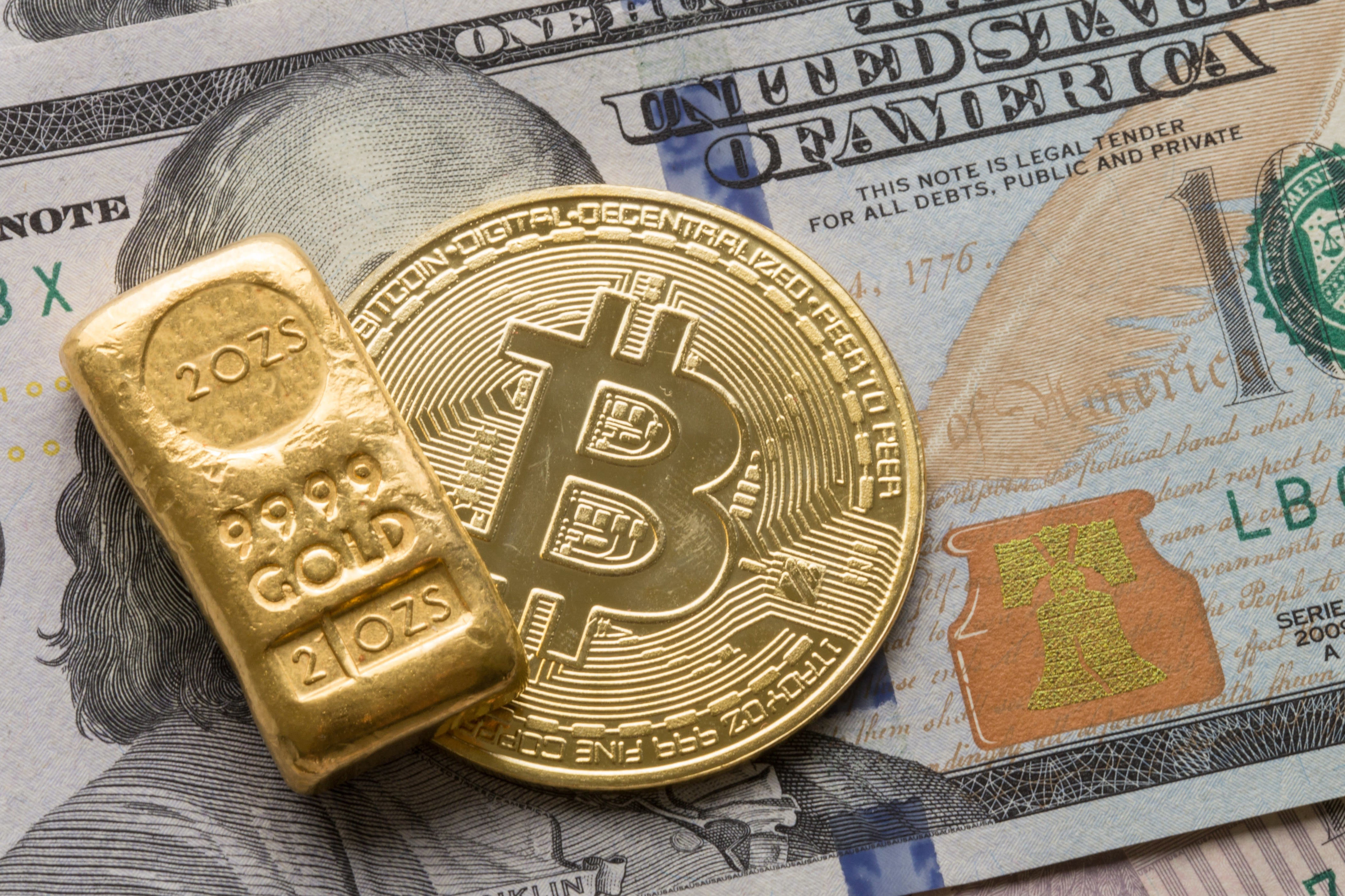
In 2025, the world has witnessed an extraordinary year for alternative assets. Gold prices have soared by over 26%, and Bitcoin has reached unprecedented heights, surpassing $124,000. These impressive gains have not occurred in a vacuum; rather, they have been driven by global instability. As central banks hesitate, interest rates fluctuate, and the international order shows signs of strain, investors are turning to assets that offer a sense of security and resilience against systemic risks.
At first glance, this trend seems expected. Gold has long been considered a safe haven during times of crisis, offering a tangible store of value and a symbol of stability. However, Bitcoin's meteoric rise presents a more complex narrative. Once dismissed as the tool of digital anarchists and dark-net activists, Bitcoin now moves in tandem with the financial system itself. Its sharp increases during turbulent periods raise a critical question: Is Bitcoin truly an alternative to the traditional financial system, or is it merely another mechanism that the system has learned to absorb?
Safe Haven or Stress Barometer?
The prevailing narrative suggests that Bitcoin responds to inflation, currency devaluation, and declining trust in central banks. In this context, it is often referred to as "digital gold" due to its scarcity, decentralization, and anti-establishment nature. Unlike fiat currencies, which can be printed indefinitely, Bitcoin has a fixed supply cap of 21 million coins. From a monetary theory perspective, it represents a revolutionary experiment.
However, its behavior reveals a more intricate story. In some crises, Bitcoin surges, while in others, it crashes alongside the stock market. This indicates that it is not a pure safe haven but rather an asset that reflects sentiment, ideology, and shifts in collective mood. When trust in institutions wavers, Bitcoin becomes more than just an investment—it becomes a statement of resistance.
The Paradox of Bitcoin's Evolution
Here lies the paradox: Bitcoin is no longer anti-establishment. Financial giants such as BlackRock and Fidelity have entered the market, and Bitcoin-based exchange-traded funds are now available for trading. State regulators are also establishing clear frameworks for exchanges. What once operated outside the system is gradually being integrated into it.
This transformation alters the rules of the game. As institutional players enter the scene, Bitcoin’s behavior becomes more predictable, aligning with other risk assets. It reacts to interest rates, political tensions, and market indices, starting to resemble just another financial product rather than a revolutionary force.
In essence, as Bitcoin gains legitimacy, it also loses some of its distinctiveness. While its value still depends on being “different,” its price increasingly reflects adoption by mainstream players.
Lessons from Gold’s History
History provides a compelling precedent. Gold, too, began as an alternative to the monetary system but eventually became a policy instrument for central banks. They bought it, controlled it, and in doing so, stripped away much of its counter-system essence. Will Bitcoin follow a similar path? Possibly.
As Bitcoin becomes a legitimate asset, it risks transforming from a rallying cry for freedom into just another balance-sheet entry, complete with options, derivatives, insurance products, and trading algorithms. The mythology may remain, but the function will become indistinguishable from any other asset.
Implications for Investors and Citizens
For investors, the message is clear: Bitcoin may still deliver returns, but it is no longer an ideological shelter. Its volatility remains high, yet it is now translated into beta coefficients and risk-appetite models. The question is not whether Bitcoin will survive but at what cost its uniqueness will be preserved.
In an era where even rebellion is commercialized, legitimacy is a double-edged sword. The system knows how to adapt, and sometimes, the most effective way to neutralize a revolution is to welcome it inside.

Post a Comment for "Bitcoin's Contradiction: The Rebel Turns Establishment"
Post a Comment