Birthright Citizenship: Key Insights on Trump's Policy Plan — If Permitted by Courts
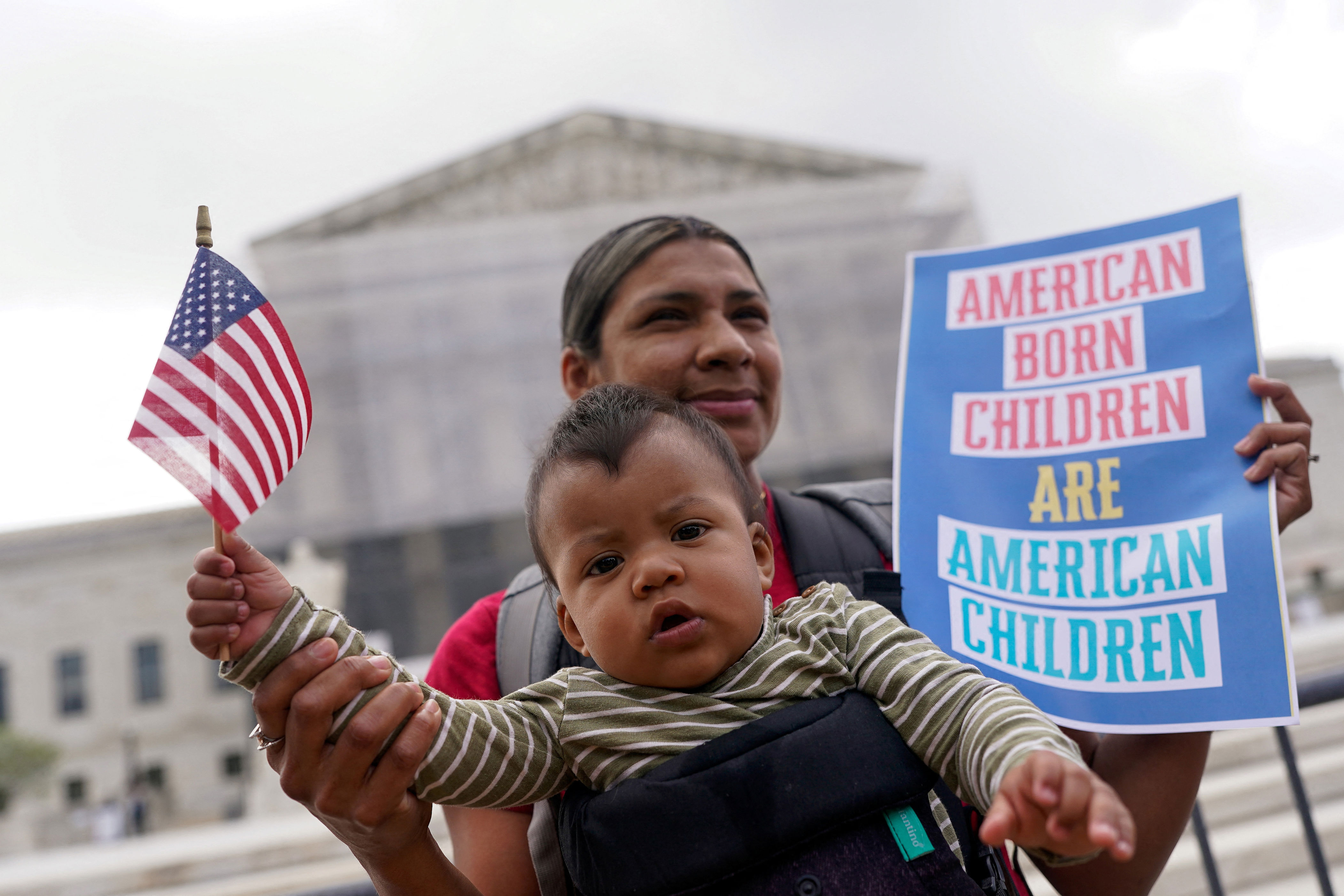
The Legal Battle Over Birthright Citizenship
On his first day back in the White House, President Trump issued an executive order aimed at revoking birthright citizenship. This move has sparked a significant legal and political debate, with many questioning whether he can actually follow through on this promise. So far, courts have consistently ruled that Trump does not have the authority to unilaterally eliminate a constitutional right that has granted citizenship to anyone born in the United States for over 150 years. The final decision may ultimately rest with the Supreme Court, which recently gave Trump a procedural victory but has yet to address his power to revoke birthright citizenship.
Another major issue that has remained unresolved for the past seven months is who would be affected by this policy. Trump’s original order outlined broad categories of immigrants whose children would not be granted citizenship, but it lacked specific details about which types of immigrants would fall into those categories.
Clarifying the Criteria
On Friday, the U.S. Citizenship and Immigration Services (USCIS) released a memo that finally provided the long-awaited specifics. The memo clarified the two main scenarios under which a child would not be granted citizenship:
- If the mother is “unlawfully present” in the U.S. and the father is not a citizen or permanent resident.
- If the mother’s presence in the U.S. is “lawful but temporary” and the father is not a citizen or permanent resident.
The first category is relatively straightforward: children of mothers who are not legally in the U.S. would not receive citizenship. However, the second category hinges on the definition of “lawful but temporary,” which was not clearly defined in the original order.
Defining “Lawful but Temporary”
The U.S. immigration system is highly complex, with numerous visa types, statuses, and other mechanisms that allow individuals to enter and remain in the country. The new memo defines “lawful but temporary” for the first time, stating that it includes immigrants who are in the U.S. legally but whose presence is “time limited, for duration of status, or otherwise not perpetual.”
This definition applies to several groups, including:
- Immigrants who entered the U.S. for tourism, business, medical care, or temporary work.
- Those granted a stay of removal due to threats to their life, freedom, or safety in their home country.
- Individuals who have filed to voluntarily leave the U.S. but have not done so yet.
- People who received legal status through programs for certain relatives of legalized aliens.
- Victims of human trafficking or other crimes who received a visa.
- Those with Temporary Protected Status (e.g., Haitian migrants), deferred removal (DACA recipients), or parole for urgent humanitarian or public benefit reasons.
These categories mean that most legal immigrants would not pass on citizenship to their children if they have children in the U.S. However, some groups are exempt from this rule, including:
- Permanent residents
- Asylum recipients
- Refugees
- U.S. nationals who are noncitizens (e.g., people from American Samoa)
- Certain Native Americans born in Canada
Protecting Noncitizen Children
The memo also states that while children of those with “lawful but temporary status” would not be citizens, the government’s policy will aim to protect them from any negative immigration consequences. However, it does not provide specific details on how this protection would work, such as whether these children could be deported or how their parents might apply for legal status.
The Path Forward
These new details are only relevant if the courts grant the Trump administration the authority to implement the policy. However, they offer important clarity on how the policy would function if it ever takes effect. The ongoing legal battles and the Supreme Court’s eventual ruling will determine the future of birthright citizenship in the United States.

Post a Comment for "Birthright Citizenship: Key Insights on Trump's Policy Plan — If Permitted by Courts"
Post a Comment