Australia's First Orbital Rocket Fails on Historic Launch
A Historic but Brief Launch for Australia
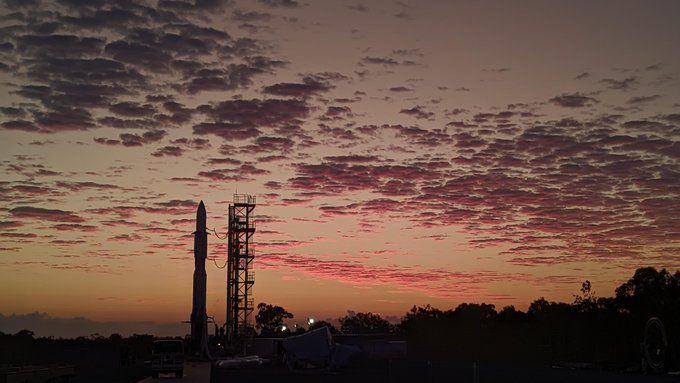
Australia has taken a significant step forward in its quest to establish a domestic orbital launch capability. On July 29, the Australian company Gilmour Space Technologies launched its first Eris rocket from the Bowen Orbital Port in coastal Queensland. This marked the first orbital launch attempt from Australian soil in over 50 years, making it a momentous occasion for the country’s space industry.
The Eris rocket, which stands at 82 feet (25 meters) tall, lifted off around 6:35 p.m. EDT (2235 GMT; 8:35 a.m. local Australian time). However, the flight was short-lived. The rocket began to slide sideways shortly after liftoff and crashed back to Earth just 14 seconds later. This outcome closely resembled the third orbital launch attempt by the U.S.-based company Astra in August 2021, which also ended in a similar sideways failure.
Despite the brief flight, the mission was not considered a failure. Gilmour Space had not expected a full success on its first test flight. In a statement released in February, the company emphasized that the primary goal of the Eris-1 mission was to gather valuable data to improve the reliability and performance of future launches. “Whether we make it off the pad, reach max Q, or get all the way to orbit, what's important is that every second of flight will deliver valuable data,” the company stated.
After the launch, Gilmour Space shared an optimistic message on social media. “Today, Eris became the first #AustralianMade orbital rocket to launch from Australian soil — ~14s of flight, 23s engine burn. Big step for launch capability. Team safe, data in hand, eyes on TestFlight 2,” the post read. The company also shared two photos of the liftoff, signaling that the mission had provided useful insights for future efforts.
A Long Road to Launch
The Eris launch was a long time coming. Originally planned for March, the mission faced several delays. The first setback came in March when Tropical Cyclone Alfred disrupted plans. The company then targeted mid-May, but a technical issue forced another postponement. On May 15, the payload fairing, which protects satellites during launch, unexpectedly popped off while the rocket was on the pad. The cause was identified as a power surge resulting from electrical backfeed from downstream devices, according to a statement from Gilmour Space.
After resolving this issue, the company aimed for late June but was again delayed by strong winds near the Bowen Orbital Port. As a result, the target date continued to shift due to unfavorable weather conditions until today’s successful launch.
Vision for the Future
Gilmour Space was founded in 2015 by brothers Adam and James Gilmour with the goal of making Australia a major player in the spaceflight industry. A key part of this vision involves the Eris rocket, which is designed to carry up to 474 pounds (215 kilograms) of payload to sun-synchronous orbit. The company has grown to about 200 employees and also builds satellites. One of its recent achievements was the launch of the ElaraSat spacecraft bus on SpaceX’s Transporter-14 rideshare mission last month. The ElaraSat carries a hyperspectral imager developed by CSIRO, Australia’s national science agency, to monitor water quality.
A New Era for Australian Spaceflight
Today’s launch marks a turning point for Australia’s space industry. The last orbital launch from Australian soil occurred in October 1971, when a British Black Arrow rocket successfully launched the Prospero satellite from the Woomera Rocket Range in South Australia. Since then, the country has relied on foreign launch providers to send satellites into orbit.
With the Eris launch, Gilmour Space has taken the first step toward establishing a self-sufficient orbital launch capability in Australia. While the flight was brief, the data collected will be crucial for refining future missions. The company’s next test, TestFlight 2, is already on the horizon, and the lessons learned from Eris-1 will undoubtedly play a role in shaping the path forward.

Post a Comment for "Australia's First Orbital Rocket Fails on Historic Launch"
Post a Comment