Appeals Court Halts Trump's Bid to End Birthright Citizenship
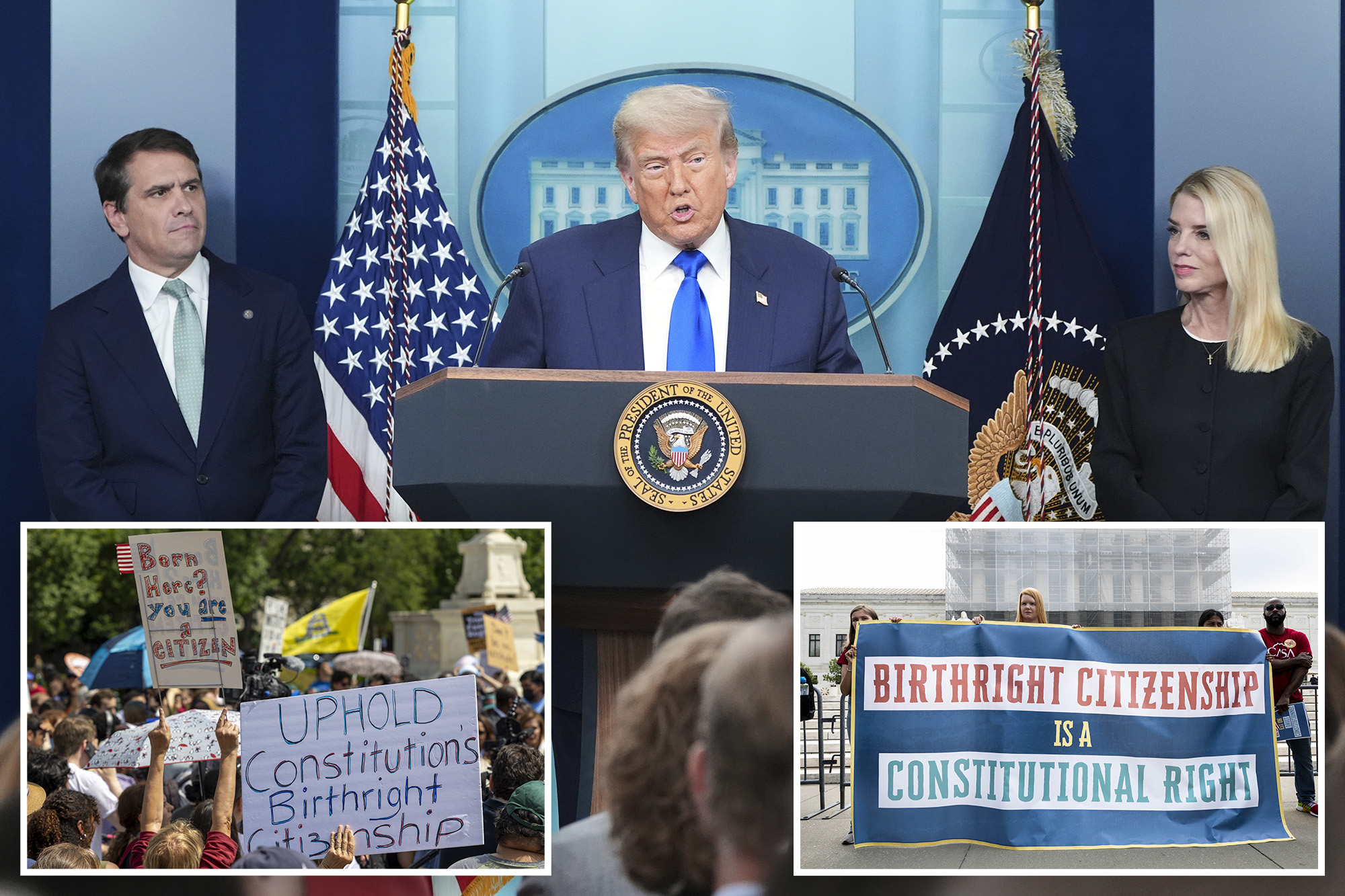
A Divided Ruling on Birthright Citizenship
A federal appeals court panel delivered a significant decision this week, ruling that President Trump’s executive order aimed at ending birthright citizenship cannot be implemented. The 9th US Circuit Court of Appeals upheld a lower court’s decision to block the directive, stating that the states challenging the order are likely to succeed in proving it unconstitutional.
The 2-1 ruling was issued by the 9th Circuit, with judges Michael Day Hawkins and Ronald M. Gould, both appointed by former President Bill Clinton, supporting the decision. Judge Patrick J. Bumatay, a Trump appointee, partially dissented. His argument centered on the issue of standing, claiming that the states did not have the legal authority to sue over the executive order.
Bumatay emphasized the importance of courts staying within their jurisdictional limits. “Courts must be vigilant in enforcing the limits of our jurisdiction and our power to order relief,” he wrote. He warned that failing to do so could lead to entanglement in issues outside the scope of judicial power, regardless of how important the matter may seem.
While Bumatay did not comment on the constitutionality of the executive order itself, the majority opinion argued that the Democratic-led states were entitled to a nationwide injunction. They believed that a narrower block would not provide complete relief, which is essential for the plaintiffs involved.
This ruling maintains an existing injunction issued by Seattle District Judge John C. Coughenour. Similar measures have been taken by federal judges in New Hampshire, Maryland, and Massachusetts, all of whom have blocked the implementation of Trump’s order.
The decision comes in the wake of a recent Supreme Court ruling that challenged the use of nationwide injunctions by lower courts. The high court stated that such injunctions likely exceed the constitutional authority of the judicial branch. However, the justices allowed certain plaintiffs, including those in class-action lawsuits and states, to continue seeking universal injunctions if necessary for complete relief.
Despite the Supreme Court’s caution, two courts—the Ninth Circuit and a New Hampshire district court—have issued temporary nationwide injunctions against Trump’s birthright citizenship order. The Ninth Circuit panel concluded that the Seattle district court did not abuse its discretion in granting the universal injunction to provide full relief to the states involved.
Understanding the Executive Order
Trump’s executive order sought to change the automatic citizenship granted to children born in the United States. Under the new policy, only children with at least one parent who is a U.S. citizen or legal permanent resident would be eligible for citizenship. This directly conflicts with the 14th Amendment, which states: “All persons born or naturalized in the United States, and subject to the jurisdiction thereof, are citizens of the United States and of the State wherein they reside.”
The president has argued that birthright citizenship has been misused, leading to what he calls “birth tourism.” This refers to foreign nationals traveling to the U.S. specifically to give birth, thereby securing citizenship for their children. Trump and his allies also claim that the 14th Amendment was originally intended for the children of freed slaves and has been improperly interpreted to apply to the children of immigrants.
The White House has not yet responded to requests for further comment on the latest developments. As the legal battle continues, the implications of this ruling will likely shape the future of immigration policy and the interpretation of constitutional rights in the United States.

Post a Comment for "Appeals Court Halts Trump's Bid to End Birthright Citizenship"
Post a Comment