AOC, Mamdani, and Progressives Profit as Democrats Stay Split
Rising Fundraising Power of Progressive Democrats
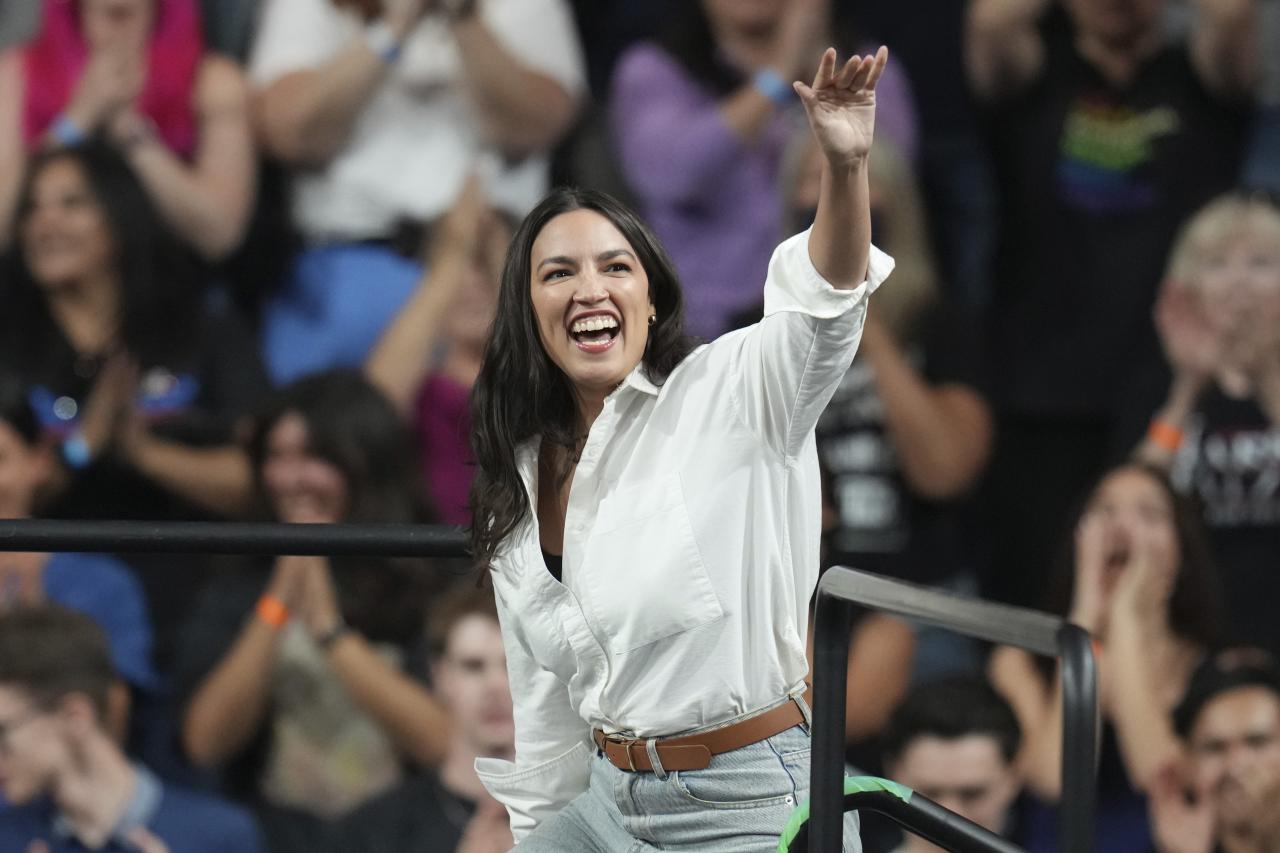
Rep. Marcy Kaptur, a Democrat and the longest-serving woman in congressional history, has raised $678,667 so far this year in her effort to retain her competitive northwestern Ohio district for the Democratic Party in next year’s midterm elections. In contrast, Rep. Alexandria Ocasio-Cortez (D., N.Y.) has raised nearly 23 times as much for her campaign committee, with a total of $15.4 million, making her the top House fundraiser this year. This figure is almost double that of House Speaker Mike Johnson (R., La.), the most powerful member of the chamber.
The stark difference between these two representatives highlights a growing trend among Democratic small-dollar donors, who are increasingly influencing campaign support based on ideological alignment rather than focusing solely on competitive races. A Wall Street Journal analysis of campaign finance disclosures reveals that among the 10 incumbent Democrats who raised the most from individual donors this year, six are members of the Congressional Progressive Caucus. Three of the top four fundraisers are progressives, with the exception being House Minority Leader Hakeem Jeffries (D., N.Y.).
This financial strength among progressive candidates presents challenges for party leaders aiming to shift the Democratic message toward the center, where they might have a better chance of winning over independent voters. Individual donations, which make up 99% of Ocasio-Cortez’s fundraising this year, are the highest proportion of any House incumbent running in 2026. While she faces an easy re-election in a district where she won 69% of the 2024 vote, Kaptur competes in a Toledo-area district that was rated as a “toss-up” by the nonpartisan Cook Political Report.
John Lapp, executive director of the Democratic Congressional Campaign Committee in 2006 when the party won control of the House, noted that more provocative stars in the Democratic Party often raise the most money. He said, “People willing to call out Trump’s corruption and Washington Republicans’ extremism the loudest definitely attract the most attention and dollars.” He added that the key to taking back Congress will be to harness collective resources for the top battlegrounds.
A portion of Ocasio-Cortez’s fundraising will be shared with fellow Democrats. The DCCC, the campaign arm for House Democrats, sets dues and fundraising expectations based primarily on seniority and committee positions. Those in the most competitive districts aren’t required to pay any dues, while leadership and committee chairs are expected to transfer hundreds of thousands to the DCCC.
David Zavac, Kaptur’s political director, emphasized that her grassroots support is the reason she keeps winning tough races. He also suggested that Republicans may face a “nasty and expensive primary” before a winner can directly confront the incumbent.
While Ocasio-Cortez has become one of the party’s leading voices, some Democrats worry she could turn off centrist voters. This concern extends to the winner of last month’s Democratic primary for New York City mayor, Zohran Mamdani, a self-described democratic socialist. Mamdani has received a flood of small-dollar donations following his primary win over former New York Gov. Andrew Cuomo and others. His fundraising efforts have been bolstered by public matching funds, effectively increasing his receipts by another $1.1 million.
Like AOC, Mamdani exemplifies the power of small-dollar donations. Although his average contribution is the smallest of any mayoral candidate, he has managed to be competitive due to the sheer number of donors. Roughly half of the dollars he raised during the period came from outside New York City, and his campaign had roughly $2.5 million on hand as of July 11.
Cuomo announced last week that he would challenge Mamdani in November’s general election and run as an independent candidate. Other expected contenders include Mayor Eric Adams, Republican nominee Curtis Sliwa, and Jim Walden, another independent candidate. Centrist Democrats have struggled with how to respond to questions about Mamdani, as Republicans are trying to use him nationally to cast the opposing party as far left.
While races like Mamdani’s attract national attention, it is lower-profile House races that offer Democrats their best hope of regaining some power in Washington. Republicans currently hold a 219-212 advantage in the House, with four seats vacant. Democratic prospects for winning control in that chamber are better than in the Senate, where the GOP holds 53 of the 100 seats and faces fewer competitive races in 2026.
The fundraising success of progressive candidates comes as traditional depositories for dollars in the party are struggling. The Republican National Committee, benefiting from GOP control of Washington, had almost $81 million in cash reserves as it started July, compared with $15 million for the Democratic National Committee. Overall, the DNC raised roughly 20% less than it did in the first six months of 2021 and has a quarter of what it did four years ago.
In seats that Cook rates as either a toss-up or just leaning toward a party, Republicans outpaced Democrats in overall fundraising, but they lag behind in donations from individuals. Some Democratic committees are working to keep small-dollar donors focused on the most critical races. The Democratic Senatorial Campaign Committee recently sent an email highlighting the importance of defending key seats in Georgia, New Hampshire, and Michigan, and flipping seats like North Carolina and Maine.
As next year’s election approaches, outside groups like super political-action committees are likely to play a significant role in boosting spending on both sides. However, money in the hands of candidates is still crucial, as it goes further under federal law, which guarantees them the lowest rates for television ads compared to super PACs.

Post a Comment for "AOC, Mamdani, and Progressives Profit as Democrats Stay Split"
Post a Comment