'Andor' Creator Tony Gilroy on Real-World Politics Echoing 'Star Wars' Legacy
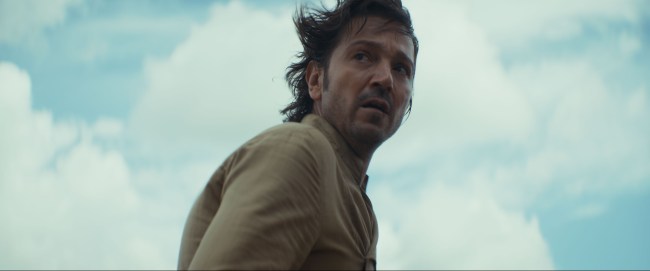
The Vision Behind Andor: A Prequel with Purpose
Tony Gilroy, the creator of Andor, is a firm believer in the power of rules when it comes to storytelling. He sees them as a form of liberation, especially when crafting a complex two-season series that serves as a prequel for Rogue One: A Star Wars Story. During a panel at the Television Academy’s inaugural Televerse Festival in Los Angeles, Gilroy emphasized that the show's success stems from its clear direction and thematic consistency.
"One of the reasons that the show is as precise and resonant and whole and thematic as it is, is that we know exactly where we're going. We knew exactly where we were gonna end up from the very beginning," he said. "I find that liberating."
Gilroy was joined by his brothers, Dan Gilroy and John Gilroy, who served as writer and editor on the series, respectively. As the Disney+ series came to an end, it received 14 Emmy nominations this season—despite some controversial snubs for stars like Diego Luna and Genevieve O'Reilly. The Gilroy brothers reflected on pivotal moments from Season 2, including the tragic Ghorman Massacre, the backstory of Luthen Rael (Stellan Skarsgård), and the sacrifice made by Bix Caleen (Adria Arjona) for the resistance while hiding a secret from Cassian Andor (Luna).
Bix’s Pregnancy: A Strategic Narrative Choice
Tony Gilroy explained that it was a "legit impulse" to reveal Bix’s pregnancy in the final moments of the show. He wanted to avoid the bleakness of Cassian Andor’s fate in Rogue One and instead offer a sense of hope. "Let's be really honest, it doesn't hurt me when I can tell [Walt Disney CEO] Bob Iger there's a baby," he said. "And he can name it, and he can sex it, and they can do whatever they want with it."
However, convincing the Andor team that Bix’s decision to leave Cassian was necessary proved challenging. "Her willingness to leave him for the greater good was an issue that a lot of people had questions about all the way through," Tony admitted. "‘Would it work?’ and ‘will it be delivered?’ and ‘are you going to be able to get us there?’ All this stuff. It really helps for anybody who has any doubts. You get to the end, you go, ‘Oh my God, she was pregnant.’"
Navigating Complex Storytelling and Time Jumps
The narrative of Andor was structured into three-episode arcs, allowing the show to jump ahead in time. This approach helped manage the vast amount of storytelling required to cover five years of events in just two seasons. The Ghorman Massacre, in particular, was a pivotal moment that catalyzed the Rebellion. Dan Gilroy credited his brother John with the editing that brought tension and energy to the show.
"There's so many swirling plot lines," Dan said. "This is just a constant building of suspense and tension and energy."
Despite the complexity, the team ultimately had to condense five seasons of storytelling into two. "We were deep in shooting the first season, and I was trying to come up with a second season, and Diego and I, literally, we're sitting in the backyard of a little hotel in Scotland having a drink and we're like, ‘What are we f--king going to do? We can't do five years of this show. I mean, it's just impossible," Tony recalled. "Diego would be ancient."
Balancing Creativity and Practicality
Producing a single season took 22 months, and Tony was also concerned about the potential cost and how Disney would respond. When they decided on the time jumps, he felt "lucky." "We were like, ‘Wow,’ and Disney was like, ‘OK, yeah, because we don't want to pay for like 90 seasons of this,'" he added.
Working on the story as a series rather than a film gave the team more breathing room, both in terms of storytelling and editing. "Editing is kind of like finding the truth," John said. "And it just gave you that couple extra seconds per scene that you're allowed to find the truth."
Real-World Parallels and Impact
The show’s exploration of authoritarianism and rebellion resonated deeply with real-world events. Dan Gilroy highlighted the significance of Mon Mothma’s speech, which followed the Ghorman Massacre. "Throughout Andor, the first two seasons covering the five years, what you're really watching is the Senate's descent into total Emperor control," he said. "So to sit down and go, that's the assignment. I'm going to write an assignment where I'm talking to these two audiences while events in the world are mirroring what this is."
As the series continued, the resemblance to reality became uncanny. Tony Gilroy recalled how U.S. Sen. Alex Padilla from California was forcibly removed from a Department of Homeland Security press conference the week Andor showed the Ghorman senator being arrested in the Galactic Senate. "Our internal chat group is like, ‘What the f--k?’" he said.
A Show That Resonates Beyond the Screen
While Tony was prepared to write a series about authoritarianism and rebellion, he expressed pride in the show’s ability to resonate beyond the screen. "I don't think I've ever convinced anybody in my family or at a dinner table to change their opinion about anything, ever," he said. "I feel happy or I feel affirmed that there are people out there that the show seems to have affected in some way that makes them think about courage."

Post a Comment for "'Andor' Creator Tony Gilroy on Real-World Politics Echoing 'Star Wars' Legacy"
Post a Comment