Analysis: The Plan to Undermine Black Political Influence
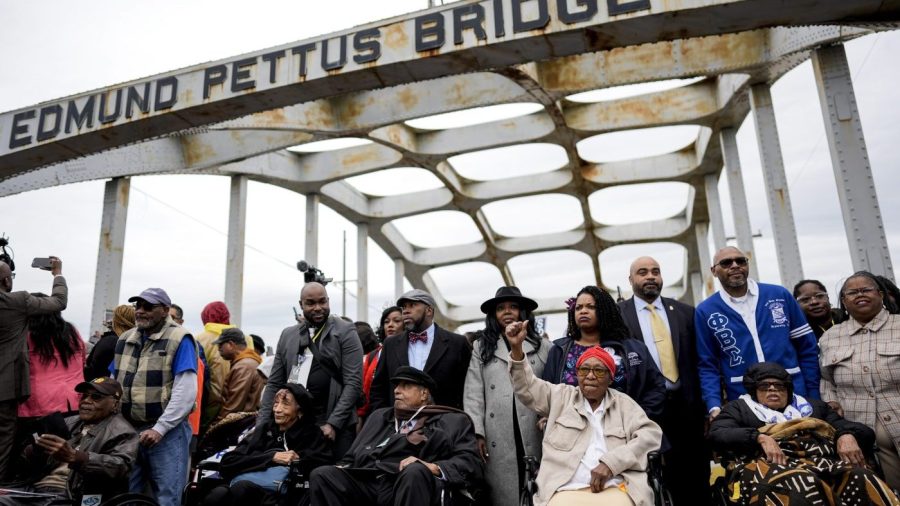
The Supreme Court and the Future of Voting Rights
The U.S. Supreme Court is set to examine a pivotal issue that could reshape the political landscape for years to come. With a conservative majority, the court appears poised to significantly weaken the Voting Rights Act, a landmark piece of legislation designed to protect voting rights for marginalized communities.
This decision comes after a call from Justice Clarence Thomas, a Black conservative, who has urged the court to reconsider the role of race in redistricting. The upcoming case will address whether it is appropriate to prevent racist tactics in drawing congressional districts. Even if some justices choose to ignore the racial implications, the consequences of a one-sided ruling are likely to be felt across the nation.
Impact on Black Voters and Representation
In several Republican-controlled states, particularly in the South, white politicians are working to dilute the votes of Black-majority districts. States like South Carolina, Alabama, and Mississippi may see their Black-majority congressional districts dismantled. This move aims to silence Black voices in Congress, targeting prominent Black Democrats such as Reps. Cleo Fields, Jim Clyburn, Terri Sewell, and Bennie Thompson.
The goal of these efforts is clear: to reduce the influence of Black voters, who have historically been crucial to the Democratic Party’s strength. By eliminating these districts, Republicans hope to secure more seats and maintain control over Congress, which would benefit former President Donald Trump during his final years in office.
The Role of the Voting Rights Act
The Voting Rights Act of 1965 was enacted in response to decades of systemic racism and voter suppression. It allowed federal courts to challenge gerrymandering that disproportionately affected minority voters. In a recent case involving Louisiana, a federal court ruled that the state should create a second Black-majority district, given that 33% of the population is Black.
However, this decision led to a lawsuit arguing that the Voting Rights Act now prevents courts from addressing racial bias in redistricting. Justice Thomas has made the case that focusing on race in district creation is outdated, claiming that specific instances of racial bias are relics of the past.
Legal Precedents and Current Rulings
Despite Thomas’s arguments, a federal appeals court recently ruled that Louisiana’s map “packed” and “cracked” Black populations to limit their political power. The court emphasized that there is a long history of precedent under the 15th Amendment allowing Congress to contest racial bias in redistricting.
South Carolina serves as a stark example of the current situation. With 26% Black and 67% white residents, the state has seven congressional districts, but only one is majority Black and Democratic. This imbalance highlights the potential consequences of allowing racially motivated gerrymandering.
Implications for the 2026 Midterms
The Supreme Court is scheduled to hear arguments on October 15, with a decision expected in time to influence the 2026 midterms. If Black voting power is diluted, the Democratic Party’s ability to win seats in Congress could shrink, increasing the chances of Republicans retaining majorities in the House and Senate.
This outcome would not only affect the balance of power but also impact Trump’s position as a lame duck president facing a divided Congress. Maintaining Republican control would allow them to appoint more judges, further weakening Democratic influence and perpetuating the cycle of reduced Black political power.
Trump's Stakes in Texas
Trump has openly expressed interest in the outcome of gerrymandering efforts in Texas, claiming an opportunity to gain five additional seats. His statements suggest a belief that the Republican Party is entitled to these seats, despite the fact that they belong to all Americans regardless of race or party affiliation.
Texas Republicans have also threatened to use law enforcement to ensure the passage of gerrymandered maps, but these actions distract from the broader implications of racially designed gerrymandering on race relations and politics.
A Call for Action
As the fight over voting rights continues, it is essential to recognize the stakes involved. Racial justice in Congress is at risk, and Democrats must take decisive action to protect Black voting power. The contributions of Black voters have been vital to Democratic victories over the past 60 years, and it is crucial to honor the legacy of those who fought for voting rights.
Juan Williams, a senior political analyst and civil rights historian, emphasizes the importance of this battle. His book, "New Prize for These Eyes: The Rise of America’s Second Civil Rights Movement," underscores the ongoing struggle for equality and representation.

Post a Comment for "Analysis: The Plan to Undermine Black Political Influence"
Post a Comment