Analysis: Newsom's Firefight Could Reshape Politics
A Bold Strategy in the Face of Political Turmoil
In the wake of a disappointing election, Democrats have been engaged in intense self-reflection, trying to figure out what went wrong and how to reinvigorate their party. Amid this uncertainty, California Governor Gavin Newsom has introduced an unconventional approach that challenges traditional Democratic values. Instead of adhering to a more virtuous political stance, Newsom is advocating for a strategy that mirrors the very tactics that many within the party have long criticized.
This bold move centers around the controversial practice of gerrymandering, which involves redrawing electoral district boundaries to favor a particular party. Newsom's proposal aims to counteract the growing influence of former President Donald Trump by creating a new map that benefits Democrats. This initiative could be pivotal in shaping the future of the party and its ability to challenge Republican dominance.
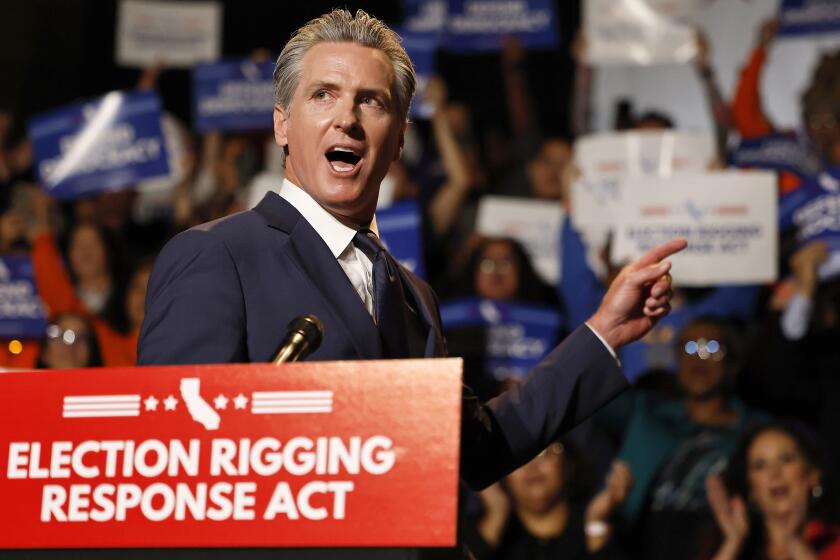
Newsom's plan is not without risks. The governor, who is term-limited and eyeing a presidential bid in 2028, is gambling on the potential of his strategy to elevate his political profile. However, the path to success is fraught with challenges. The "Election Rigging Response Act" would temporarily override the current congressional districts created by an independent redistricting commission. If approved, this measure could help Democrats gain five additional seats while strengthening vulnerable incumbents.
Despite the potential benefits, the road to implementing this plan is not straightforward. It requires approval from the state legislature and subsequent voter support. While the idea has garnered some backing from prominent Democrats, there are still significant hurdles to overcome. Many Californians have historically favored independent redistricting, and the notion of temporarily setting aside these principles may not sit well with all voters.
The poll results indicate a strong preference for maintaining an independent redistricting process, with many voters favoring the status quo. However, Newsom's team argues that the poll was not accurately worded, as it focused on permanently returning line-drawing power to legislators rather than a temporary measure. This nuance could play a crucial role in swaying public opinion.
Newsom's campaign is expected to frame the issue as a referendum on Trump's efforts to maintain Republican control of Congress. By drawing parallels to past struggles against the former president, Newsom aims to galvanize support among Democrats. His messaging has already proven effective in previous campaigns, such as the successful defense against a recall effort in 2021.
The governor's digital team has also played a significant role in amplifying his message. Their social media presence, particularly on platforms like X, has adopted a tone reminiscent of Trump's own style, using hyperbole and provocative language. These posts have gained traction, attracting a large following and generating considerable attention.
Newsom's approach has sparked debate about the appropriate response to Trump's actions. While some critics argue that mocking the former president is unseemly, others see it as a necessary tactic in the current political climate. Newsom himself has defended the tone of his team's messages, suggesting that if there are issues with his content, they should also be concerned with Trump's own behavior.
As the Democratic Party continues to grapple with its post-election challenges, Newsom's strategy offers a glimpse of a potential path forward. By embracing a more aggressive approach, he is positioning himself as a leader willing to adapt to the changing political landscape. Whether this gamble pays off remains to be seen, but it underscores the evolving nature of political strategy in an increasingly polarized environment.

Post a Comment for "Analysis: Newsom's Firefight Could Reshape Politics"
Post a Comment