Alina Habba's Fate as NJ's Top Federal Prosecutor Tested by Legal Challenge
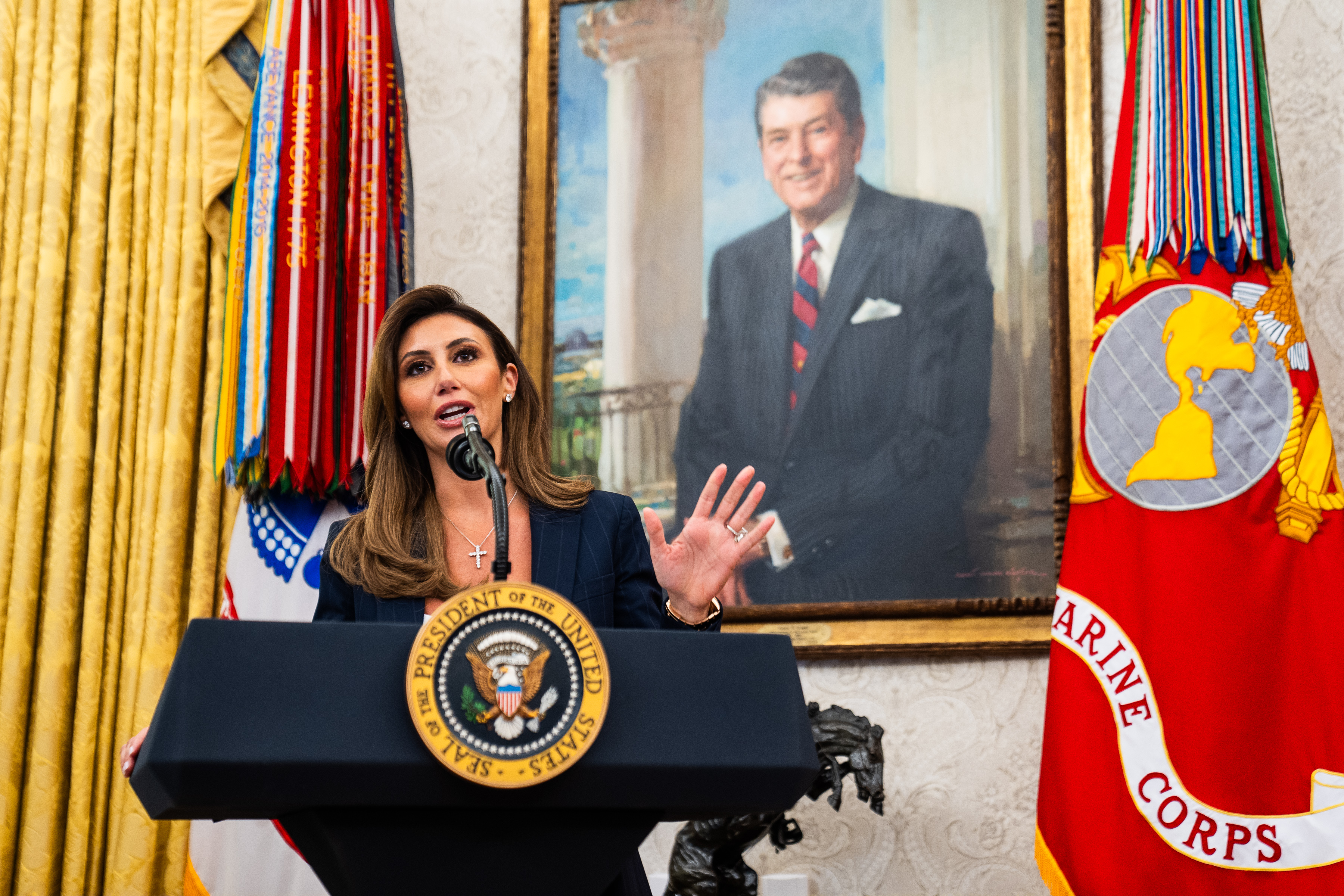
Legal Battle Over Alina Habba’s Role as U.S. Attorney in New Jersey
A legal challenge against Alina Habba’s continued role as the acting U.S. attorney for New Jersey has sparked a broader debate over the extent of presidential power to appoint and retain federal prosecutors. This case could set a precedent that affects how future presidents manage their appointments, particularly those who may face opposition from Senate Democrats or other political adversaries.
Defendants in a drug and gun case scheduled for trial this week have filed a motion asking a federal court to dismiss the charges, arguing that Habba lacks the legal authority to lead the office. The defense claims that her appointment is unconstitutional and that any actions taken under her leadership are invalid.
Thomas Mirigliano, one of the defense attorneys, stated that the executive branch has overstepped its authority, and that all subsequent prosecutorial actions by Habba or her team lack constitutional legitimacy. A judge initially described the argument as “nonfrivolous,” before the case was transferred to a Pennsylvania-based judge to determine the merits of the claim.
Habba was appointed by President Donald Trump earlier this year for a 120-day term as interim U.S. attorney for New Jersey. However, her tenure ended last week, and the state’s federal judges decided not to renew her appointment. They selected Desiree Leigh Grace, a seasoned prosecutor, to replace her. Yet, the Justice Department quickly dismissed Grace and implemented a series of procedural steps to keep Habba in her position.
These steps included Habba resigning from her interim role just before her term officially ended, followed by the president withdrawing her nomination for a full four-year term. Then, Attorney General Pam Bondi appointed Habba to the second-highest position in the New Jersey office, which the Justice Department argues allows her to act as the de facto leader. Critics, however, question the legality of these maneuvers and whether Habba still holds the authority to serve as the top prosecutor.
Experts have raised concerns about the potential implications of these actions on the integrity of the justice system. Meanwhile, officials from the Trump administration have accused New Jersey’s federal judges — many of whom were appointed by Presidents Barack Obama and Joe Biden — of obstructing the president’s agenda.
Mirigliano, representing one of the defendants, argued that the illegitimacy of Habba’s appointment violates his client’s due process rights. U.S. District Judge Edward S. Kiel acknowledged the argument as nonfrivolous and suggested that other judges in New Jersey might pause ongoing cases until the issue is resolved.
The matter was then moved to U.S. District Judge Matthew Brann, who previously gained attention for dismissing Trump’s efforts to overturn the 2020 election results in Pennsylvania. In court filings, the Justice Department defended the legality of keeping Habba in her role, asserting that the president has the authority to remove and replace U.S. attorneys at will.
Despite these claims, the status of cases brought by Habba’s office remains uncertain. Recent court dockets show that prosecutors have filed charges against at least three new defendants since her term ended. K. Anthony Thomas, the chief federal public defender in New Jersey, urged Judge Brann to address the legal implications of these cases.
Brann has requested further information and has not yet decided whether to hold a hearing on the motion to dismiss. The outcome of this case could have significant consequences for the functioning of U.S. attorney offices across the country.
This situation is not unique to New Jersey. Similar tactics have been used to maintain the positions of two other controversial Trump appointees: John E. Sarcone III in New York and Sigal Chattah in Nevada. Unlike Habba, neither of them had been nominated for a full term, which may be due to opposition from Senate members.
Sen. Chuck Grassley, chair of the Senate Judiciary Committee, has defended the “blue slip” tradition, which allows state senators to block presidential nominees for judicial or U.S. attorney roles. New Jersey’s Democratic senators opposed Habba, while Sen. Catherine Cortez Masto has indicated she would oppose Chattah if she were nominated.
In response, Trump criticized the blue slip tradition on social media, calling it a “hoax” that hinders his ability to appoint judges and prosecutors in key states. He claimed that the only way to overcome this is to appoint a Democrat or a weak Republican, suggesting that such actions would prevent him from filling important roles in states like California, New York, and New Jersey.

Post a Comment for "Alina Habba's Fate as NJ's Top Federal Prosecutor Tested by Legal Challenge"
Post a Comment