Air Canada Halts Restart Amid Flight Attendant Strike Despite Court Order
Ongoing Strike by Air Canada Flight Attendants
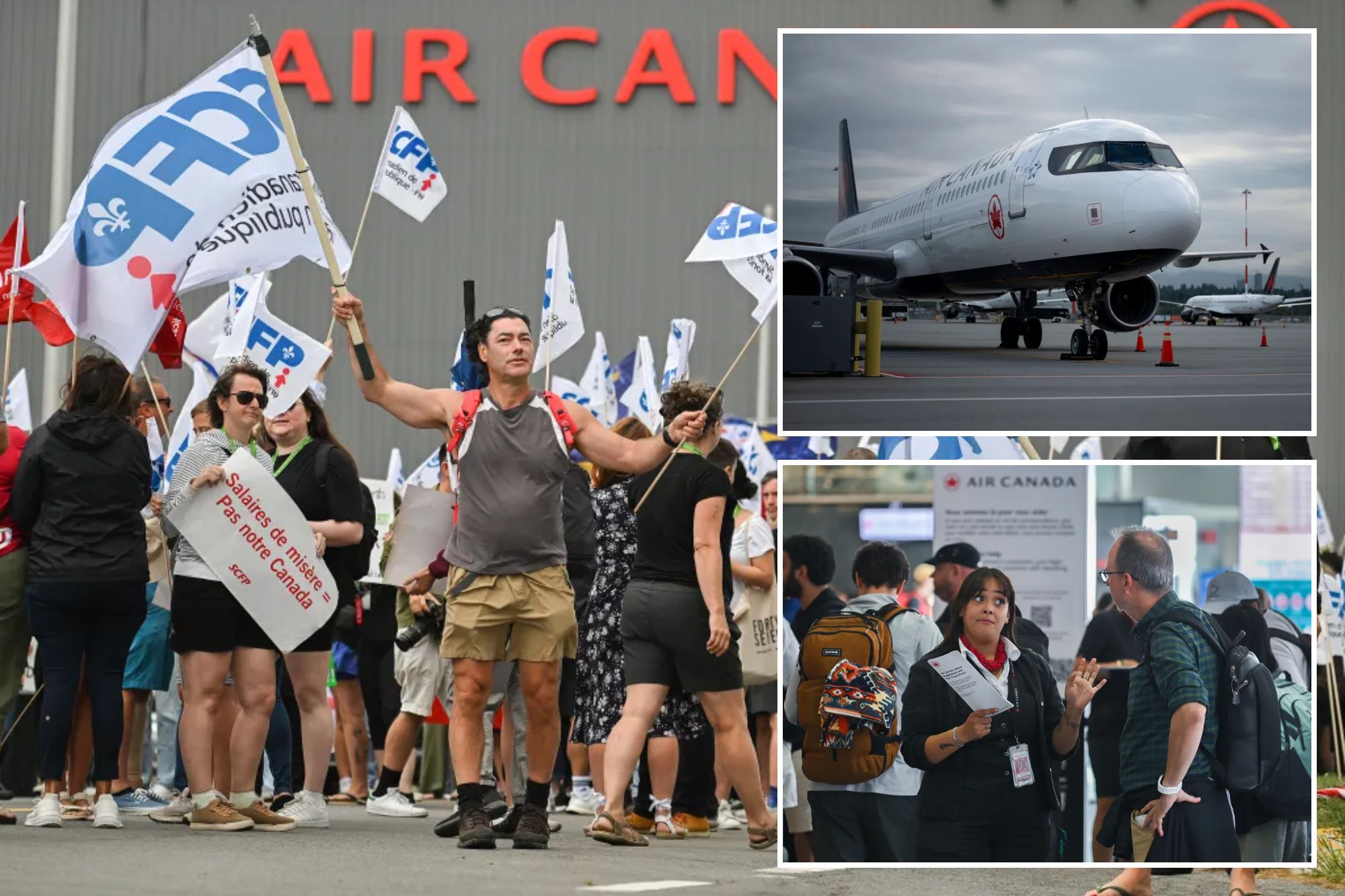
Air Canada flight attendants continued their strike on Sunday, defying a government-backed labor board’s order to return to work. This decision has led the country’s largest airline to delay the resumption of its operations. The Canadian Union of Public Employees (CUPE) stated that its members would remain on strike and urged Air Canada to return to negotiations for a fair deal. The union also criticized the order to end the strike as unconstitutional.
Air Canada announced that it would postpone its plans to restart flights from Sunday to Monday evening. The situation escalated when Prime Minister Justin Trudeau's Liberal government sought to end the strike by requesting the Canada Industrial Relations Board (CIRB) to impose binding arbitration. This move was supported by Air Canada but opposed by the unionized flight attendants.
The Canada Labor Code grants the government the authority to ask the CIRB to enforce binding arbitration if it is in the interest of protecting the economy. Now, the government faces several options to resolve the strike, including seeking court enforcement of the order to return to work or requesting an expedited hearing. However, the minority government may also need to pass legislation, which would require support from political rivals and approval from both houses of parliament—both of which are currently in recess until September 15.
A professor of employment relations at the University of Toronto, Rafael Gomez, emphasized that the federal government has entrusted the CIRB with administering the rules in the Canadian Labor Code. He noted that defying these rules amounts to violating the law.
This is not the first time the government has intervened in labor disputes. Under former Prime Minister Justin Trudeau, the government stepped in last year to prevent rail and dock strikes that could have severely impacted the economy. However, it is rare for a union to defy a CIRB order.
The strike marks the first time since 1985 that Air Canada flight attendants have walked off the job after months of negotiations over a new contract. Initially, Air Canada had planned to resume flights on Sunday evening following the expected end of the strike. However, the strike caused the suspension of around 700 daily flights on Saturday, stranding more than 100,000 passengers.
The union raised concerns about a potential conflict of interest involving CIRB Chair Maryse Tremblay, who previously worked as senior counsel for Air Canada. According to her LinkedIn profile, she served as Air Canada’s counsel from 1998 to 2004. The CIRB did not respond to requests for comment.
Other unions joined the flight attendants’ picket line in solidarity in Toronto on Sunday. Natasha Stea, an Air Canada flight attendant and local union president, said the other unions were supporting the cause because they saw workers' rights being eroded.
Air Canada began canceling flights on Thursday in anticipation of the stoppage. Travelers at Toronto Pearson International Airport expressed confusion about whether their flights would resume or if alternative arrangements would be made. Elizabeth Fourney from Vancouver described the situation as leaving passengers to figure things out on their own without any support from Air Canada.
One of the most contentious issues in the negotiations has been the union’s demand for compensation for time spent on the ground between flights and when assisting passengers with boarding. Flight attendants are primarily paid only when the plane is in motion. CUPE had advocated for a negotiated solution, arguing that binding arbitration would relieve pressure on the airline.
On Sunday, Air Canada confirmed that the CIRB had ordered the terms of the collective agreement between the union and the airline, which expired on March 31, to be extended until a new agreement could be reached.

Post a Comment for "Air Canada Halts Restart Amid Flight Attendant Strike Despite Court Order"
Post a Comment